
REVIEW · COSTA RICA
Puerto Viejo hands on chocolate making class. From bean to bar, get chocolatey!
The best part of this Puerto Viejo class is that chocolate starts with a living tree, not a glossy wrapper. Ancel introduces you to cacao’s history, culture, and uses before guiding you through roasting, cracking, grinding, and shaping beans into chocolate. You also taste the process along the way.
I like the small-group setting, capped at 18 people, and the way the class connects chocolate to the farm that produces it. I also like that you leave with chocolate you made yourself, plus roasted cacao beans. The main thing to consider is the pace: the advertised time is about 2 hours 15 minutes, but a detailed class can last 2.5 to 3.5 hours.
Key points to know before booking
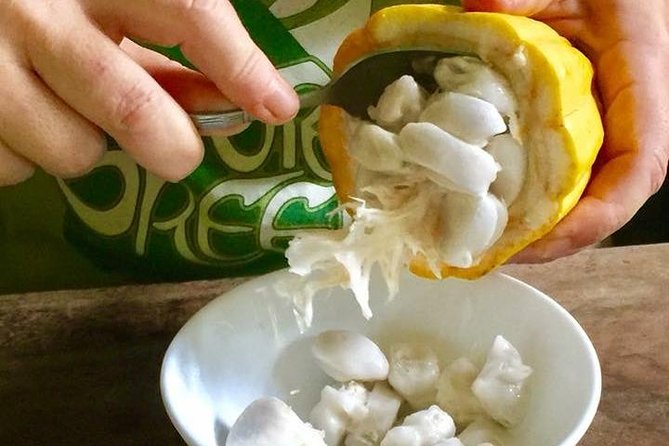
- You begin at a cacao tree: The opening lesson covers the tree, fruit, history, culture, and medicinal uses of cacao.
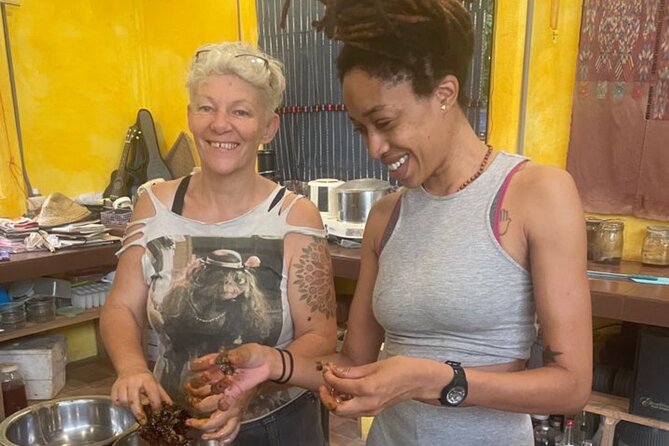
- You work through the process: Expect demonstrations and hands-on steps including cracking beans, roasting, powdering, grinding, and making a bar.
- Most chocolate is dark: One detailed account specifically warns that milk chocolate is not part of the class.
- You taste cacao at different stages: Samples can include cacao beans, traditional hot chocolate, truffles, bars, and chocolate in progress.
- You take home your work: The class includes roasted beans and handmade chocolate.
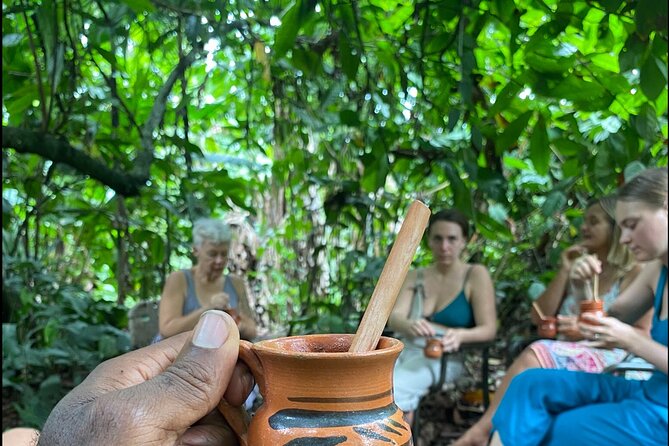
- The setting is a working outdoor farm: Dogs, cats, birds, flies, and other farm activity may be part of the scene, so this suits you better if you are comfortable with a rustic environment.
Starting with the cacao tree near Puerto Viejo
The class begins at 10:00 a.m. at M64V+GM6 in Puerto Viejo de Talamanca, in Limón Province. The meeting point is not far from Puerto Viejo’s center and can be reached on foot according to the available directions, though you can also use nearby public transportation.
Rather than starting in a polished kitchen, you first meet the cacao tree. This matters because the class is built around reconnecting the finished product with its source. You see where cacao grows and learn how the fruit and seeds became part of Costa Rican food, trade, culture, and traditional medicine.
Ancel leads this part of the experience with a personal, story-based approach. Her enthusiasm is a major part of the class. She explains how cacao has been used over time and how modern chocolate differs from the original bean. You also hear about the effects of large-scale chocolate production on land, animals, and the people who grow cacao.
This opening is valuable if you want more than a cooking lesson. It gives you a clearer idea of why a cacao bean tastes nothing like a supermarket chocolate bar. It also provides some of the cultural context that can disappear when chocolate is treated only as a sweet snack.
The warning is simple: this section can be long. One group spent about 50 minutes beside the cacao tree and found that too much for their taste. If you prefer quick facts and immediate hands-on work, you may feel ready to move on sooner. If you enjoy a detailed talk and have room in your morning, the extra time may feel worthwhile.
More Chocolate Making Workshops in the world:
- Vienna: Chocolate Workshop in Chocolate Museum w/ Tasting
★ 4.5 · 1,802 reviews - Brussels: Belgian Chocolate Making Workshop with Tastings
★ 4.7 · 1,629 reviews - Brussels: Chocolate Museum Visit with Workshop
★ 4.6 · 1,474 reviews
From fermented seed to roasted cacao bean
After the introduction, you return to the chocolate-making facility. Here Ancel explains fermentation and the changes that turn a cacao seed into something that can become chocolate.
The exact work may vary slightly with the group, but the class follows the everyday method used at Talamanca Chocolate. You get to see how the beans are treated in the proper order, rather than simply watching a finished bar appear. That step-by-step approach is one of the strongest reasons to book this activity.
You may crack open cacao beans, handle them at different stages, and taste the raw materials. Roasted beans are included at the end, and the process can involve powdering and grinding the cacao. Several parts of the class are practical, but the balance between listening and doing depends on the group and on how many questions come up.
This is not a rapid confectionery workshop. You are learning why each stage matters. Fermentation affects flavor. Roasting changes the aroma and taste. Grinding changes the texture. The result is a useful lesson in food production, and you can repeat some of what you learn later at home.
Keep your expectations realistic about raw cacao. It is not the same as eating a sweet bar. One unhappy participant found the raw samples and hot chocolate too bitter, while others enjoyed tasting cacao at different stages. If you prefer very sweet milk chocolate, this class may not match your usual taste. The experience centers on cacao and dark chocolate, not creamy milk chocolate.
The hands-on chocolate-making session
The practical section is where the class earns its name. You do not simply watch Ancel make a bar. You take part in the process and produce chocolate from beans grown on the farm.
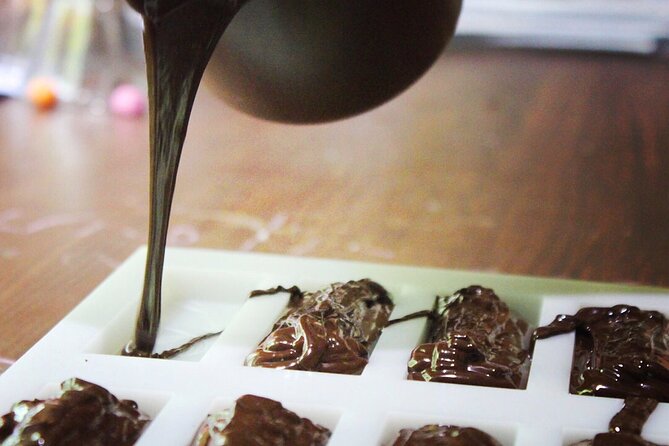
The work may include cracking beans, powdering cacao, grinding it, and shaping the finished chocolate. You also get to sample various forms of chocolate, including bars and truffles, along with traditional hot chocolate. The precise selection can vary, but the class is designed to let you taste the difference between stages.
I like that the finished product is not treated as a souvenir handed over at the door. You make it during the session. That gives the bar a personal connection to the place, and it also helps you understand how much work sits behind a product that normally takes only a few seconds to unwrap.
The class is suitable for adults and children, but younger participants will need to be comfortable listening for parts of the presentation. The tone is relaxed and friendly, not formal. Solo visitors can join comfortably, while families and groups of friends have enough shared work to keep the session social.
The practical section has received especially warm praise. Ancel is often described as patient, kind, and able to give people the confidence to try making chocolate themselves. If you have always wondered how chocolate is made, this is the part that turns curiosity into a usable skill.
Tastings, hot chocolate, and what you take home
Tasting is spread through the class rather than saved for one final sample. You may try cacao in several forms, including roasted beans, cacao powder, chocolate bars, truffles, and hot chocolate.
Do not expect every sample to be sweet. The class is meant to show how flavor changes from bean to finished chocolate, so some stages can be earthy, bitter, or plain. That contrast is useful, especially if you want to understand why sugar and other ingredients change the character of chocolate.
At the end, you leave with handmade chocolate and roasted beans. Some accounts also describe taking home chocolate bars and an original cacao product. The amount may depend on the group and the batch, so think of the take-home items as part of the workshop rather than a guaranteed large box of candy.
For the price, this is good value if you care about learning and participation. At $47.37 per person, you are paying for a roughly half-day activity with instruction, tastings, farm context, and your own chocolate. It is less compelling if you are mainly seeking a quick tasting or a large quantity of finished sweets.
The price also makes sense for a rainy-day alternative, though the activity requires good weather. A cancellation caused by poor conditions should result in a different date or a full refund.
More Drinking Tours in the world:
- Hungry Mary’s Famous Beer and Chocolate Tour in Brussels
★ 5.0 · 2,258 reviews - Epic Yarra Valley Wine Tour + Lunch, Chocolate & Gin/Beer Option
★ 5.0 · 1,819 reviews - Brussels Chocolate Beer Waffle and Belgian Whiskey All-in-One (Small Group) Tour
★ 5.0 · 551 reviews - Project Chocolat Tree to Bar Tour at Hotel Chocolat Saint Lucia
★ 4.5 · 501 reviews
A rustic farm setting, with real trade-offs
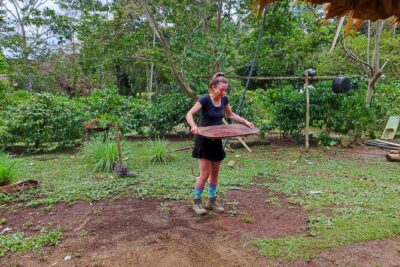
The facility is not presented as a sterile commercial kitchen. It has an outdoor, farm-style atmosphere, with animals and ordinary tropical activity around the property. Dogs, cats, birds, and other animals may be nearby.
For many people, this is part of the charm. A relaxed setting with friendly dogs and fowl can make the class feel personal rather than manufactured. It also places the chocolate lesson in a working environment instead of separating the food from the farm.
You should still consider your own comfort level. One participant was uneasy around loose animals and raised concerns about flies and cleaning around the work areas. That account differs sharply from the many positive descriptions of the class, but it points to a real consideration: this is not the right choice if you need a highly controlled, indoor culinary studio.
If you have animal fears, allergies, or strong concerns about outdoor food preparation, ask questions before booking. Service animals are allowed, and the activity is near public transportation.
How long should you allow?
The stated duration is approximately 2 hours 15 minutes. In practice, you should leave at least three hours free if your schedule permits.
Some sessions finish closer to the advertised length. Others run 2.5 to 3.5 hours because Ancel gives detailed explanations and allows time for questions. The class also has a minimum number of participants, and the maximum group size is 18.
This variation is not necessarily a problem. A small group with curious people can lead to a better discussion and more time with the equipment. But do not book this immediately before a bus departure, lunch reservation, or another timed excursion.
The relaxed pace is part of the appeal. You have time to taste, ask questions, and understand the steps. Still, if you want a tightly timed activity with little discussion, this may feel slow.
Who will enjoy this class most?
I would recommend it most strongly to you if you:
- Like food workshops that explain where ingredients come from
- Want a hands-on activity rather than a standard sightseeing stop
- Enjoy dark chocolate and less-sweet cacao flavors
- Are traveling with children who can listen and participate
- Want an easy morning activity near Puerto Viejo
- Appreciate local stories and the social side of a small class
- Plan to try making chocolate again after your vacation
It is also a good choice for solo visitors. The group format gives you an easy way to meet people without requiring a full-day commitment.
You may want to skip it if you want only milk chocolate, a short tasting, or a polished indoor kitchen. It is also not ideal if you dislike animals around a farm workspace or prefer every activity to follow a strict schedule.
Booking, cancellation, and practical details
Confirmation is provided when you book. The class begins at 10:00 a.m. and returns to the same meeting point, so you do not need to arrange a second pickup location.
Free cancellation is available if you cancel at least 24 hours before the local start time. Changes or cancellations inside that window are not refunded. If bad weather cancels the class, you should be offered another date or a full refund. The same applies if the minimum group size is not met.
The activity is often booked around 15 days ahead, so advance planning is sensible, especially if your Puerto Viejo dates are fixed. Wear something suitable for a hands-on food activity and outdoor surroundings. The available details do not specify clothing requirements, so practical casual clothes are the safest choice.
Should you book Talamanca Chocolate?
Yes, if you want a personal, educational food experience and you are happy with a relaxed pace. The strongest parts are Ancel’s enthusiasm, the connection to the cacao tree, the chance to work through the process, and the chocolate you make and take home.
Go in expecting dark chocolate, detailed storytelling, and a rustic farm setting. Do not book it as a quick sugar fix or a polished cooking-school lesson. Allow extra time beyond the advertised 2 hours 15 minutes, and be ready for cacao that can taste bitter before it becomes chocolate.
For most visitors who want to understand what sits behind Costa Rica’s chocolate, the $47.37 price is fair. You leave with more than candy: you leave knowing how a cacao seed changes, why the stages matter, and how to try the process yourself.
FAQ
Where does the Puerto Viejo chocolate class meet?
The meeting point is M64V+GM6, Limón Province, Puerto Viejo de Talamanca, 70403, Costa Rica.
What time does the class start?
The class starts at 10:00 a.m.
How long does the experience last?
The advertised duration is approximately 2 hours 15 minutes. Some sessions may last 2.5 to 3.5 hours, depending on the amount of discussion and questions.
What does the class include?
You visit a cacao tree, learn about cacao’s history, culture, and medicinal uses, study fermentation and chocolate production, make a chocolate bar, and taste cacao at different stages.
Do I get to make chocolate myself?
Yes. The class includes hands-on work, and you make chocolate from beans grown on the farm.
What can I take home?
You leave with roasted cacao beans and chocolate you made during the class. The available information also describes handmade bars and other chocolate products.
Is milk chocolate available?
The class focuses on dark chocolate. One detailed account specifically warns that there is no milk chocolate.
How many people can join the class?
The maximum group size is 18 people.
Can I cancel for a refund?
Yes, if you cancel at least 24 hours before the experience’s local start time. Poor weather or failure to meet the minimum number of participants may also lead to a different date or a full refund.
Just added around the world
- Zurich: Chocolate Tasting and Walking Tour with a Local★ 4.2 · 13 reviews
- Lindt Chocolate Museum with Cruise Transfer from Zurich★ 4.6 · 7 reviews
- Zurich Open-top Tour and Chocolate and Cheese Countryside★ 3.5 · 11 reviews
- York: Introduction to Chocolate Making Experience★ 4.9 · 10 reviews
- Zagreb: Lake Bled and Ljubljana Day Tour with Chocolate Gift★ 5.0 · 26 reviews
- Private Wine and Chocolate Tasting Experience★ 4.4 · 3 reviews
- Wine and Chocolate experience★ 4.6 · 3 reviews
- Yarra Valley: Wine and Chocolate tasting tour.★ 5.0 · 5 reviews
Costa Rica Chocolate Tours, compared.
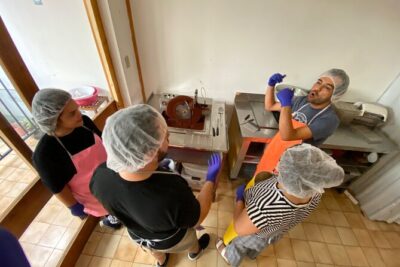
Chocolate Making and Tasting at a Local Factory in San José
Read our review →
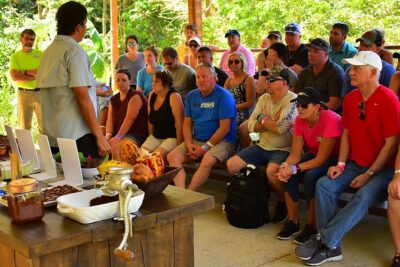
Chocolate Experience in Jaco Beach and Los Suenos
Read our review →

Coffee & Chocolate Tour+Sloths Park & Llanos de Cortez Waterfall
Read our review →
Chocolate Experience by Bribri Indigenous Culture
Read our review →
Sloths in the Rain Forest and Safari by the River
Read our review →Browse the lists this tour appears in