
REVIEW · COSTA RICA
Chocolate and Farm Tour with local Tico family
Cacao is not born in a candy wrapper. On this family farm about 25 minutes from La Fortuna, you see the fruit on the tree, taste its fresh pulp, and follow it toward the chocolate bar in your bag. The visit also includes coffee and other crops, so it feels like a look at daily farm life, not only a tasting stop.
I like the small maximum of 12 people, which keeps the visit personal and helps you ask questions. I also like the hands-on plan: you help prepare an indigenous-style cacao drink, make a sweeter Costa Rican hot chocolate, and mold your own bars. The main consideration is that the chocolate-making portion may not always happen exactly as described, so confirm the day’s plan when you arrive.
Key points at a glance
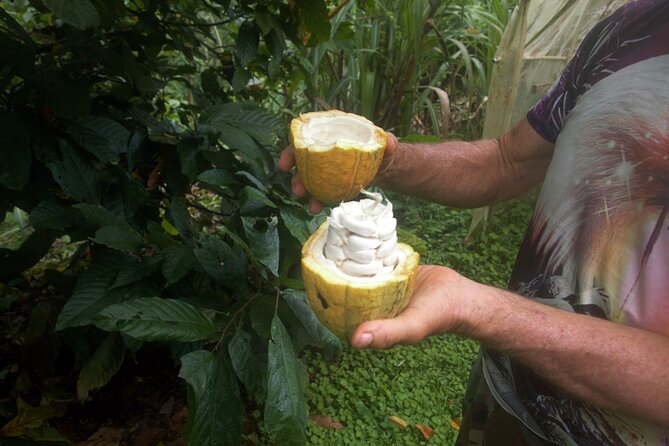
- Fresh cacao fruit: Walk among the cacao trees, see how flowers become pods, and taste the fruit straight from the plantation.
- Two very different drinks: Prepare an ancient-style cacao drink and a sweeter hot chocolate made with fresh ingredients.
- A working family farm: Meet a local Tico family and see cacao, coffee, fruit, and organic farming methods in one setting.
- Small-group value: The tour costs $45, lasts about two hours, and has a maximum of 12 people.
- Chocolate to take home: Mold bars from the farm’s cacao and add toppings, though this activity may vary on the day.
- Easy half-day planning: The tour ends where it starts, leaving the rest of your day free in the La Fortuna area.
A family farm visit, not a factory tour
This experience takes place at Finca La Esperanza: Coffee and Chocolate Tour, at Cabaña Blue Jeans in San Juan, San Isidro, about 25 minutes outside La Fortuna. That short trip matters. You leave the town’s main tour circuit and reach a family-run farm where the focus is on crops, food, and conversation.
You are not walking through a large commercial chocolate plant. You are visiting a farm and meeting the family who works there. That gives the experience a slower pace and a more direct connection to Costa Rican agriculture.
The setting also makes the tour useful for anyone who wants more than a tasting. You see where cacao grows, learn how the fruit is handled, and connect the finished drink or chocolate bar with the plant itself.
The tour is conducted in English, based on the experience details provided. Since the visit involves walking around a farm, wear shoes that can handle an uneven or damp outdoor setting. No special equipment is listed, and the activity ends back at the meeting point.
More Cocoa Farm Tours in the world:
- Lahaina: Maui Ku’ia Estate Guided Cacao Farm Tour and Tasting
★ 5.0 · 1,103 reviews - Award Winning Farm Tour: Coffee, Chocolate and Unique Gifts
★ 5.0 · 484 reviews - Finca 18 Puerto Vallarta Tequila Tour + Chocolate Pairing
★ 5.0 · 393 reviews
Following cacao from flower to fruit
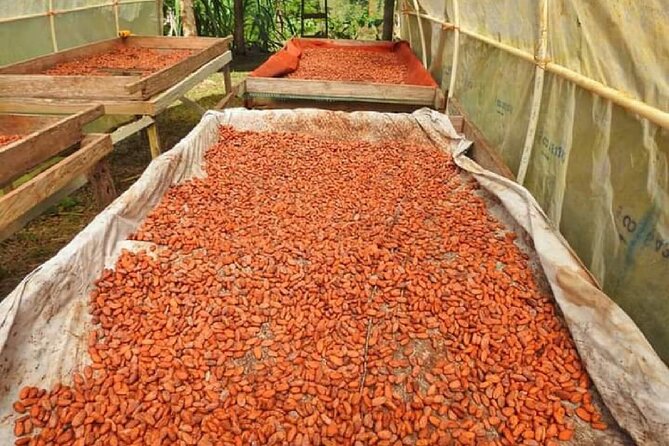
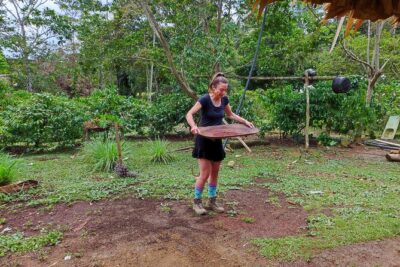
The tour begins with a walk through the cacao plantation. Your guide points out the cacao trees and explains how a small flower develops into the familiar cacao pod. That simple change is one of the best parts of the visit because it gives you a clear picture of how much happens before anyone makes chocolate.
The farm grows more than cacao. You may see coffee and other crops as you move around the property, and the visit includes local fruit. This broader look helps you understand cacao as part of a working farm rather than an isolated product.
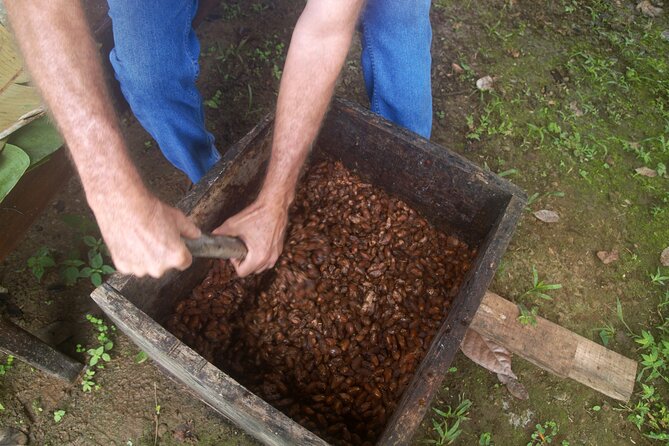
One of the most memorable steps is tasting fresh cacao fruit. The fruit is not the same as a chocolate bar. The pulp around the seeds is soft and sweet, while the raw cacao seeds themselves have a more bitter, earthy character. Tasting them at this stage gives you a useful reference for the later drinks and chocolate.
I especially like this part for families and curious eaters. Children can see the pod, touch the plant, and taste something they normally encounter only after heavy processing. Adults get a quick lesson in how marketing often hides the original food.
The farm also uses organic methods to control fungus, an especially relevant topic in a wet tropical climate. The experience does not turn this into a technical farming class, but you get a look at the practical problems a small cacao grower must manage.
Preparing an ancient-style cacao drink
After the plantation walk, you help prepare cacao drinks. The first follows older indigenous traditions rather than the sweet, creamy hot chocolate familiar in North America and Europe.
The exact recipe and preparation method can vary, but the point is clear: cacao has been used as a drink for thousands of years, and it has not always been treated as a dessert. The farm presents the drink as a way to connect body, mind, and nature, while also explaining its traditional importance.
This is a participatory tour. You do not simply watch a guide pour samples into cups. You take part in preparing and tasting the drinks, which makes the lesson easier to remember.
You should expect a flavor that is more direct and less sugary than standard hot chocolate. If you prefer very sweet drinks, this may be the less familiar part of the tasting. If you enjoy trying food in its older or less processed form, it is a worthwhile contrast.
The tour also covers cacao’s reported medicinal and nutritional properties. Treat this as cultural and food education rather than personal medical advice. The useful takeaway is that cacao has long had a role beyond candy, both as a drink and as a valued crop.
A sweeter Costa Rican hot chocolate
The second drink follows a more modern style. You prepare a sweet hot chocolate using fresh ingredients, closer to the way many people in Costa Rica enjoy it today.
Having both drinks in one visit is smart. The comparison shows how the same crop can produce very different tastes and meanings. One drink connects to older indigenous customs; the other is more familiar and comforting.
This part may be the easiest hit for a mixed group. Someone who is unsure about an earthy traditional drink can still enjoy the sweeter version. Someone who likes food traditions can compare the preparation methods and ask how the farm uses its own cacao.
A snack is also included, and the farm’s produce helps round out the tasting. The available food can vary, so do not treat it as a full meal. Plan to eat lunch or dinner separately if you are visiting at a mealtime.
A few more chocolate tours around the world worth a look
- Lindt Home of Chocolate Museum Entry Ticket
★ 4.7 · 9,329 reviews - Choco-Story Brussels: Chocolate Museum Entrance with Tasting
★ 4.3 · 4,883 reviews - Zurich: City Tour, Cruise, and Lindt Home of Chocolate Visit
★ 4.5 · 4,624 reviews - The Chocolatarium Chocolate Tour Experience in Edinburgh
★ 5.0 · 4,322 reviews
Making a chocolate bar with your own toppings
The planned finale is hands-on chocolate making. Using cacao from the farm, you mold chocolate bars and add toppings. You can take the finished bars with you, which gives the tour a useful souvenir rather than another small sample that disappears before you reach the car.
This activity suits children, couples, and anyone who likes making food. It also gives you a chance to be playful with the toppings and create something personal. You do not need to have any chocolatier skills before arriving.
There is one practical caution. At least one participant did not get to make the chocolate bars during the visit, despite enjoying the farm walk and drinks. That suggests the final activity can vary with timing, preparation, or the conditions on the day.
I would ask about the chocolate bar portion at the start, especially if it is the main reason you booked. The tour description includes it, but a short confirmation with your guide can prevent disappointment. The farm walk and drinks still provide the core experience, but the bar-making step is the part to verify.
Why the two-hour length works
At about two hours, this tour fits neatly into a day in La Fortuna. You have enough time to walk the farm, taste cacao fruit, prepare drinks, and take part in the food activities without giving up the entire afternoon.
That timing makes it easy to pair with another plan, though you should account for your own transportation time to and from the farm. The experience starts and ends at Finca La Esperanza, so there is no separate downtown return point.
A short tour also keeps the subject from becoming tiring. Cacao is interesting, but you probably do not need half a day of repeated tasting and demonstrations. Two hours gives you a focused introduction, then leaves room for another La Fortuna activity or a quiet afternoon.
The tradeoff is that the tour cannot cover every aspect of cacao production in great technical detail. If you want a full agricultural course, this is not that. If you want a personal introduction with food and conversation, the length is sensible.
Small-group size and personal attention
The maximum group size is 12 people. That is small enough for a family member or guide to answer questions without turning the visit into a speech delivered to a crowd.
Some departures may be much smaller. One visit had only four people, which allowed the family to show the farm at a relaxed pace and talk about what they grow. You should not assume every departure will be that intimate, but the group limit protects the basic feel.
The personal setting is the strongest reason to choose this tour over a large commercial chocolate presentation. You are meeting people who work with the crops, not just hearing a polished explanation designed for a large audience.
That said, a family-run visit may feel less standardized than a factory attraction. The pace, available produce, and final chocolate activity can depend on the farm and the day. I see that as part of the appeal, but you should choose this experience for its human scale, not for a perfectly timed production show.
What the $45 price gets you
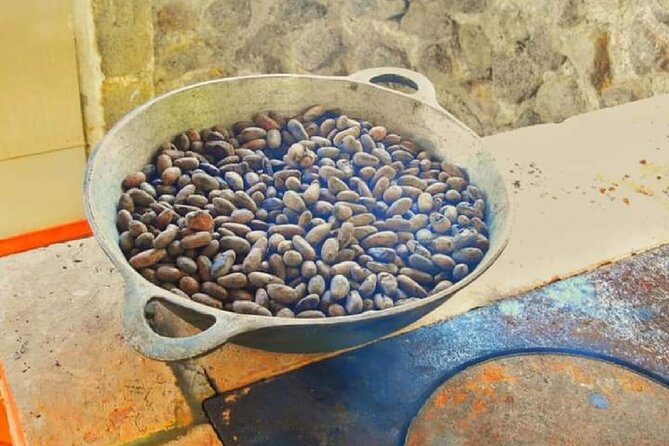
At $45, the value comes from several parts working together: a plantation walk, fresh fruit, a look at other farm crops, two cacao drinks, a snack, family interaction, and planned chocolate making.
The tour is not simply a chocolate tasting. You are paying for access to a working family farm and for a guided explanation of how cacao moves from flower to fruit to drink and bar. That makes the price reasonable for someone who values local contact and active participation.
The value is weaker if you only want to buy excellent finished chocolate. You may find cheaper ways to taste chocolate in La Fortuna, and this tour takes time to explain the farm rather than rushing straight to samples.
The small group helps justify the cost. With no more than 12 people, the fee supports a more personal visit than a large, high-volume attraction. It also includes an item you can take away, assuming the bar-making portion runs as planned.
Who will enjoy this farm experience most
I would recommend this tour to people who like food with a story. You get to see the crop, taste the fresh fruit, prepare drinks, and learn how a local family uses the land.
It is also a good fit for families. The tour has several physical and sensory steps, so children are not asked to listen to a long lecture. They can walk, taste, mix, and decorate.
Couples and solo visitors who prefer quiet, personal activities should also find the format appealing. The tour offers conversation and local contact without requiring a full-day commitment.
You may want to choose another activity if you dislike farm settings, cannot comfortably walk around an outdoor property, or want a polished factory tour with exact timing. The experience is about the farm and family as much as the chocolate.
Practical details before you book
The meeting point is Finca La Esperanza: Coffee and Chocolate Tour, Cabaña Blue Jeans, San Juan, Provincia de Alajuela, San Isidro, Costa Rica. It is about 25 minutes from La Fortuna, so check your route before booking and allow enough time to arrive.
Mobile tickets are accepted, and confirmation is provided when you book. The tour is near public transportation, and service animals are allowed.
The activity ends back at the same meeting point. Since the tour lasts roughly two hours, you can plan another activity afterward, but leave a cushion for transport and the natural pace of a family-run visit.
The cancellation policy is simple: cancel at least 24 hours before the local start time for a full refund. Cancellations or changes made within 24 hours are not refunded or accepted.
The experience has a 4.9 rating from 35 reviews, with 97 percent recommending it. Those numbers point to a very strong experience, but the chocolate-bar caveat is still worth keeping in mind.
Should you book this cacao tour?
Book it if you want to meet a local family, see cacao growing, taste fresh fruit, and take part in preparing drinks. The best parts are the personal setting, the small group limit, and the contrast between traditional cacao and modern hot chocolate.
I would be especially happy to fit this into a La Fortuna itinerary that already includes bigger outdoor attractions. It gives you a quieter, food-focused morning or afternoon and leaves the rest of the day open.
Think twice if your only goal is guaranteed chocolate-bar production or a highly polished factory presentation. Confirm that final activity before you arrive. For everyone else, the $45 fee buys a useful look at Costa Rican cacao from the farm outward, with enough tasting and participation to make the lesson stick.
FAQ
Where does the chocolate and farm tour take place?
The tour takes place at Finca La Esperanza: Coffee and Chocolate Tour, Cabaña Blue Jeans, in San Juan, San Isidro, Costa Rica. The farm is about 25 minutes from La Fortuna.
How long does the tour last?
The activity lasts approximately two hours.
What happens during the farm walk?
You walk through the cacao plantation, learn how cacao flowers develop into fruit, and harvest and taste fresh cacao fruit. You may also see coffee and other crops grown on the farm.
Do I get to taste cacao directly from the plant?
Yes. The tour includes harvesting and tasting fresh cacao fruit.
What drinks are included?
You prepare and taste an ancient-style cacao drink connected to indigenous traditions. You also prepare a sweeter hot chocolate made with fresh ingredients in a modern Costa Rican style.
Do I make a chocolate bar?
The planned activity includes molding chocolate bars with cacao from the farm and adding toppings. Since the activity may vary on the day, confirm this part with your guide when you arrive.
How many people can join the tour?
The activity has a maximum of 12 travelers.
Is the tour available in English?
The experience information states that the tour is in English.
Does the tour end at the same place where it begins?
Yes. The activity ends back at the meeting point at Finca La Esperanza.
What is the cancellation policy?
You can cancel at least 24 hours before the start time for a full refund. Cancellations or changes made less than 24 hours before the start time are not accepted, and the amount paid is not refunded.
Just added around the world
- Zurich: Chocolate Tasting and Walking Tour with a Local★ 4.2 · 13 reviews
- Lindt Chocolate Museum with Cruise Transfer from Zurich★ 4.6 · 7 reviews
- Zurich Open-top Tour and Chocolate and Cheese Countryside★ 3.5 · 11 reviews
- Zagreb: Lake Bled and Ljubljana Day Tour with Chocolate Gift★ 5.0 · 26 reviews
- York: Introduction to Chocolate Making Experience★ 4.9 · 10 reviews
- Private Wine and Chocolate Tasting Experience★ 4.4 · 3 reviews
- Wine and Chocolate experience★ 4.6 · 3 reviews
- Yarra Valley: Wine and Chocolate tasting tour.★ 5.0 · 5 reviews
Costa Rica Chocolate Tours, compared.
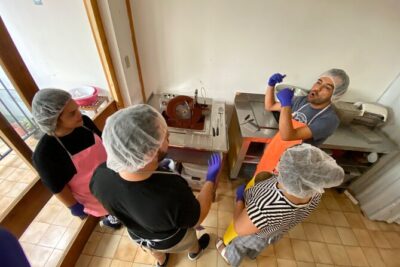
Chocolate Making and Tasting at a Local Factory in San José
Read our review →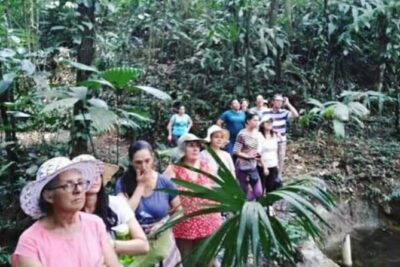
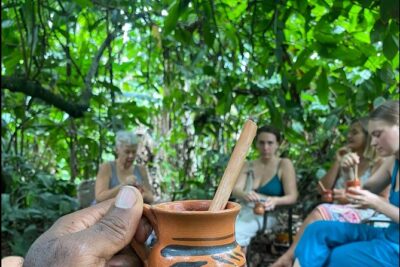
Puerto Viejo hands on chocolate making class. From bean to bar, get chocolatey!
Read our review →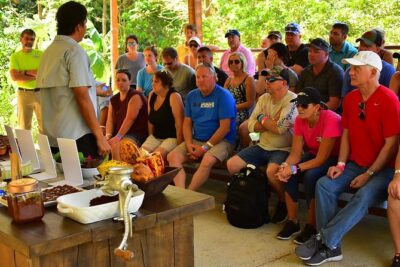
Chocolate Experience in Jaco Beach and Los Suenos
Read our review →

Coffee & Chocolate Tour+Sloths Park & Llanos de Cortez Waterfall
Read our review →
Chocolate Experience by Bribri Indigenous Culture
Read our review →Browse the lists this tour appears in