
REVIEW · ECUADOR
Half Day Guayaquil Historical Tour and Cocoa Culinary Experience
The best part of this Guayaquil tour comes at the end: you sit down for an Ecuadorian cooking class and learn how cocoa works in savory food, not just candy. Before that, you’ll see wildlife, old wooden buildings, colorful Las Peñas, a cocoa factory, and the city from Cerro Santa Ana.
I like the efficient route for a layover or overnight stay, and I like the private format, which lets the guide adjust the pace and answer your questions. The main drawback is that five hours is a lot to pack in, so each stop is fairly brief and the day can feel busy.
Key points at a glance
- A full Guayaquil sampler: See wildlife, historic architecture, old neighborhoods, cocoa production, and city views in one half-day outing.
- The cooking class is the real signature: Prepare Ecuadorian food, including seafood and chicken with cocoa, then taste homemade chocolate and desserts.
- Private transportation saves time: Air-conditioned transport, hotel pickup, and drop-off make this practical for a short stay or port stop.
- Guide support is personal: Yamil organizes the experience, with guides such as Nanfi, Luis, Marcel, or Vanessa involved depending on the day.
- Cocoa has a wider story here: The museum connects farming and chocolate with Ecuador’s agricultural and economic development.
- Allow for a quick pace: The Historical Park gets two hours, while several other stops receive about 30 minutes each.
A smart five-hour introduction to Guayaquil
Guayaquil can be hard to read in a short visit. You may have only an overnight stay, a port stop, or a flight layover, and the city’s important sights are spread across different areas. This private tour solves that problem with air-conditioned transport and a guide who handles the route.
The advertised duration is about five hours, though one outing lasted close to six hours after a late start. That extra flexibility matters if you lose time getting off a ship or dealing with airport traffic. The guide team has shown a willingness to adjust rather than simply cut stops from the day.
The experience costs $135 per person. That is not a bargain-priced city walk, but it includes private transport, a guide, hotel pickup and drop-off, bottled water, coffee or tea, lunch, and admission to the listed stops. The cooking class also gives you something beyond sightseeing: a meal and a hands-on look at local food traditions.
I see the price as reasonable for two people or a small private group, especially if you need a dependable half-day plan. It is less compelling if you only want a quick walk through the center or prefer to arrange inexpensive taxis and museums on your own.
More Heritage Tours in the world:
- Brussels: Historical Tour with Chocolate & Waffle Tasting
★ 4.8 · 1,206 reviews - Brussels: Historical Walking Tour with Chocolate & Waffle Tasting
★ 5.0 · 1,165 reviews - Best of Bruges: History, Chocolate & Beer Tour
★ 5.0 · 256 reviews
Parque Historico: wildlife beside old Guayaquil
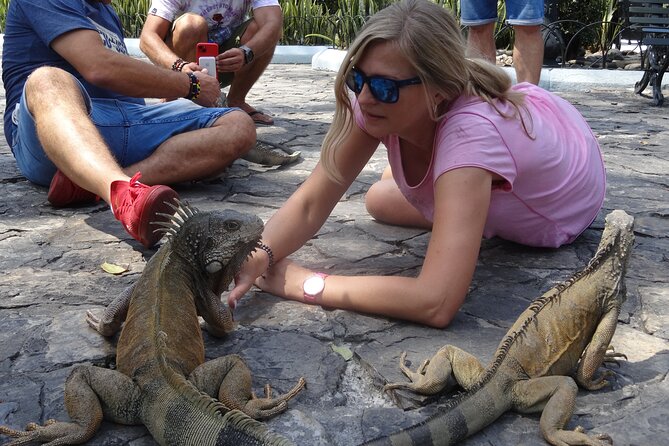
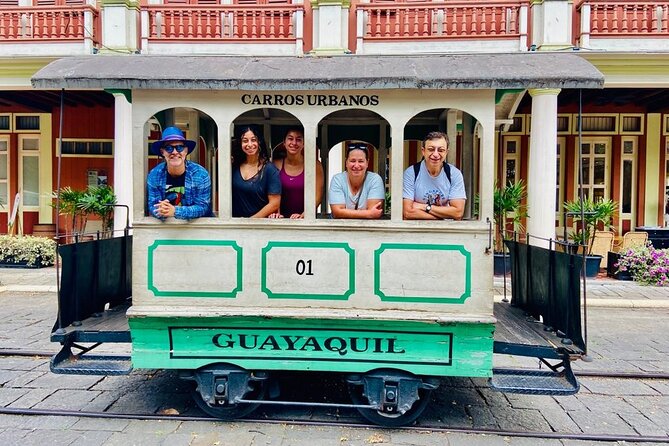
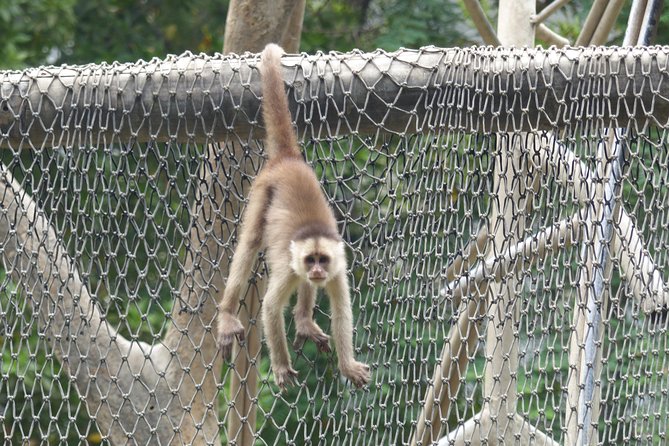
The tour begins at Parque Historico Guayaquil, and this is the longest stop, with about two hours set aside. The park combines natural surroundings, local fauna and flora, and preserved architecture from Guayaquil’s past.
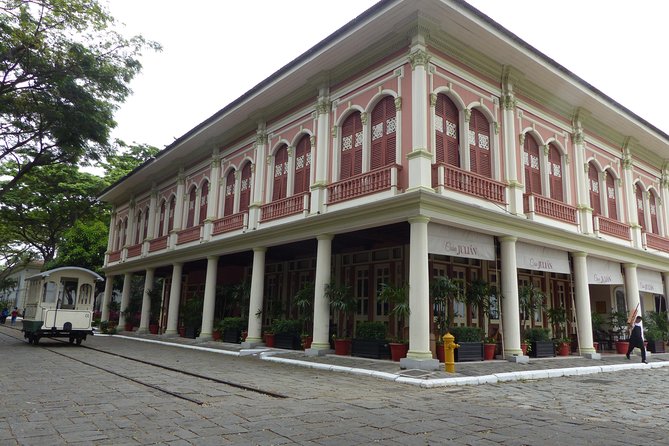
That combination gives you a better first look at the city than a standard urban sightseeing loop. You can learn about local wildlife while also seeing how earlier Guayaquil homes and public spaces were built and maintained. The park is not simply a zoo or an open-air museum. Its appeal comes from the meeting of nature and local history.
This stop also helps explain why Guayaquil feels different from Ecuador’s highland cities. The plants, animals, and architecture reflect the coastal setting. A guide can connect what you see to the city’s growth, preservation work, and changing neighborhoods.
Two hours is enough time to make the park worthwhile without letting it take over the day. If you enjoy animals, old buildings, and local context, this is likely to be one of the stronger portions of the tour. If you prefer markets, shopping, or a long uninterrupted museum visit, the park may feel less essential.
Las Peñas: colorful streets and a short historic walk
From the park, you continue to Las Peñas, one of Guayaquil’s best-known old neighborhoods. Its cobblestone streets, colorful houses, colonial-style architecture, art galleries, and hillside setting give you a very different view of the city.
The planned visit lasts about 30 minutes. That is enough for a short walk, photographs, and a basic introduction, but not enough for a slow gallery crawl or a careful look at every street. I would treat this as a focused orientation stop rather than a full neighborhood exploration.
Las Peñas is especially useful if you want to see the visual character of older Guayaquil. The bright buildings and uneven streets make a pleasant contrast with newer parts of the city. Your guide can also explain how the area fits into Guayaquil’s past and present.
Because the route includes several stops, you should expect to keep moving. Wear shoes that are comfortable on cobblestones, and keep your camera ready. The short visit is a drawback only if Las Peñas is the main reason you booked the tour.
Cocoa Museum and factory: from farm to chocolate
The cocoa portion gives the tour its strongest local theme. At the Guayaquil Cocoa Museum, you learn about cocoa farming, the agricultural tradition around it, and its role in the region’s economic and social development.
This is more useful than a simple chocolate tasting because cocoa is tied to Ecuador’s rural life and trade. The museum helps put the finished chocolate bar into context. You see cocoa as a crop, an industry, and a source of income, not just as a sweet treat.
The visit also includes a cocoa factory, where you can watch the chocolate-making process. Seeing how beans become chocolate makes the subject practical and easy to follow. If you are curious about Ecuadorian food or want to bring home a better understanding of local products, this stop earns its place in the itinerary.
The scheduled time is about 30 minutes, so do not expect a long factory tour or a full technical course. The stop works best as a clear introduction before the cooking class. It also gives you useful background for the final dish, where cocoa appears in a savory recipe.
Same place, a different way to taste it:
- Lindt Home of Chocolate Museum Entry Ticket
★ 4.7 · 9,329 reviews - Choco-Story Brussels: Chocolate Museum Entrance with Tasting
★ 4.3 · 4,883 reviews - Zurich: City Tour, Cruise, and Lindt Home of Chocolate Visit
★ 4.5 · 4,624 reviews - The Chocolatarium Chocolate Tour Experience in Edinburgh
★ 5.0 · 4,322 reviews
Cerro Santa Ana: a city view in 30 minutes
The route continues to Cerro Santa Ana, a hill with panoramic views over Guayaquil. From above, you can take in the skyline and get a sense of how the city spreads across the coastal plain.
The stop is planned for about 30 minutes. That is enough for the view and a few photographs, but it may feel short if you want a relaxed climb or a long stay at the top. The itinerary describes a climb, so this portion may require more effort than the museum stops.
I like this stop because city views help organize everything you have seen. After the Historical Park, Las Peñas, and the cocoa district, you can look down and understand their place within Guayaquil. It is a brief but useful pause before the food-focused finale.
If mobility or stairs are a concern, ask about the exact route before booking. The supplied information says most people can participate, but it does not give detailed accessibility information.
The cooking class at Villa 97
The final hour takes place at Villa 97, where you learn to prepare traditional Ecuadorian food with a focus on seafood and cocoa. This is not a token demonstration followed by a quick snack. The plan includes preparing a main dish, tasting desserts, and trying homemade artisan chocolate.
The signature recipe is chicken with cocoa, a homemade dish that shows how cocoa can add depth to savory food. That is a useful lesson for anyone who thinks Ecuadorian chocolate begins and ends with dessert.
The menu described during one class included ceviche, a fish dish with plantains, peanut and chocolate sauce, rice, and hot chocolate. The hot chocolate was prepared with vanilla, cinnamon, and turmeric and was not heavily sweetened. Menus can vary, but these details show the kind of food experience you may receive: familiar ingredients used in ways that connect home cooking, coastal seafood, and cocoa.
Nanfi has led the culinary portion and is described as a professional chef. She has also cooked with ingredients from her family’s farm, adding a personal link between agriculture and the meal. Yamil has organized the overall experience, and the guide team may include Nanfi alongside him.
This is where the tour becomes more than a sightseeing package. You are not only looking at Guayaquil from the outside. You are learning how food carries family traditions, local ingredients, and regional identity. For many people, this will be the most memorable hour of the day.
What private touring changes
A private tour means only your group participates. That gives you room to ask about subjects that interest you, from cocoa farming and local economics to wildlife, neighborhoods, or Ecuadorian cooking.
The guide team has also shown flexibility when plans go wrong. In one case, a group was delayed leaving a port and the start was pushed back by about an hour and a half. The guide located the group, recovered the route, and still covered the planned destinations without rushing them through every stop.
That is useful for cruise passengers and people connecting through Guayaquil, but you should still build in a time cushion. A private tour cannot control ship disembarkation, traffic, airport delays, or weather.
The guides named in the supplied information include Yamil, Nanfi, Luis, Marcel, and Vanessa. Yamil handles communication and tour planning, while other guides may lead the day. If having a particular guide matters to you, ask when booking.
Safety, communication, and practical comfort
The tour includes hotel pickup and drop-off, private air-conditioned transportation, bottled water, coffee or tea, and lunch. Those inclusions remove several small hassles from a short day in Guayaquil.
Communication before the tour is one of the useful features. Yamil has responded to concerns about safety and rolling power outages, and he has worked with guests to shape the itinerary around local customs, history, and food. That kind of exchange is valuable when you have limited time and want the day to match your interests.
One account describes a problem with an unauthorized person outside a port who claimed to be the assigned driver. The group realized the mistake, contacted the operator, and was collected by the correct guide. The practical lesson is simple: confirm the guide, vehicle, and operator before getting into a car, especially at a busy port.
The tour is described as safe in the areas visited, but you should still use normal city precautions and follow the guide’s instructions. Children must be accompanied by an adult, and most people can participate.
Timing, weather, and cancellation
You receive confirmation when booking, and the tour offers free cancellation up to 24 hours before the start time. Cancel at least 24 hours ahead for a full refund. Changes or cancellations inside that period are not accepted, and the local time controls the cutoff.
Good weather is required. If poor weather forces cancellation, you can choose another date or receive a full refund. This matters most because the itinerary includes outdoor areas, a hillside viewpoint, and walking through historic streets.
The tour is booked, on average, about 10 days in advance. That is a useful planning clue if your schedule is fixed, especially for a port call or short overnight stay. I would avoid booking it so tightly against a flight that a small delay could create stress.
Who should book the Guayaquil cocoa tour?
I would choose this experience if you have one day or less in Guayaquil and want a broad introduction without managing transport yourself. It suits couples, families with an adult present, cruise passengers, and people who care as much about food and local life as they do about monuments.
It is also a good match if cocoa interests you. The museum, factory, chocolate tasting, and cooking class create a clear theme that ties the day together.
I would hesitate if you want a slow, specialized visit to one neighborhood, a long cooking workshop, or several hours at a single museum. The tour covers a lot, and most stops are short. You should also confirm the meeting plan and allow spare time around a flight or ship departure.
Should you book it?
Book this tour if you want Guayaquil in a compact package, with a private guide, reliable transport, a city viewpoint, historic neighborhoods, wildlife, and a meal that teaches you something. Its strongest feature is the shift from seeing cocoa in a museum to using it in a homemade Ecuadorian dish.
Skip it if the $135 price feels high for a half-day or if you would rather explore slowly on foot. For a short visit, though, the mix is hard to match: local history, cocoa production, and hands-on cooking in roughly five hours, with hotel pickup and lunch included.
FAQ
How long does the Guayaquil historical and cocoa tour last?
The tour lasts approximately five hours. One outing lasted close to six hours, so you should allow some flexibility in your schedule.
What is the price?
The price is $135 per person.
Is the tour private?
Yes. Only your group participates in the private tour or activity.
What transportation is included?
Private transportation with air conditioning is included, along with hotel pickup and drop-off.
Is lunch included?
Yes. Lunch is included, as are bottled water and coffee or tea.
What food will I prepare during the cooking class?
The class focuses on traditional Ecuadorian food, especially seafood. The main dish described is chicken with cocoa, and the experience may also include ceviche, fish with plantains, rice, desserts, artisan chocolate, and hot chocolate.
Are alcoholic drinks included?
No. Alcoholic drinks are not included, but they are available to purchase.
What is the cancellation policy?
You can cancel at least 24 hours before the start time for a full refund. Cancellations or changes made less than 24 hours before the start time are not accepted. If poor weather cancels the tour, you can receive a full refund or choose another date.
Just added around the world
- Zurich: Chocolate Tasting and Walking Tour with a Local★ 4.2 · 13 reviews
- Lindt Chocolate Museum with Cruise Transfer from Zurich★ 4.6 · 7 reviews
- Zurich Open-top Tour and Chocolate and Cheese Countryside★ 3.5 · 11 reviews
- York: Introduction to Chocolate Making Experience★ 4.9 · 10 reviews
- Zagreb: Lake Bled and Ljubljana Day Tour with Chocolate Gift★ 5.0 · 26 reviews
- Wine and Chocolate experience★ 4.6 · 3 reviews
- Yarra Valley: Wine and Chocolate tasting tour.★ 5.0 · 5 reviews
- Private Wine and Chocolate Tasting Experience★ 4.4 · 3 reviews
Ecuador Chocolate Tours, compared.
Private Full-Day Mindo Cloud Forest,Butterfly Farm, Chocolate Tour bird watching
Read our review →
Day Trip Churute Howler Monkey Observation and Chocolate Making
Read our review →
Cuenca to Guayaquil one-way tour with Cajas Park and a Cacao Farm visit
Read our review →
Guayaquil to Cuenca one-way tour with Cajas Park and a Cacao Farm visit
Read our review →
Browse the lists this tour appears in