

REVIEW · NAIROBI
Visit kibera Slum the chocolate city
Kibera is not a museum exhibit. It is a lived-in community, and this 150-minute walking tour tries to show you daily life through local voices, community projects, and the people working to improve the area. You begin at Equity Ayani, walk through Kibera with a guide, and return to the same point.
I like the focus on community-led projects, including education, skills training, and social enterprise. I also like the chance to hear about Kibera’s place in Kenya’s rapid urban growth rather than seeing it only through poverty. The main consideration is simple: this is a visit to a marginalized community, so you need to approach it with respect and avoid treating people or homes as scenery.
Key points to know before booking
- Two and a half hours on foot: The full visit is built around walking, sightseeing, and conversation in Kibera.
- Community projects are central: You may visit local organizations working in education, skills training, and community development.
- Equity Ayani is both start and finish: You arrange your own way to the meeting point because pickup is not included.
- The guide is the main value: Daniel is one named guide, and the tour offers live guiding in English, Chinese, Esperanto, German, Italian, Spanish, and French.
- The $25 price is not all-inclusive: An entrance fee is listed separately, so confirm the amount before you commit.
- Respect matters more here than sightseeing speed: The tour asks you to listen, learn, and support local work rather than simply take pictures.
What this Kibera walk is really about

Kibera is widely known as Nairobi’s largest informal settlement, but a name and a label tell you very little. This tour gives you a guided way to think about how people build homes, businesses, schools, social programs, and community networks in a dense urban setting.
You are not signing up for a quick photo stop. The plan allows 2.5 hours for walking and discussion, which gives the guide time to explain the area’s development and the challenges linked to urbanization in Kenya. That longer format matters because Kibera cannot be understood from a roadside viewpoint.
The tour also presents Kibera through more than hardship. You can learn about local art, music, business activity, and community initiatives. That broader view is important. A visit focused only on difficult living conditions would leave you with a narrow and unfair picture.
More City Tours in the world:
- Zurich: City Tour, Cruise, and Lindt Home of Chocolate Visit
★ 4.5 · 4,624 reviews - Puerto Plata Private City Tour with Mount Isabel & Rum &Chocolate
★ 4.5 · 123 reviews - Mexico City: MUCHO Museum of Chocolate Entrance Ticket
★ 4.6 · 91 reviews
Starting at Equity Ayani

The tour begins at Equity Ayani, then returns there after the Kibera visit. Since pickup is not included, you need to make your own way to this starting location and plan to be there before the scheduled departure.
This arrangement keeps the tour straightforward, but it places more responsibility on you. Check the starting time when you book, allow enough time to reach Equity Ayani, and save the meeting-point details on your phone. The tour does not include a transfer from your hotel.
The same-point return is useful if you have another Nairobi plan afterward. You finish where you started instead of being left at an unfamiliar location. The supplied information does not give a hotel transfer or a separate drop-off service, so do not assume either is included.
Walking through Kibera for 150 minutes
The main part of the experience is a guided walk through Kibera. You can expect sightseeing, conversation, and views along the way, with the guide explaining what you are seeing and placing it in a wider Kenyan context.
The value comes from having someone interpret the setting. Without a guide, it would be easy to notice only the physical surroundings and make quick assumptions. With a guide, you can learn about the community’s history, the pressures created by city growth, and the work being done by residents and local groups.
The pace is likely to feel more deliberate than a standard city walk because the tour includes interaction and explanation. The supplied details do not specify the walking distance, route surface, or number of people in the group. If those details matter to you, ask the provider before booking.
You should also wear practical clothing and shoes suitable for 2.5 hours on foot. That is general walking advice rather than a stated dress code, but it makes sense for any tour whose main activity is a neighborhood walk.
Meeting residents and community leaders

Community engagement is one of the stated aims of the visit. You may interact with local residents and community leaders, hear about their experiences, and learn about the problems they face as well as the solutions they are pursuing.
This is where your attitude matters. Listen more than you speak, follow the guide’s instructions, and ask questions that show interest in people’s work and choices. Do not assume that everyone you see is part of the tour or wants to be photographed.
The tour’s responsible tourism message is particularly useful here. Visits to low-income communities can easily become uncomfortable or exploitative if they are built around shock value. This activity places more weight on understanding, dignity, and support for local initiatives.
That does not make every difficult issue disappear. You may still hear about serious social and economic challenges. The benefit is that those issues are discussed alongside local effort, creativity, and self-reliance.
A few more chocolate tours around the world worth a look
- Lindt Home of Chocolate Museum Entry Ticket
★ 4.7 · 9,329 reviews - Choco-Story Brussels: Chocolate Museum Entrance with Tasting
★ 4.3 · 4,883 reviews - The Chocolatarium Chocolate Tour Experience in Edinburgh
★ 5.0 · 4,322 reviews - Award-Winning Geneva Chocolate &Old Town Tour with Boat Ride (3h)
★ 5.0 · 3,721 reviews
Seeing empowerment projects in action

The tour may include visits to organizations and social enterprises that support residents through education, skills training, and community development. These stops help explain what empowerment means in practical terms.
An education project can show how local groups respond to gaps in opportunity. Skills training points to ways people work toward income and independence. Social enterprises reveal how business activity and community benefit can overlap.
The exact organizations and projects are not listed, so you should not book expecting one named school, workshop, or charity. Think of this part as a chance to learn about local initiatives selected by the guide and provider.
I see this as one of the strongest reasons to choose the tour. Your $25 is buying access to a guided explanation of Kibera, not just a route through it. You also gain a clearer idea of how community development works at street level.
At the same time, the entrance fee is not included in the stated price. Ask what that fee covers and how much it is before booking, since the final cost may be higher than $25 per person.
Art, music, and enterprise beyond the stereotype
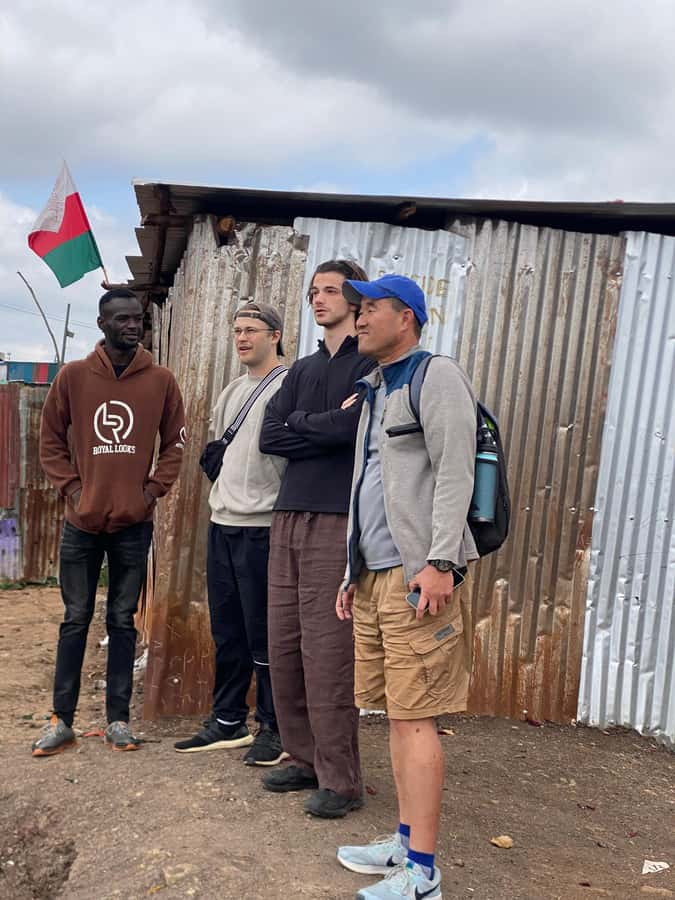
Kibera is presented here as a place with cultural life as well as social challenges. The tour may introduce you to local art, music, and entrepreneurial activity, giving you a fuller sense of how residents express themselves and earn a living.
These details matter because they shift your attention from statistics to people. Art and music can show identity and pride. Small businesses and enterprise can show initiative in a place often described only in terms of shortage.
The wording of the activity does not promise a concert, performance, or shopping stop. Treat these elements as cultural themes you may encounter during the walk, not fixed shows on a timetable.
That uncertainty is worth noting. If you want a highly structured tour with guaranteed performances or specific venues, this may feel too open-ended. If you prefer a guide-led introduction that leaves room for what is happening in the community on the day, the format makes more sense.
The guide makes or breaks the visit
With a community walk like this, the guide is not just someone who keeps you on the route. The guide explains sensitive subjects, introduces the purpose of local projects, and helps you interpret what you see without reducing the community to a spectacle.
Daniel is one guide associated with this activity. His name is useful to know if you are trying to confirm who may lead your visit, although the available details do not promise that Daniel will guide every departure.
The guide service is listed in English, Chinese, Esperanto, German, Italian, Spanish, and French. Confirm your preferred language when booking, since the availability of a particular language may depend on the departure.
The small set of available ratings is strongly positive, with a 4.8 score from three reviews. Sara from Spain specifically praised a tour with Daniel, while a visitor from Switzerland described the guide as kind and highly professional. Those details point to the human side of the experience: a calm, respectful guide matters greatly in a sensitive setting.
Still, three ratings are not enough to make broad claims about every departure. I would treat the score as encouraging rather than definitive, and I would pay close attention to the guide’s communication before the walk begins.
Is $25 good value?
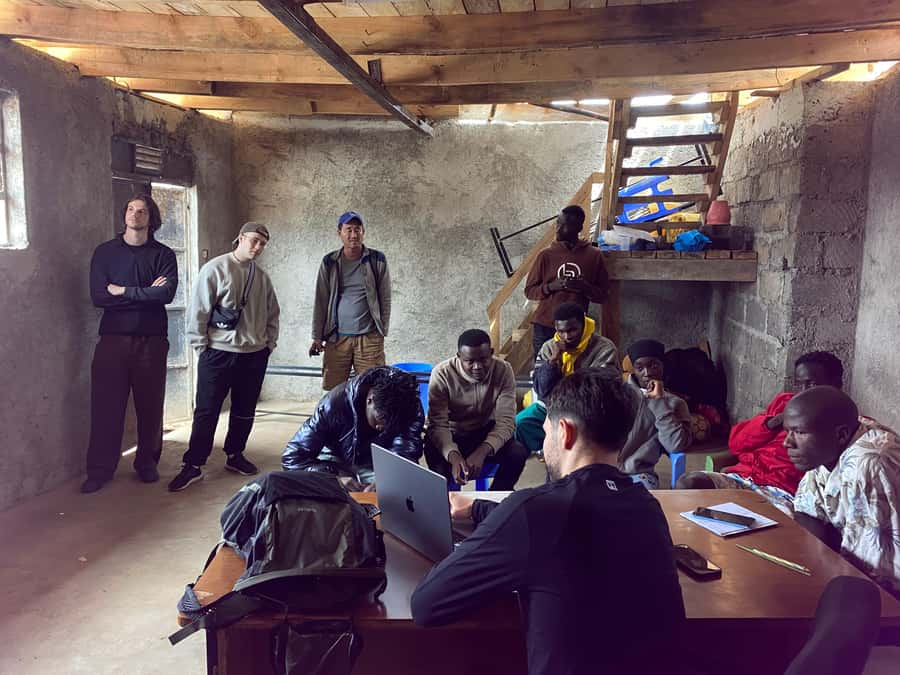
At $25 per person, the tour is reasonably priced for a 150-minute guided activity, especially if you want local context rather than a quick pass through the area. The price includes the tour guide, and the visit covers community engagement, cultural explanation, history, and local development.
The value depends on what you want. If you want a polished attraction with many included extras, the cost may not feel like a bargain because pickup and the entrance fee are separate. If you want a focused, guide-led introduction to Kibera, two and a half hours gives you a fair amount of time for the money.
The strongest value is the interpretation. You are paying for access, explanation, and introductions to community work. You are not paying for a long list of attractions or transport services.
Before booking, calculate the complete price by adding the separate entrance charge and your own transport to Equity Ayani. The reserve-now-and-pay-later option can help if your Nairobi schedule is still changing, and cancellation is free up to 24 hours in advance.
Who should choose this tour?

I would recommend it to you if you want to understand Nairobi’s urban life through local voices and community work. It suits curious visitors who are comfortable walking, listening, and thinking about difficult social subjects without expecting a simple or polished story.
It may also suit you if you want to support a locally focused activity and learn about education, skills training, and social enterprise. The tour gives those subjects more attention than a standard city sightseeing route is likely to provide.
You may want to choose something else if you dislike guided walking, need hotel pickup, or want a tightly timed program with guaranteed performances and named stops. The available information does not give a group size, exact route, walking distance, or accessibility details, so ask those questions if they affect your decision.
Most of all, this is not a place for careless photography or detached sightseeing. Go ready to show courtesy, follow local guidance, and remember that the people you meet are living their ordinary lives.
My verdict on the Kibera experience
I would book this tour if my goal were to gain a more thoughtful understanding of Kibera and Nairobi’s urban challenges. The community projects, local cultural themes, and historical explanation make it more worthwhile than a short look from a vehicle.
I would first confirm the entrance fee, meeting instructions, language, and walking conditions. If those details work for you, $25 is a fair starting price for 150 minutes with a guide, provided you approach the visit as a respectful community exchange rather than a spectacle.
FAQ
Where does the tour start?
The tour starts at Equity Ayani.
Where does the tour end?
The tour returns to Equity Ayani after the Kibera visit.
How long does the tour last?
The activity lasts 150 minutes, or 2.5 hours.
How much does the tour cost?
The listed price is $25 per person.
Is an entrance fee included?
No. An entrance fee is listed as not included in the price.
Is hotel pickup included?
No. Pickup is not included, so you need to reach Equity Ayani yourself.
What does the tour include?
A tour guide is included. The visit covers a guided walk through Kibera, community engagement, local projects, cultural themes, and historical context.
Which languages are available?
Live guiding is listed in English, Chinese, Esperanto, German, Italian, Spanish, and French.
Can I cancel for a full refund?
Yes. You can cancel up to 24 hours in advance for a full refund.
Can I reserve now and pay later?
Yes. The activity offers a reserve-now-and-pay-later option, so you can hold your place without paying immediately.
Just added around the world
- Zurich: Chocolate Tasting and Walking Tour with a Local★ 4.2 · 13 reviews
- Lindt Chocolate Museum with Cruise Transfer from Zurich★ 4.6 · 7 reviews
- Zurich Open-top Tour and Chocolate and Cheese Countryside★ 3.5 · 11 reviews
- York: Introduction to Chocolate Making Experience★ 4.9 · 10 reviews
- Zagreb: Lake Bled and Ljubljana Day Tour with Chocolate Gift★ 5.0 · 26 reviews
- Private Wine and Chocolate Tasting Experience★ 4.4 · 3 reviews
- Wine and Chocolate experience★ 4.6 · 3 reviews
- Yarra Valley: Wine and Chocolate tasting tour.★ 5.0 · 5 reviews
Nairobi Chocolate Tours, compared.




Kibera Slum (The Chocolate city)Guided Walking Tour
Read our review →Browse the lists this tour appears in