
REVIEW · CHOCOLATE WALKING TOURS
Nairobi: Chocolate City Kibera Slum Walking Tour
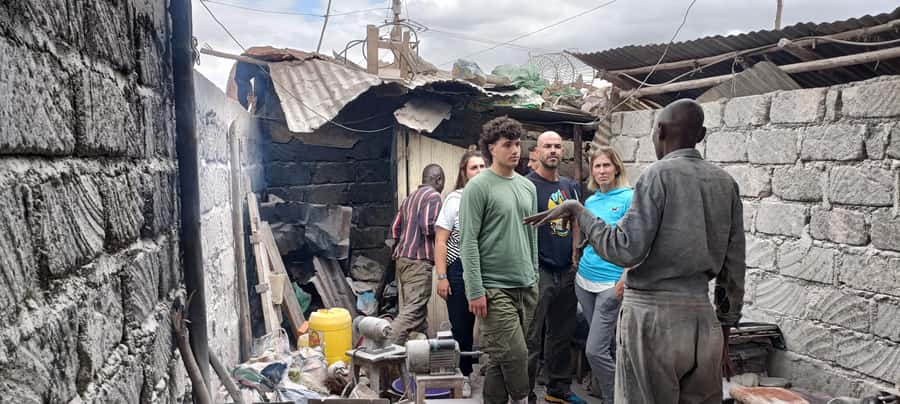
Kibera is not a sightseeing backdrop. It is a lived-in community, and this tour gives you a guided look at its daily rhythms, local projects, and hard questions. You walk with residents who can explain what you are seeing, rather than simply passing through with a camera.
I like the local guides, especially the personal care shown by guides such as Collins and Allan. I also like that your $15 goes beyond a walk: the route includes the Agape Hope Children Centre and community beadwork, giving you a practical way to support local work.
The main drawback is that this is not a polished attraction with easy paths or a predictable language match. The advertised guide languages include Japanese and several others, but Japanese-speaking visitors received English, so book this tour only if you are comfortable confirming the language and walking through a crowded informal settlement.
Key points to know before you book

- Local leadership: Guides from Kibera, including Collins and Allan, explain the area from personal experience.
- More than a street walk: The route includes Agape Hope Children Centre, a beadwork project, a beadwork factory, and a home visit.
- Toi Market adds the color and noise: You see commerce and everyday activity rather than a staged cultural display.
- Safety is taken seriously: The guide stays with you, gives a safety briefing, and helps with your return transport.
- Good value at $15: The price includes the guide, bottled water, and community visits, while also directing money toward local initiatives.
- Check the language carefully: English is the safest expectation, even though several other languages appear as booking choices.
Seeing Kibera with context, not from a passing car

Kibera, also called Chocolate City in the tour description, is Nairobi’s largest informal settlement. A walk here can be uncomfortable, eye-opening, and worthwhile, but your attitude matters. You are entering someone’s home area, not an open-air museum.
The useful part of this tour is the explanation. Streets, buildings, markets, and community projects mean more when a local guide describes how they fit into daily life. A guide can also tell you where to walk, when to pause, and how to take photographs with basic respect.
The experience is designed around understanding and contact. You are not simply driven past Kibera from a bus window. You walk through it, stop at local initiatives, and have opportunities to speak with people connected to the community.
That directness is also why you should set realistic expectations. Conditions may be confronting, and the walking route is not presented as suitable for everyone. The activity excludes wheelchair users and people with mobility impairments, and it is not suitable for pregnant women, people with epilepsy, or very young children.
More Chocolate Walking Tours in the world:
- Brussels: Historical Walking Tour with Chocolate & Waffle Tasting
★ 5.0 · 1,165 reviews - Brussels Walking and Tasting Tour (Beers,Chocolates&Fries/Waffle)
★ 5.0 · 929 reviews - Brussels Chocolate Walking Tour and Workshop
★ 4.5 · 885 reviews
Starting at Ayany, Agape Hope, or Prestige Plaza
Meeting arrangements can vary according to the option you book. The information gives Agape Hope for Kibera and Prestige Plaza Shopping Mall as starting choices, while the tour description also identifies Ayany Equity Bank Kibera as the point where the walk begins.
That means you should check the final meeting point before setting out. Do not assume that every departure uses the same entrance or pickup spot. Prestige Plaza may be the most familiar reference point for some bookings, while Agape Hope connects more directly with the community project.
The walk begins with a safety briefing. This is not filler. In a busy settlement, a short explanation about staying with the guide, moving through narrow streets, and handling photographs can make the entire visit more comfortable.
The tour also provides bottled water. Wear comfortable, closed-toe shoes. Leave high heels at home, and do not bring weapons, sharp objects, or explosive substances. Bare feet are also prohibited, which is sensible advice for any urban walking tour.
Walking through the Chocolate City

The central portion is a guided walk through Kibera. The itinerary describes a photo stop, a guided tour, and possible bus or self-guided elements depending on the option selected. The published duration is two hours, while the detailed route information lists the Kibera portion as 2.5 hours, so confirm the timing when you book.
The name Chocolate City points to the packed brown roofs and earthy tones associated with the settlement, but the area is not one simple viewpoint. You move through streets where people live, work, shop, and go about ordinary tasks. The point is not to collect dramatic images. It is to understand the contrast between Nairobi’s wider economy and the daily reality inside Kibera.
A local guide makes a major difference here. Collins, who comes from Kibera, has been praised for explaining the area clearly, answering questions throughout the walk, and pointing out suitable photo spots. Allan is also described as kind and attentive, including waiting with a participant until a taxi arrived.
That kind of personal help matters because you may feel uncertain at first. You may wonder where to look, how close to stand, or if a photograph is appropriate. Your guide can help you avoid turning people’s homes and working lives into scenery.
The route is likely to feel busy and close, and the tour does not promise a quiet stroll. If you are looking for a gentle urban walk with wide sidewalks, this is not the right choice. If you want a more honest look at Nairobi’s social contrasts, the setting gives the tour its weight.
Agape Hope Children Centre and the community projects

The Agape Hope Children Centre is one of the clearest reasons to choose this tour. You visit a local center focused on children and community support, rather than hearing only general facts about poverty.
The center connects the walk to practical needs such as education, healthcare, and economic support. Your ticket helps local initiatives directly, according to the tour’s stated purpose. That does not solve Kibera’s challenges, of course, but it gives your visit a more useful connection than simply paying for access to a difficult neighborhood.
You should approach this stop with care. The children are not there to perform for visitors, and respectful behavior matters more than getting a memorable photograph. If you want more time with children or more interaction at the center, raise that with your guide rather than assuming the schedule includes it.
One participant specifically wished for more contact with the children and recognized that this could have been discussed with the guide. That is good practical advice. The tour includes a visit, but the exact level of interaction can depend on timing, the center’s needs, and what you communicate politely.
The inclusion of a home visit adds another personal element. The supplied details do not specify whose home you will enter or how long you will stay, so treat this as a possible opportunity to learn, not a guaranteed private conversation or household tour.
More City Tours in the world:
- Zurich: City Tour, Cruise, and Lindt Home of Chocolate Visit
★ 4.5 · 4,624 reviews - Puerto Plata Private City Tour with Mount Isabel & Rum &Chocolate
★ 4.5 · 123 reviews - Mexico City: MUCHO Museum of Chocolate Entrance Ticket
★ 4.6 · 91 reviews - Tony`s private city tour with picnic & chocolate degustation
★ 5.0 · 80 reviews
Beadwork, buying, and direct support

You also visit a community-based beadwork project and a beadwork factory. These stops show a different side of Kibera: local skills and small-scale economic activity rather than only hardship.
Beadwork matters in this context because it links culture with income. You can see how a community project may create work and help support families. The factory visit also gives you something tangible to focus on while learning about wider conditions.
Buying does not appear to be forced. One Japanese visitor specifically appreciated not being pressured to shop during the stops. That is a welcome detail, especially on a tour where you may feel responsible for supporting every project you see.
You can decide for yourself if you want to purchase something. If you do, you are putting money into a local activity. If you do not, you can still listen, ask questions, and behave respectfully. The value of the stop is not limited to spending more money after the ticket price.
Toi Market and the everyday side of Kibera
Toi Market brings the walk into a lively trading area filled with colors, sounds, and smells. It is a useful counterpoint to the charity and education stops because it shows Kibera as a place of commerce and ambition.
Markets can be the most revealing part of a city visit. You see what people sell, how they move through the space, and how daily needs are met. Here, your guide can help explain what you are seeing and keep you oriented.
Do not expect a relaxed shopping trip. The market is part of an active neighborhood, not a visitor-only zone. Stay close to your guide and keep your belongings secure in the ordinary way you would in any crowded market.
The market also helps prevent a narrow view of Kibera. Poverty is part of the story, but it is not the entire story. People work, trade, organize, raise children, and build businesses here. To understand the place, you need both the social challenges and the ordinary routines.
How safe does the walk feel?
Safety is one of the strongest features of the arrangement. The tour uses local guides who know the area, gives a briefing before the walk, and keeps the group under guidance as it moves through Kibera.
Several details point to attentive handling. Collins reportedly checked for questions throughout the tour, and both Collins and Allan helped participants with their taxis at the end. That extra care is useful in Nairobi, where knowing exactly how you will leave can reduce stress.
Still, a guided tour is not a guarantee that every visitor will feel fully at ease. The setting is crowded and unfamiliar, and the route passes through a community facing serious economic challenges. Follow instructions, dress simply, avoid flashy displays of valuables, and ask before photographing people.
The supplied restrictions also matter. This is not suitable for wheelchair users or people with mobility impairments. It is not recommended for pregnant women or people with epilepsy, and it excludes babies under one year. The information lists several age restrictions for children under two, three, and four, so families should confirm the exact rule for their child before booking.
The guides and the language question
English is the safest language assumption. The activity lists English, French, German, Japanese, Italian, and Spanish, but the actual experiences described by Japanese-speaking participants were conducted in English.
That does not make the tour a poor choice for someone who speaks English. Collins was praised for being clear, engaging, and willing to answer questions, while Allan was praised for his kindness. But if you are booking because you expect Japanese or another specific language, confirm this directly before paying.
The guide’s local connection is more important than a polished script. A resident guide can explain what the area means to its own community and can help you behave appropriately in places where you would otherwise be guessing.
I would also tell you to ask questions during the walk. The guides appear willing to respond, and the quality of the experience depends partly on your curiosity. Ask about the community projects, the market, education, work, and the daily realities you are seeing.
Is $15 a fair price?
At $15 per person, this is inexpensive for a two-hour guided activity in Nairobi. The cost includes a professional English-speaking guide, bottled water, the Kibera walk, the children’s center, a beadwork project, a beadwork factory, and a home visit.
The better measure of value is not how many stops you can list. It is what the fee allows you to access responsibly. You receive local guidance, a safer route through a complex neighborhood, and a direct connection to community initiatives.
The price also makes sense for a short introduction. You will not understand every part of Kibera in two hours, but you can gain a grounded first impression and decide what questions you want to explore elsewhere.
The activity offers free cancellation up to 24 hours before departure and a reserve-now, pay-later option. Those terms are useful if your Nairobi schedule includes a safari or other time-sensitive plans. Check the exact starting time and meeting point for your booking, since both can vary.
Who should book this Kibera walk?
I would recommend it to you if you want a people-centered look at Nairobi and are willing to approach Kibera with humility. It suits adults and older children who can manage walking, crowded streets, and an emotionally serious subject.
It is especially useful after a safari. One participant described seeing Nairobi’s other side after a safari tour, and that contrast is important. Wildlife viewing can show Kenya’s natural wealth, while this walk brings attention to urban inequality, community work, and the lives of people who are often reduced to statistics.
You should skip it if you want a carefree photo stop, a luxury outing, or a tightly controlled attraction. You should also skip it if walking through an informal settlement would leave you uncomfortable throughout the visit.
Bring comfortable closed-toe shoes, keep your schedule flexible, and prepare to listen more than you speak. Ask permission before taking photographs, and do not treat the children’s center or homes as photo opportunities.
Should you book the Chocolate City tour?
Book this tour if you want a short, affordable introduction to Kibera led by people connected to the community. The strongest reasons are the local guides, the children’s center, the beadwork visits, and the care shown at the end of the walk when guides help you find your taxi.
Do not book it expecting a guaranteed Japanese-language tour, a fully accessible route, or a light sightseeing experience. Confirm your language, starting point, and duration before you go.
For the right visitor, the $15 fee buys more than a walk. It gives you context, a chance to support local work, and a clearer understanding of Nairobi beyond the usual tourist route.
FAQ
How much does the Kibera walking tour cost?
The tour costs $15 per person.
How long does the activity last?
The advertised duration is two hours. The detailed Kibera itinerary lists 2.5 hours, so confirm the exact timing for the option you book.
Where does the tour start?
Starting points can include Agape Hope for Kibera and Prestige Plaza Shopping Mall. The tour description also identifies Ayany Equity Bank Kibera as the place where the walk begins. Your meeting point may vary by booking option.
Where does the tour finish?
Drop-off options include Prestige Plaza Shopping Mall and Agape Hope for Kibera.
What places are included?
The activity includes Kibera, Agape Hope Children Centre, a community-based beadwork project, a beadwork factory, and a home visit. The route also includes Toi Market.
Is bottled water included?
Yes. Bottled water is included.
What language is the tour offered in?
The listed guide languages are English, French, German, Japanese, Italian, and Spanish. English is the safest expectation, since Japanese-speaking participants received English during their tours.
What should I wear or bring?
Wear comfortable shoes, preferably closed-toe shoes. High heels and bare feet are not allowed.
Is the tour suitable for wheelchair users?
No. The activity is not suitable for wheelchair users or people with mobility impairments.
Can I cancel the booking?
Yes. You can cancel up to 24 hours in advance for a full refund. A reserve-now, pay-later option is also available.
Just added around the world
- Lindt Chocolate Museum with Cruise Transfer from Zurich★ 4.6 · 7 reviews
- Zurich Open-top Tour and Chocolate and Cheese Countryside★ 3.5 · 11 reviews
- Zurich: Chocolate Tasting and Walking Tour with a Local★ 4.2 · 13 reviews
- York: Introduction to Chocolate Making Experience★ 4.9 · 10 reviews
- Zagreb: Lake Bled and Ljubljana Day Tour with Chocolate Gift★ 5.0 · 26 reviews
- Private Wine and Chocolate Tasting Experience★ 4.4 · 3 reviews
- Wine and Chocolate experience★ 4.6 · 3 reviews
- Yarra Valley: Wine and Chocolate tasting tour.★ 5.0 · 5 reviews
Chocolate Walking Tours, compared.
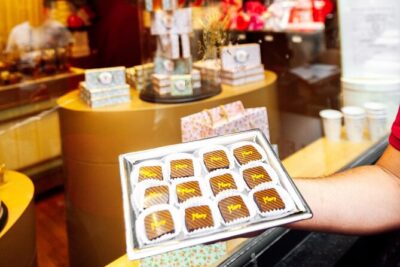
Historical Walking Tour with Chocolate & Waffle Tasting
Read our review →
Brussels Walking and Tasting Tour (Beers,Chocolates&Fries/Waffle)
Read our review →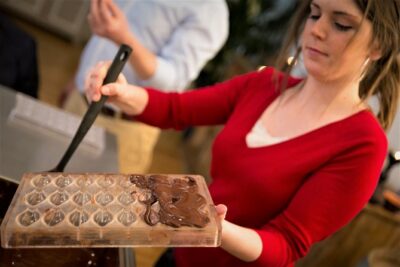


A Morning in Paris Food Tour: Croissants, Baguettes & Chocolate
Read our review →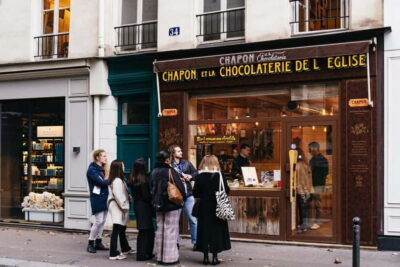
Saint-Germain: Gourmet Chocolate & Pastry Walking Food Tour
Read our review →
Dresden: Guided Walking Tour and Chocolate Museum Ticket
Read our review →
Vancouver Food Tour with 6 Tastings of Sushi, Chocolate, and more
Read our review →Browse the lists this tour appears in