

REVIEW · NAIROBI
Kibera Chocolate City Tour
Kibera Chocolate City Tour takes you beyond Nairobi’s usual sights and into a neighborhood best understood through the people who live there. A local guide such as Collins, who grew up in Kibera, leads you through markets, workshops, a school, and streets shaped by daily work and community life.
I like the direct contact with local residents and the chance to visit places with a real purpose, especially Agape Hope’s school and library. I also like that the tour tries to show more than hardship, including enterprise, creativity, education, and neighborhood pride.
The main consideration is that this is a walk through a densely populated area facing serious challenges. You need to approach it with respect, listen carefully, and understand that the experience may feel confronting at times.
Key points about the Kibera Chocolate City Tour

- Local guides with personal roots: Collins is described as having grown up in Kibera, while Allan and Rama have also led tours.
- A working neighborhood, not a staged attraction: The route includes Toi Market, local businesses, homes, schools, workshops, and the railway.
- Community projects are part of the visit: You stop at the Agape Hope school and library, where children receive education and have space to play.
- A compact Nairobi experience: The walk takes about two hours, with the full activity listed at roughly two to three hours.
- Good value at $22: The price pays for a locally led experience with several stops, rather than a quick drive-by view.
- Small details matter: The tour can be arranged around private needs or particular subjects and places if you contact the provider.
A local introduction to Kibera

The tour begins at Kibera Town Centre, at Kamukunji Grounds. This gives you a clear starting point before the walk moves into the neighborhood itself.
Kibera is often reduced to a single label. That does not tell you much about how people work, raise children, trade, study, and support one another. A guide from the area can add the context that a visitor walking alone would miss.
Collins is the guide most often associated with this experience. The available guide names also include Allan and Rama. Their connection to Kibera matters because the tour is not built only around distant observation. You hear about the area from people who know its streets and community relationships firsthand.
That personal link can also make the tour more flexible. You are encouraged to ask about daily life, local challenges, education, small businesses, and plans for the future. If you have a particular interest, the provider says private tours and specific stops can be arranged.
The mood is not simply cheerful, and it should not be. Kibera faces poverty and limited services, and the tour aims to explain those conditions without presenting residents as helpless. At the same time, you may see children playing, businesses operating, and people going about ordinary routines. That balance is important.
More City Tours in the world:
- Zurich: City Tour, Cruise, and Lindt Home of Chocolate Visit
★ 4.5 · 4,624 reviews - Puerto Plata Private City Tour with Mount Isabel & Rum &Chocolate
★ 4.5 · 123 reviews - Mexico City: MUCHO Museum of Chocolate Entrance Ticket
★ 4.6 · 91 reviews
Toi Market and the business of daily life
Toi Market is one of the first major stops. It is a useful place to begin because it shows Kibera as a place of commerce, not just a place described by its problems.
The market contains many local businesses. You may get a sense of how people earn money, serve neighbors, and keep household life going in a crowded urban setting. The tour does not treat the market as a backdrop. Your guide explains how it fits into the wider community.
This is also where a guide’s local knowledge helps. A visitor may see rows of stalls and movement, but a local guide can explain what kinds of work take place there and how residents rely on the market. The point is not to collect dramatic images. The point is to understand the systems that make the neighborhood function.
Keep your focus on people rather than on taking pictures. The activity is built around respectful interaction, and the provider’s stated aim is to challenge stereotypes. That means listening, asking polite questions, and allowing your guide to explain when photography or closer contact is appropriate.
Victoria Bones Craftshop and local creativity
The next stop is Victoria Bones Craftshop. This adds a creative and practical side to the visit.
A craft workshop helps you see another way residents use skill and imagination to make a living. It also gives the walk a useful change of pace. After seeing the market, you encounter a place where work is tied to making, design, and sales.
The stop may be particularly useful if you want to support a local enterprise rather than only observe. The tour description identifies it as a visit, but it does not promise that purchases are required or that specific products will be available on every day. Treat it as a chance to learn about the work first.
This is one of the tour’s stronger features because it keeps Kibera from being presented only through need. You see people building livelihoods and creating products, even in difficult conditions. That does not erase the challenges, but it gives you a fuller picture.
Agape Hope school and library

The visit to the school and library connected with Agape Hope gives the tour its clearest community focus. Here, children receive education and have a place to play with friends.
This stop helps you understand why local organizations matter. Education is not an abstract topic when you are shown a real school and library serving children in the neighborhood. You can ask your guide about the project and its role in the community.
Several details make this stop worth your time. The guides are connected to efforts to improve local conditions, and the school is presented as more than a quick photo stop. It is part of the work being done to give children support and opportunity.
You may find the children’s energy striking, especially because the surrounding conditions can be difficult. It is important to keep that response grounded. Avoid turning children into symbols of hardship or inspiration. They are children at school, and the respectful choice is to follow the guide’s direction about interaction and photography.
The school also explains why the tour can feel personal. You are not only hearing that community projects exist. You are seeing one of them and learning how it fits into everyday life.
A few more chocolate tours around the world worth a look
- Lindt Home of Chocolate Museum Entry Ticket
★ 4.7 · 9,329 reviews - Choco-Story Brussels: Chocolate Museum Entrance with Tasting
★ 4.3 · 4,883 reviews - The Chocolatarium Chocolate Tour Experience in Edinburgh
★ 5.0 · 4,322 reviews - Award-Winning Geneva Chocolate &Old Town Tour with Boat Ride (3h)
★ 5.0 · 3,721 reviews
The railway and a broader view of Kibera

The final part of the walk follows the historic railway. This gives you a wider sense of the area after the closer stops in the market and community projects.
The railway is described as historical, so your guide can place it within Kibera’s past and present. It also offers a chance to step back and consider how the neighborhood connects with Nairobi as a whole.
This part of the walk may feel less intimate than the market or school, but it has value. A good neighborhood tour needs both close details and a wider frame. You begin with people and places, then finish with a broader view of how Kibera has developed.
The route returns to the meeting point at Kibera Town Centre. The core walk is listed as two hours, while the full activity is described as lasting about two to three hours. Allow the longer window so you are not rushing to another appointment.
What $22 gets you

At $22 per person, this is a reasonably priced way to spend part of a day in Nairobi. You are paying for a locally led walking experience, several community stops, and an explanation of Kibera that you would not get from a passing vehicle.
The value is strongest if you want conversation and context. This is not a sightseeing loop with a long list of monuments. Its worth comes from the guide, access to local projects, and the chance to understand how people work and live in the area.
It also compares well with the length. Two to three hours is long enough to make the trip meaningful without taking over your day. You can pair it with other Nairobi activities, though you should leave some time around it because walking pace and conversations may vary.
The group limit is 30 people. That is not a tiny private group, so the experience can feel less personal if the maximum group size is reached. Still, the provider allows private arrangements and requests for particular subjects or places, which may be better for families, students, or anyone seeking a slower discussion.
The mobile ticket is convenient. Confirmation is sent at booking, and the meeting point is near public transportation. The activity begins and ends at Kibera Town Centre, so you need to plan your own way to Kamukunji Grounds unless you arrange something separately.
How to prepare for the walk

You do not need specialist equipment, but practical preparation will improve the experience. Wear shoes suitable for walking and be ready for changing ground conditions. The activity requires good weather, and the provider may cancel if conditions are poor.
Keep your clothing and behavior respectful. This is someone’s home and workplace, not a set built for visitors. Ask before photographing people, especially children, and let the guide introduce you to local residents.
The tour welcomes service animals, and most people can take part. The information does not give detailed accessibility specifications, so contact the provider directly if you have mobility concerns or need a particular route.
The experience is available Monday through Sunday, from 8:00 in the morning to 6:00 in the evening, during the stated operating period. Since the walking portion is about two hours, confirm your preferred start time when booking.
The activity is often booked around 17 days ahead. That does not mean you cannot book close to your visit, but planning ahead is sensible if you need a private tour or want to request particular topics.
The right attitude for a Kibera visit
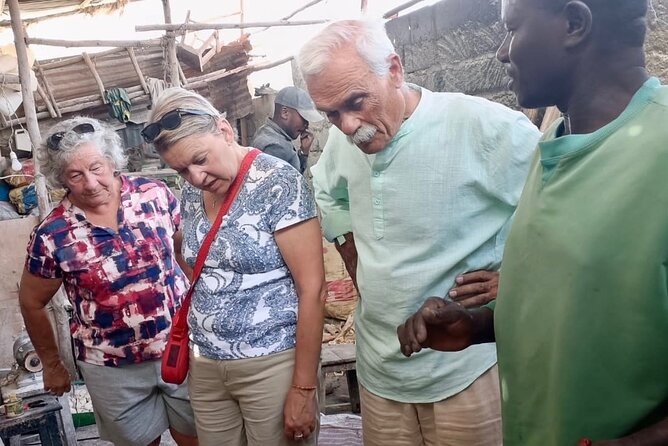
A tour of Kibera should not be treated as poverty tourism. The difference comes partly from the operator and partly from you.
Agape Hope for Kibera Tours presents the experience as a way to challenge stereotypes and show resilience, creativity, and community spirit. That is a sound approach, but you still control how you behave. Listen more than you speak. Ask questions without treating residents as case studies. Do not assume that a short visit gives you a complete picture of life in Kibera.
The strongest parts of the experience are the human connections. You may speak with people involved in local business, see the school and library, and learn how the guides view the neighborhood’s future. Collins is described as someone who regards people in the community as family and works to help those in need. That connection gives the tour a clear social purpose.
At the same time, do not expect the walk to solve the problems it introduces. A visit can give you context, support local work, and challenge your assumptions. It cannot replace long-term community-led action.
Who should book this tour?
I would recommend it to you if you want to understand Nairobi through a local community rather than through major attractions alone. It suits curious visitors who are willing to walk, listen, and handle difficult subjects with care.
It may also suit families with older children, students, photographers who follow strict ethical standards, and people interested in education, small business, and community projects. The option to request specific interests makes it useful for a more focused visit.
I would think twice if you want a polished attraction, a quiet outing, or a tour with little emotional weight. Kibera is a real neighborhood with real pressures. You may leave encouraged by the work taking place there, but you may also find parts of the visit uncomfortable.
The tour is recommended by all of the published participants, with a 5 rating based on 13 reviews. The praise centers on the guides, especially Collins, the personal connection to the area, the feeling of being welcomed, and the chance to visit the school and meet local people. Those are the parts I would value most.
Should you book the Kibera Chocolate City Tour?
Book it if you want a locally led, human-scale look at Kibera and you are prepared to approach the visit with humility. The $22 price is fair for a two-hour walk that includes Toi Market, Victoria Bones Craftshop, Agape Hope’s school and library, and the railway.
The experience is at its best when you treat it as a conversation and a lesson, not as a spectacle. If that sounds right for you, this is a thoughtful use of a morning or afternoon in Nairobi. If you prefer conventional sightseeing, choose another activity instead.
Free cancellation is available up to 24 hours before the start time. Within 24 hours, the payment is not refunded, and changes are not accepted. If poor weather causes the provider to cancel, you are offered another date or a full refund.
FAQ
Where does the Kibera Chocolate City Tour begin?
It begins at Kibera Town Centre, at Kamukunji Grounds in Nairobi, Kenya.
Where does the tour end?
The activity ends back at the meeting point at Kibera Town Centre.
How long does the experience last?
The main walk is listed as two hours. The overall activity is described as lasting approximately two to three hours.
What places are visited?
The route includes Toi Market, Victoria Bones Craftshop, an Agape Hope school and library, and the historical railway.
How much does the tour cost?
The listed price is $22 per person.
Who leads the tour?
The experience is led by local guides. Collins is named as a guide, and Allan and Rama are also associated with leading the tour.
Is a mobile ticket available?
Yes. The experience includes a mobile ticket.
How many people can join?
The maximum group size is 30 people.
Can I request a private tour or specific stops?
Yes. The provider says the tour can be adjusted for private groups or particular topics and places of interest if you contact them.
What is the cancellation policy?
You can cancel at least 24 hours before the start time for a full refund. Cancellations or changes made within 24 hours are not accepted and are not refunded. If poor weather causes the experience to be canceled, you are offered a different date or a full refund.
Just added around the world
- Lindt Chocolate Museum with Cruise Transfer from Zurich★ 4.6 · 7 reviews
- Zurich Open-top Tour and Chocolate and Cheese Countryside★ 3.5 · 11 reviews
- Zurich: Chocolate Tasting and Walking Tour with a Local★ 4.2 · 13 reviews
- York: Introduction to Chocolate Making Experience★ 4.9 · 10 reviews
- Zagreb: Lake Bled and Ljubljana Day Tour with Chocolate Gift★ 5.0 · 26 reviews
- Private Wine and Chocolate Tasting Experience★ 4.4 · 3 reviews
- Wine and Chocolate experience★ 4.6 · 3 reviews
- Yarra Valley: Wine and Chocolate tasting tour.★ 5.0 · 5 reviews
Nairobi Chocolate Tours, compared.



Kibera Slum (The Chocolate city)Guided Walking Tour
Read our review →
Browse the lists this tour appears in