
REVIEW · PORTUGAL
Tavira City & Chocolate
Tavira’s best surprise may be waiting near the end of this small-group tuk-tuk tour: an appointment-only stop at iBelle, an artisanal chocolate atelier where you see chocolate being made and taste the finished sweets. Before that, you cover a generous slice of Tavira, from salt pans and churches to the castle and Roman Bridge area.
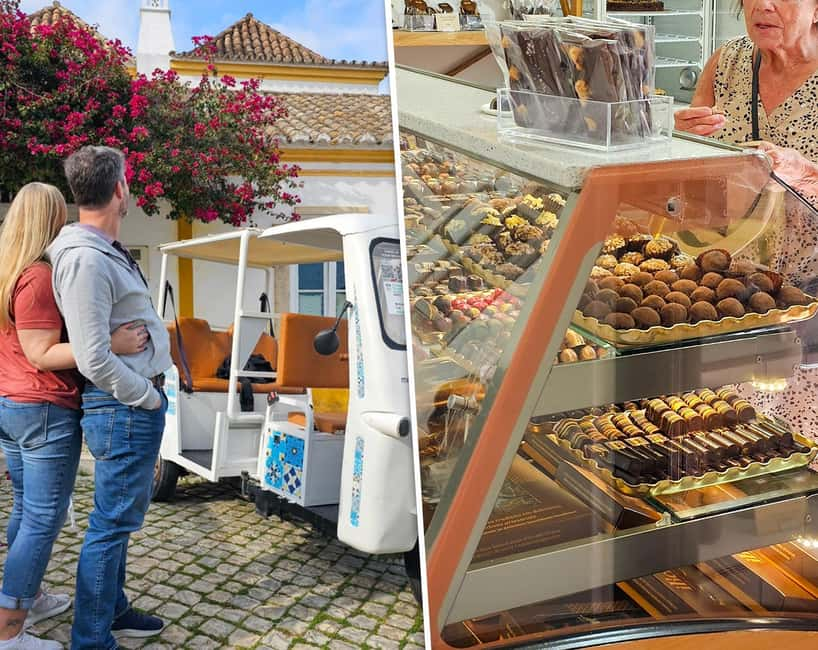
I like the efficient route and the personal scale. With room for only five people, you can hear the guide and ask questions without shouting over a crowd. I also like the mix of sights: salt pans, churches, military buildings, and chocolate give you a broader feel for Tavira than a quick ride through the central streets.
The trade-off is time. At 1.5 hours, the tour gives you an excellent overview rather than long visits inside each church or landmark. The chocolate stop can be brief, too, so book this for an introduction and tasting, not an extended factory workshop.
Key details at a glance
- The chocolate stop requires advance planning: Maria’s Tuk Tuk needs an appointment to make sure the iBelle atelier visit is available.
- The route begins beyond the central square: You start at R. Gonçalo Velho 7 and first head toward Alto de São Brás and the salt pans.
- You see many of Tavira’s major religious sites: The route passes São Sebastião, São Francisco, São José, Santiago, Santa Maria, and Misericórdia churches.
- The group is limited to five people: This keeps the tuk-tuk ride intimate and makes it easier to follow the guide.
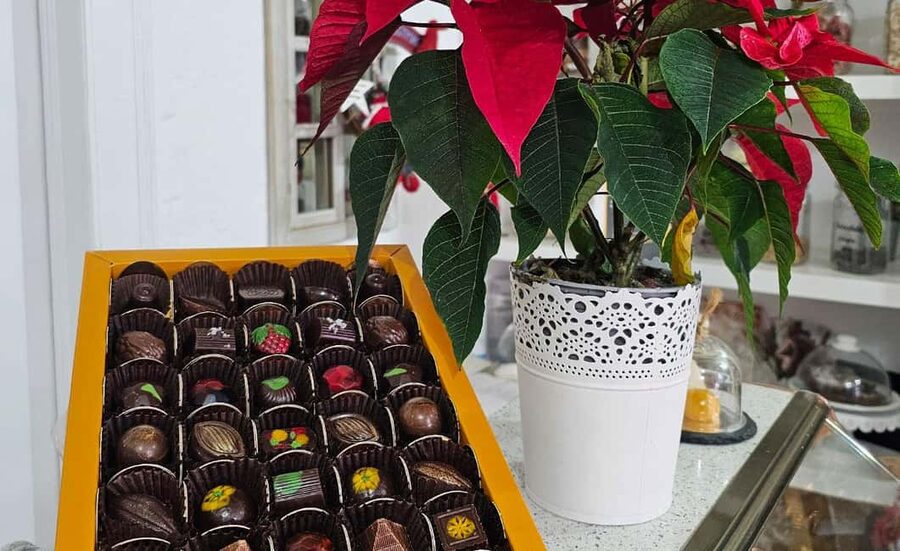
- The chocolate is a highlight for many visitors: The tasting is short, but the atelier makes chocolates by hand and uses locally sourced ingredients in some products.
- The final stop is near Tavira’s Roman Bridge: The tuk-tuk returns to the Maria’s Tuk Tuk stop near Ponte Romana de Tavira.
Why this tuk-tuk route works well in Tavira
Tavira rewards slow wandering, but its sights are spread across both sides of the Gilão River and up toward the castle. A tuk-tuk helps you cover ground without turning the first hour of your visit into a search for the next hill or church entrance.
This is not a transfer service dressed up as sightseeing. The route has a clear purpose: give you a quick city orientation, point out a series of important buildings, and add a distinctly local food stop. I especially like that the tour does not focus only on the postcard center. The salt pans, convent, barracks, and churches help explain how Tavira developed.
The group limit matters. Five participants is small enough for a conversational ride, and the guide can adjust explanations or answer questions. Lori guided at least one recent tour and earned warm praise for the way she presented Tavira. Other tours may have a different guide, but Maria’s Tuk Tuk offers the service in English, Portuguese, Spanish, and French.
The price is $57 per person. That is not the cheapest way to see Tavira, especially for a short 1.5-hour activity, but the price includes both the city tour and the chocolate factory visit with tasting. I see the value most clearly for first-time visitors who want orientation, or for anyone with limited mobility or limited time who would rather not piece together the route alone.
More City Tours in the world:
- Zurich: City Tour, Cruise, and Lindt Home of Chocolate Visit
★ 4.5 · 4,624 reviews - Puerto Plata Private City Tour with Mount Isabel & Rum &Chocolate
★ 4.5 · 123 reviews - Mexico City: MUCHO Museum of Chocolate Entrance Ticket
★ 4.6 · 91 reviews
From Alto de São Brás to Tavira’s salt pans
The tour starts at R. Gonçalo Velho 7, then heads toward Alto de São Brás. This opening section takes you away from the main square and toward the salt pans, giving you a different view of Tavira before the old center takes over.
The salt pans are a useful first stop because they connect the town to its working surroundings. This is not just a pretty viewpoint. Salt production remains part of the area’s identity, and you may have the chance to purchase salt from the factory, depending on what is available during the visit.
I would pay attention here even if your main goal is chocolate. The salt connection returns later in the tasting, with a salted caramel chocolate singled out as a favorite. That small link gives the route more character than a standard city ride followed by an unrelated snack.
The exact amount of time at the salt pans is not specified, so do not expect a long independent visit. The tuk-tuk format is best for seeing the area and getting an explanation before moving on.
Convento das Bernardas and the first churches
After the salt pans, the route passes the Convento das Bernardas and stops at Igreja de São Sebastião. These early stops set the tone for a tour that treats Tavira as a town of religious buildings, not simply a collection of attractive streets.
The itinerary includes several churches, but the tour description does not promise interior visits to every one. Think of these as guided exterior stops and points of orientation unless your guide tells you that a particular building is open for entry.
That distinction matters. If you want to study tilework, altars, or artwork inside each church, you will need extra time before or after the tour. The benefit here is breadth. In a short period, you learn where the major churches are and why they matter to the town’s historic center.
The ride then passes the military barracks and continues to Igreja de São Francisco and Igreja de São José. The barracks add a civic and military note to a route otherwise heavy on churches. I like this variety because it keeps the tour from becoming a procession of similar façades.
A quick stop at iBelle’s chocolate atelier
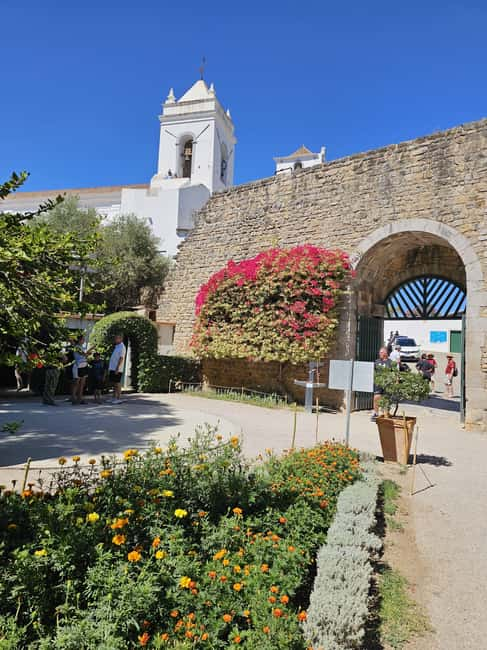
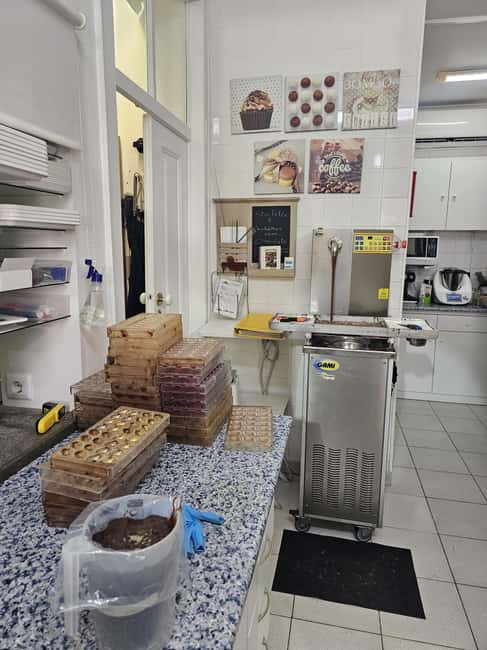
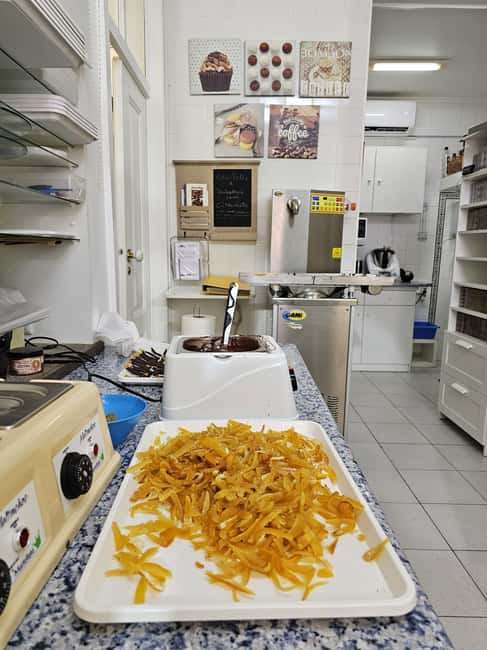
The chocolate visit is the tour’s distinctive feature. At iBelle, you see chocolate made by an artisanal method, then sample the results. The tasting is included in the price, and the atelier also offers chocolates for purchase.
You should set your expectations correctly. This is a factory visit and tasting, not a long hands-on class. One visitor described the stop as quick and focused on tasting, while still finding the chocolates delicious. That sounds like the right way to frame it: a compact look at production followed by a sweet sample.
The stop has more appeal than a generic candy shop because you see the making process. The chocolates include locally sourced ingredients, and the salted caramel variety has earned special attention. If you enjoy the tasting, you can buy more to take away, though purchases beyond the included tasting are not part of the tour price.
The chocolate stop is also where advance appointment planning matters most. Maria’s Tuk Tuk needs to arrange availability with the atelier, so you should reserve ahead rather than assume you can join at the last minute.
For me, this food element justifies the tour’s unusual pairing. Tavira sightseeing can easily become a list of churches and viewpoints. A local chocolate producer gives the route a sensory finish and a small connection to regional ingredients.
A few more chocolate tours around the world worth a look
- Lindt Home of Chocolate Museum Entry Ticket
★ 4.7 · 9,329 reviews - Choco-Story Brussels: Chocolate Museum Entrance with Tasting
★ 4.3 · 4,883 reviews - The Chocolatarium Chocolate Tour Experience in Edinburgh
★ 5.0 · 4,322 reviews - Award-Winning Geneva Chocolate &Old Town Tour with Boat Ride (3h)
★ 5.0 · 3,721 reviews
Praça da República and the historic center
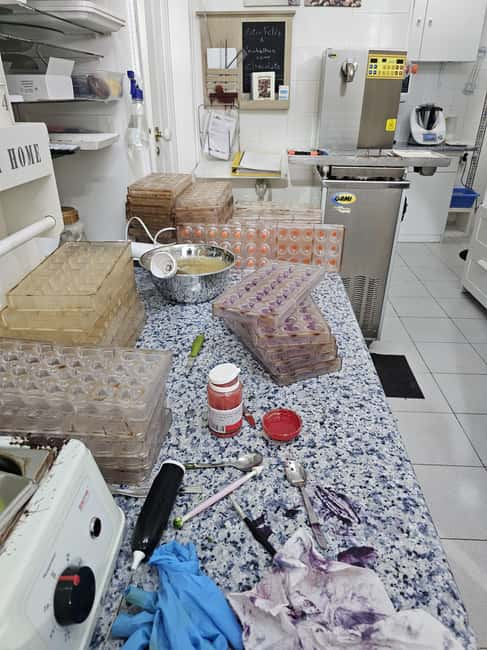
After iBelle, the tuk-tuk moves through Praça da República, Tavira’s central public square, then into the historic area. This is the section most visitors expect when they picture Tavira: traditional streets, old buildings, and the main pedestrian flow around the center.
The order is smart. Seeing the salt pans and less central sights first means you arrive in the square with some context. You are not just looking at a pretty plaza. You have already seen parts of the town’s working and religious life, so the center becomes one part of a larger picture.
The tour then passes the Convento da Graça and Igreja de Santiago. These stops continue the church-heavy route, but the guide’s commentary can help you separate one building from the next. Write down names if you plan to return on foot, since Tavira offers enough historic sites to blur together after a while.
The tuk-tuk is useful here because some central roads and lanes are easier to view from a seated vehicle than from a rushed walking route. At the same time, you do not get the same freedom to pause, enter shops, or set your own pace. This is a guided overview, not a self-directed stroll.
Santa Maria, Misericórdia, and Tavira Castle
The route continues to Igreja de Santa Maria and Igreja da Misericórdia before stopping at Castelo de Tavira. This is the most concentrated historic stretch of the experience.
Santa Maria and Misericórdia are among the key religious landmarks named on the route. The guide points them out as part of Tavira’s historic fabric, while the castle gives the tour a stronger visual finish and a chance to look across the town.
The castle stop is especially useful for getting your bearings. From there, you can understand how the older part of Tavira sits around the river and central streets. The stop is described as part of the route, but the tour information does not specify how much time you spend exploring inside the castle grounds. If you want a careful castle visit, plan to return separately.
That is the recurring theme here: the tuk-tuk shows you where to go. It does not replace a full visit to every site. I would use the tour to mark the churches and castle I want to revisit on foot, then spend the rest of my day choosing two or three rather than trying to see everything.
Finishing near the Roman Bridge
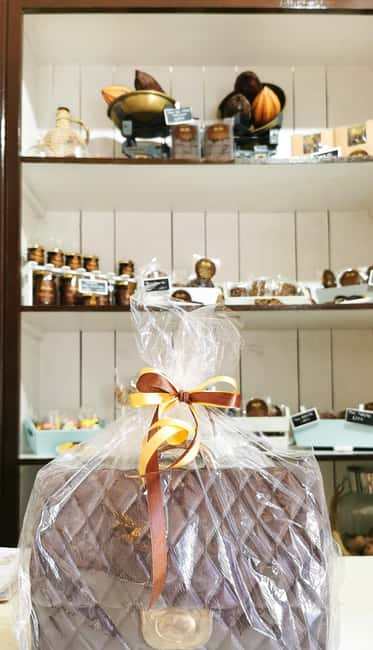
The tour ends back at Maria’s Tuk Tuk stop near Ponte Romana de Tavira. This is a practical finish because the Roman Bridge area is close to the central sights, making it easy to continue exploring after the ride.
The bridge is a useful landmark for the rest of your day. You can use the end point as a base for walking around the historic center, returning to a church, finding a café, or visiting the locations the guide identified.
I like tours that finish somewhere useful rather than at an isolated pickup point. Here, the end location keeps you in the middle of Tavira’s main historic area.
What the 1.5-hour duration really means
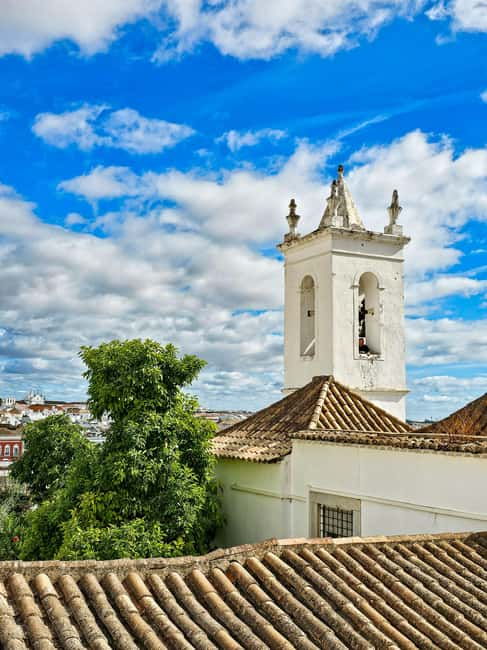
Ninety minutes is enough for a broad introduction, but not enough for detailed visits at every stop. The itinerary includes a large number of locations, so much of the route is necessarily a pass-by, photo stop, or short explanation.
That pace suits you if you want to get your bearings early in a Tavira stay. It is also a sensible choice if someone in your group would struggle with a longer walking tour. The wheelchair-accessible format is an important practical advantage, though you should still confirm any personal access needs when booking.
The short format may disappoint you if you want long church visits, extended castle time, or a detailed chocolate-making demonstration. The same is true if your ideal food tour includes several tastings. Here, chocolate is one focused stop, not a full food crawl.
Group size, languages, and practical value
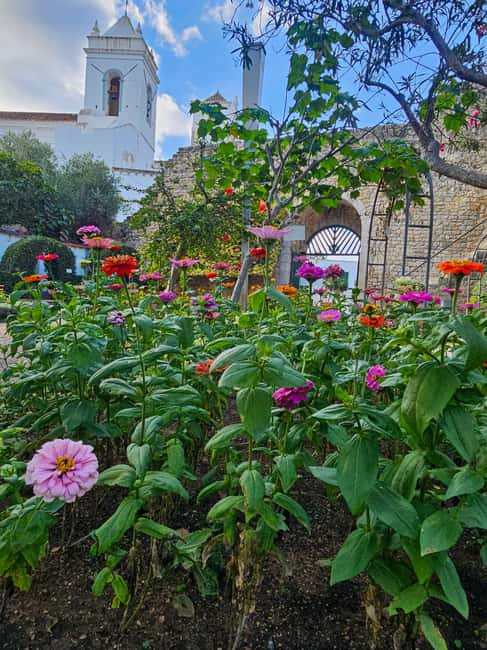
The group is limited to five participants. That is one of the strongest features of the experience because it gives the guide room to speak naturally and respond to questions.
Tours are offered in English, Portuguese, Spanish, and French. If you are booking for a mixed-language group, check the available departure language before confirming, since the supplied information lists the languages but does not guarantee every language at every starting time.
The tour costs $57 per person and lasts 1.5 hours. I would call that fair rather than cheap. You are paying for a private-feeling small group, a guided route through much of Tavira, and a scheduled stop at an artisanal chocolate atelier. The value drops if you only want a quick ride around the square, since much of Tavira’s center is easy to explore independently.
The reserve-now-and-pay-later option gives you some flexibility, and cancellation is free up to 24 hours before the activity for a full refund. Those terms are useful if your Algarve plans are still shifting.
Who should book this Tavira experience?
I would recommend it most strongly to:
- First-time visitors who want a quick overview before exploring alone
- Couples or families who prefer a small group over a large bus
- Chocolate lovers who want a tasting tied to a real production visit
- Visitors who want to see the salt pans and outer sights without a long walk
- People with limited time in Tavira
- Anyone who prefers a guide speaking English, Portuguese, Spanish, or French
I would choose something else if your priority is a long, detailed church tour or a hands-on chocolate workshop. The experience gives you a smart introduction, but it leaves the deeper visits for you to make later.
Should you book Tavira City and Chocolate?
Book it if you want Tavira explained in a compact, comfortable way and like the idea of combining historic sights with a local chocolate stop. The small group, broad route, multilingual guiding, and castle finish make it more useful than a simple tuk-tuk loop around the main square.
Go in knowing that the chocolate tasting may be brief and that most landmarks are viewed as part of a moving city tour. For many people, that balance works: you see salt pans, churches, barracks, convents, the center, and castle in one outing, then sample artisanal chocolate before returning near the Roman Bridge.
At $57, I would book this early if the iBelle stop is important to you, since the appointment must be arranged in advance. After the tour, use the guide’s route as a personal checklist and return on foot to the church or castle that caught your attention.
FAQ
How long does the Tavira City and Chocolate tour last?
The tour lasts 1.5 hours.
Where does the tour start?
It starts at R. Gonçalo Velho 7 in Tavira.
Where does the tour finish?
It returns to R. Gonçalo Velho 7, near the Ponte Romana de Tavira and Maria’s Tuk Tuk stop.
What is included in the experience?
The price includes the Tavira city tour and the visit to the artisanal chocolate factory with a chocolate tasting.
Does the tour visit a real chocolate factory?
Yes. The route includes iBelle’s artisanal chocolate atelier, where you see chocolate made by an artisanal method and taste the results.
Do I need to arrange the chocolate visit in advance?
Yes. An appointment is needed to ensure availability at the iBelle artisanal chocolate factory.
How many people can join the tuk-tuk tour?
The tour is limited to five participants.
What languages are available?
The live guide service is available in English, Portuguese, Spanish, and French.
Is the tour wheelchair accessible?
Yes, the experience is listed as wheelchair accessible.
Just added around the world
- Zurich: Chocolate Tasting and Walking Tour with a Local★ 4.2 · 13 reviews
- Lindt Chocolate Museum with Cruise Transfer from Zurich★ 4.6 · 7 reviews
- Zurich Open-top Tour and Chocolate and Cheese Countryside★ 3.5 · 11 reviews
- York: Introduction to Chocolate Making Experience★ 4.9 · 10 reviews
- Zagreb: Lake Bled and Ljubljana Day Tour with Chocolate Gift★ 5.0 · 26 reviews
- Private Wine and Chocolate Tasting Experience★ 4.4 · 3 reviews
- Wine and Chocolate experience★ 4.6 · 3 reviews
- Yarra Valley: Wine and Chocolate tasting tour.★ 5.0 · 5 reviews
Portugal Chocolate Tours, compared.
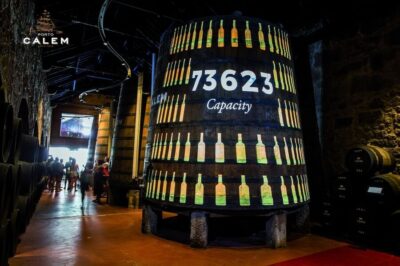
Cálem Cellar with Chocolate, Cheese, and Wine Tasting
Read our review →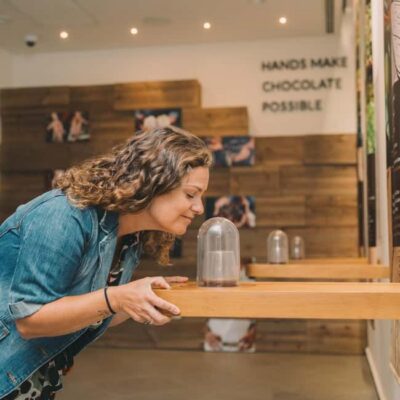
Chocolate Museum – Unwrap the Secrets of Chocolate
Read our review →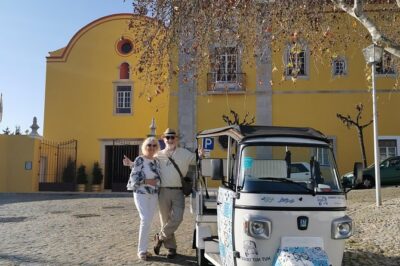
Tavira Tuk Tuk Tour – Chocolate Tour – Tavira City & Chocolate
Read our review →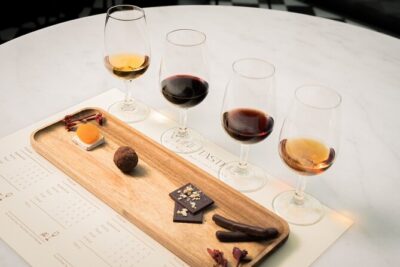
Porto Best of the Best Port Tasting with Artisan Chocolates
Read our review →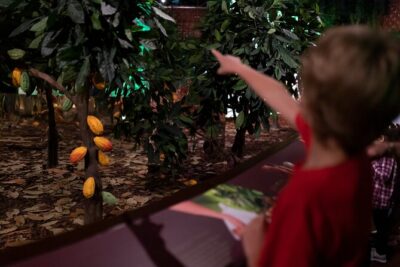
Chocolate Museum – Chocolate’s Delicious Journey + Tasting
Read our review →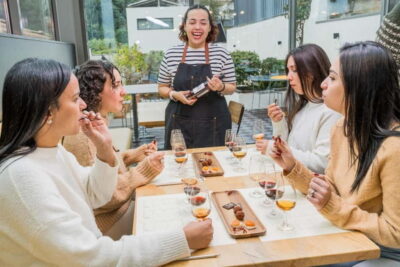
Porto ‘Best of the Best’ Port Tasting and Artisan Chocolates
Read our review →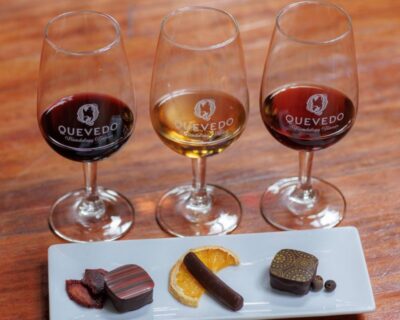

Browse the lists this tour appears in