
REVIEW · CHOCOLATE MAKING WORKSHOPS
Project Chocolat Bean to Bar Experience from Hotel Chocolat
The best part of this St Lucia experience is getting your hands on the chocolate instead of simply watching a demonstration. At Project Chocolat, you taste fresh cacao pulp, try chocolate made with beans from the Rabot Estate, then work roasted cacao into a bar of your own. Nathan, Marina, and John are among the guides praised for making the lesson lively and clear.
I like the short format, which slips neatly into a busy island day, and the mix of tasting, history, and hands-on work. I also like that you leave with a real souvenir, not just a few samples. The main caution is that the actual bar-making can take less than half the advertised hour, and some of the remaining time may involve waiting or browsing.
Key points to know before you book
- Fresh cacao pulp comes first: You taste the fruit straight from a newly opened pod before learning how the beans become chocolate.
- You make a bar by hand: The work is simple but physical, and you may need a fair bit of arm strength to reach the right consistency.
- The guides shape the experience: Nathan, Marina, and John are noted for humor, clear explanations, and friendly help.
- It fits a tight schedule: The Bean to Bar session lasts about one hour, with the chance to spend more time at Project Chocolat afterward.
- Lunch costs extra: Food can be bought on arrival, but it is not part of the experience price.
- Plan your ride carefully: Transportation is not included, and late arrival can mean missing part of the session.
From cacao pod to chocolate bar in one hour
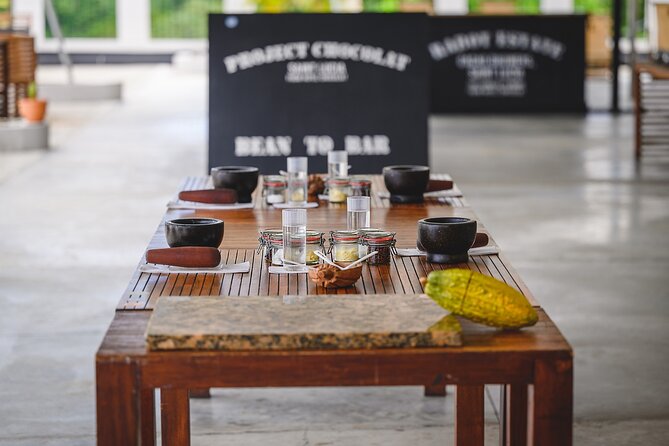
Project Chocolat’s Bean to Bar Experience gives you a compact look at how cacao changes from fruit into the chocolate you know. It is not a full farm tour or a long factory visit. Instead, it focuses on tasting, explanation, and the satisfying business of making a small bar yourself.
The session begins with cacao in its natural form. You taste the soft pulp from a freshly cut pod, which is a useful reminder that a chocolate bar does not begin with something brown and sweet. The fruit has its own flavor and texture, and this first taste helps set up the rest of the lesson.
You also taste Rabot Estate chocolate, made with cacao connected to St Lucia. That local element matters. This is not simply a generic chocolate workshop placed in the Caribbean. The session links the finished product to the island and to Hotel Chocolat’s Project Chocolat estate.
From there, the guide explains the stages that turn cacao into chocolate. You learn about harvesting the pulp, handling the beans, roasting them, and preparing the chocolate mixture. The exact level of detail can vary with the pace of the group, but the aim is to show the path from plant to finished treat.
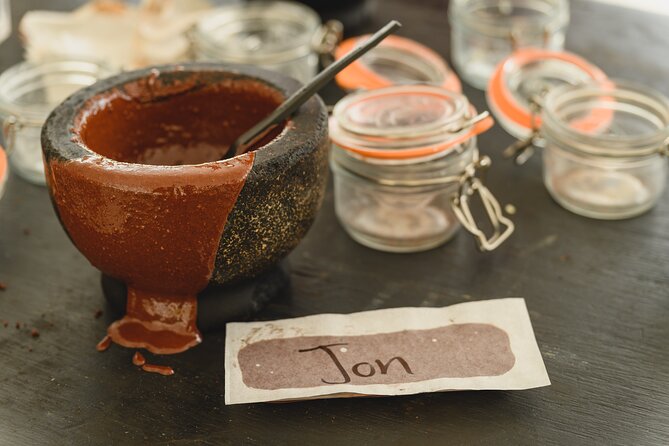
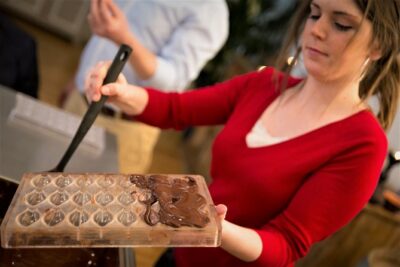
The final stage is hands-on. You work the chocolate mixture and prepare your own bar to take away. It is easy to understand the process in theory. It is more memorable when your own arms have done some of the work.
More Chocolate Making Workshops in the world:
- Vienna: Chocolate Workshop in Chocolate Museum w/ Tasting
★ 4.5 · 1,802 reviews - Brussels: Belgian Chocolate Making Workshop with Tastings
★ 4.7 · 1,629 reviews - Brussels: Chocolate Museum Visit with Workshop
★ 4.6 · 1,474 reviews
What the chocolate-making session is really like
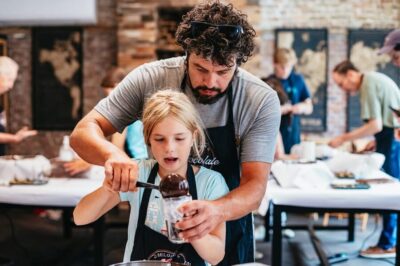
The practical part is straightforward and family-friendly for children aged eight and older. You are not expected to have cooking skills. The guides set up the stations and explain what to do, then help as you work.
Do not mistake easy instructions for effortless work. Several people found that getting the chocolate to the right consistency required real elbow strength. That physical element adds to the fun, but it is worth knowing if you are expecting a relaxed tasting session with almost no participation.
The best part is the contrast between the simple task and the larger lesson. You are handling ingredients in a small group, yet the activity points toward the much longer process behind commercial chocolate. By the end, you have a better sense of why chocolate production takes time and care.
The session can feel social, especially when the group is full. The stated maximum is 50 people, so the atmosphere may range from a small class to a fairly large gathering. During a quiet period, the class can be much smaller. One couple described having what felt like a private one-to-one lesson, which shows how different the experience may feel depending on the day.
Guides who make the lesson work
The staff are a major part of the appeal. Nathan is praised for being funny, welcoming, and easy to listen to. Marina is noted for combining useful information with a lively manner, while John receives credit for guiding the walking portion and answering questions clearly.
That matters because a chocolate workshop can quickly become a dull list of steps. A good guide turns each stage into a story about the crop, the work, and the finished food. The strongest sessions here seem to balance information with humor rather than treating the subject like a formal lecture.
You should still keep your expectations sensible. This is a one-hour activity, not a specialist course in chocolate production. Some people wanted more detail about the estate, the cacao plant, and the manufacturing process. If you want to see more of the farming and production side, Project Chocolat offers a separate Tree to Bar tour, which is not included here.
Tasting cacao pulp and Rabot Estate chocolate
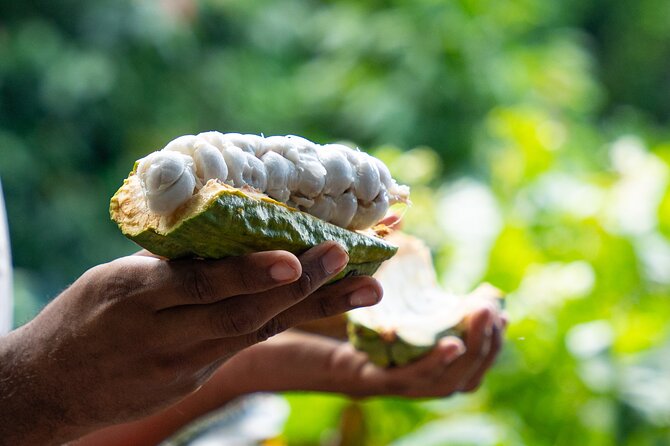
The tasting portion gives the experience its sense of place. Fresh cacao pulp is unlike the finished chocolate most of us know, and tasting it helps you understand that the fruit itself is part of the starting point.
The Rabot Estate chocolate provides a second useful comparison. You can taste chocolate tied to St Lucia and then work with the ingredients yourself. That progression makes the activity feel more grounded than a workshop built around packaged chocolate alone.
Some people found the chocolate tasted unusual at first. That is not necessarily a problem. You are dealing with cacao in different forms, and your palate may need a moment to adjust. The point is to notice the changes from fresh fruit to roasted bean to finished chocolate.
The food available around Project Chocolat can add to the visit. Cacao-infused dishes are served on site, and lunch may be purchased separately. The quality and organization of the meal service have not been as consistent as the chocolate class, so I would treat lunch as a separate decision rather than part of the tour’s value.
More Drinking Tours in the world:
- Hungry Mary’s Famous Beer and Chocolate Tour in Brussels
★ 5.0 · 2,258 reviews - Epic Yarra Valley Wine Tour + Lunch, Chocolate & Gin/Beer Option
★ 5.0 · 1,819 reviews - Brussels Chocolate Beer Waffle and Belgian Whiskey All-in-One (Small Group) Tour
★ 5.0 · 551 reviews - Project Chocolat Tree to Bar Tour at Hotel Chocolat Saint Lucia
★ 4.5 · 501 reviews
Project Chocolat, the setting, and time between activities
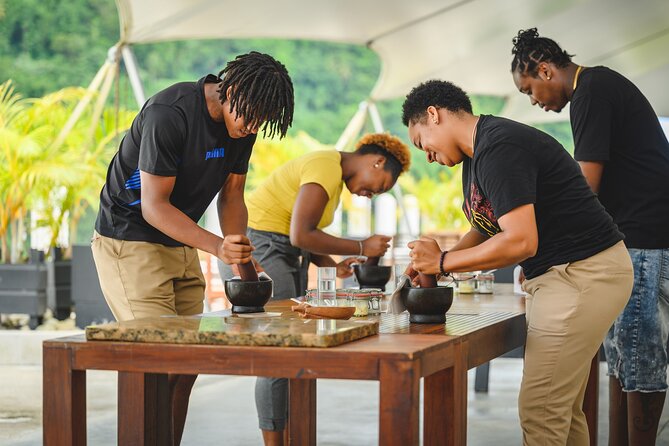
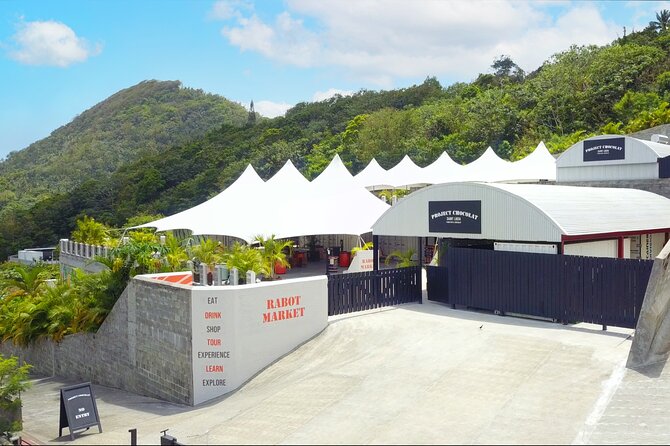
The experience takes place at Project Chocolat on an unnamed road in Malgretoute, St Lucia. The grounds are described as small but attractive, with shops and areas where you can look around after the session.
You may have time to browse chocolate, gifts, drinks, body products, soap, and other items. The shop gives you a chance to buy more than the bar you make, though some visitors felt the packaged chocolate was expensive. A 70-gram bar priced at $10 was specifically considered high, so keep that in mind if you plan to shop.
The waiting time is the weak point for some schedules. Although the experience is advertised at about one hour, the active chocolate-making portion may take only around 20 minutes. The rest can include the explanation, setup, tasting, or time spent waiting before and after the class.
That makes the timing important. If you are fitting this between a cruise stop, meal, beach visit, or another scheduled activity, do not assume you can arrive at the last minute and leave exactly one hour later. You must arrive with good time, and transportation from your destination is not included.
The setting can still work well in wet weather. The workshop takes place under a large tent, so a rainy day may not ruin the activity. The experience does require suitable weather, though, and the operator may offer another date or a refund if poor weather forces a cancellation.
Is $69 good value?
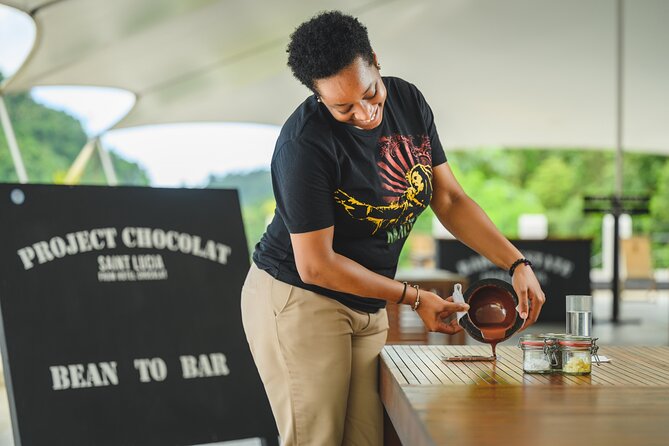
At $69 per person, this is not a cheap snack stop. You are paying for a hosted activity, tastings, a hands-on class, and a chocolate bar to take home. You are also paying for the chance to visit a Hotel Chocolat project in St Lucia, which gives the experience some local and brand-specific interest.
I think the price makes sense if you value activities that combine food and learning. The souvenir helps, but the bar alone does not justify the full cost. You are paying for the explanation of cacao’s journey, the fresh pulp tasting, the local chocolate, the guide, and the chance to make something yourself.
The value is weaker if you want a detailed estate tour or a long look at production equipment. That belongs more to the Tree to Bar option, which is not included here. It is also weaker if you expect an hour of nonstop chocolate-making. The hands-on part may be brief.
For a family, couple, or small group of friends, the activity can be worth the money because it gives everyone a shared task. It also works well as a change from beaches, viewpoints, and standard sightseeing. I would be less eager to recommend it to someone who is not interested in chocolate, food production, or short guided activities.
Who will enjoy this most
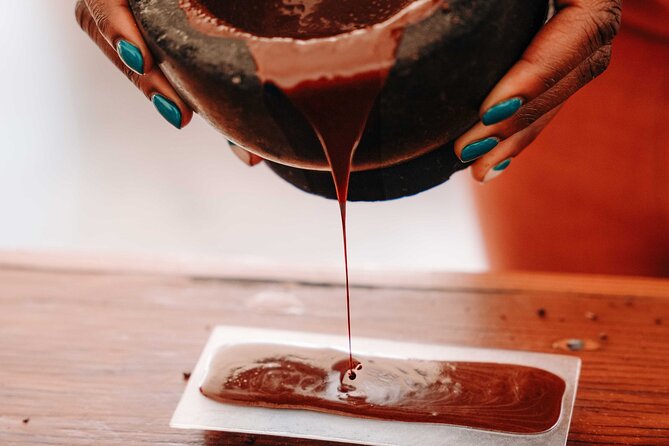
This is a good pick for families with children aged eight and older, provided they are happy to listen and use their hands. The task is accessible, and the take-home bar gives younger participants a clear reward.
Couples may enjoy it as a light anniversary or birthday activity. A quiet class can feel personal, while a full class provides a chance to meet other people on the island.
It also suits cruise visitors and anyone working with limited time. The one-hour format is useful, but build in extra time for arrival, setup, shopping, or lunch. If your transport is arranged privately, allow for delays. One missed start caused a booking problem that could not be fixed on the day, so punctuality matters.
Chocolate enthusiasts may want more technical detail than this session provides. If your main goal is to see cacao growing, learn more about the estate, or understand production in depth, ask about the Tree to Bar tour instead.
Practical details that can change your day
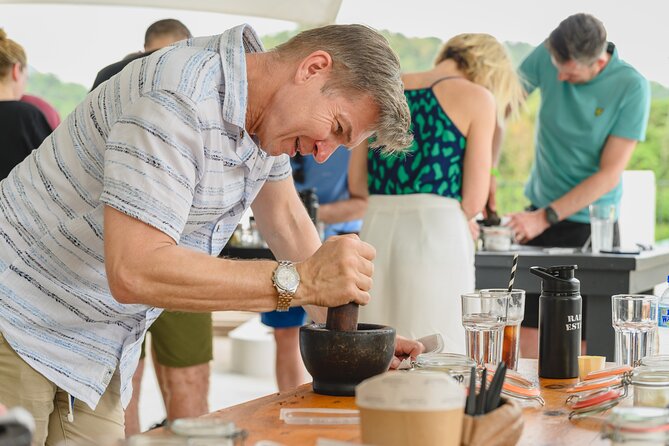
The meeting point is Project Chocolat, Malgretoute, St Lucia, and the activity ends back there. Your booking confirmation is issued at the time of booking, and the ticket is mobile, so you can use it from your phone.
Lunch is not included, though food can be purchased on arrival. Transportation is also not included, so you need to arrange your own way to Project Chocolat.
The experience is not suitable for children under eight. The maximum group size is 50 people, although actual class size can be much smaller. Toilets are down several steps, according to one detailed account, so ask staff for help if that creates a problem for you.
Free cancellation is available up to 24 hours before the local start time. Inside that 24-hour window, changes and refunds are not accepted. If the minimum number is not reached, or poor weather stops the session, you can be offered another date or experience, or receive a full refund.
My verdict on the Bean to Bar Experience
Book it if you want a short, sociable St Lucia activity that gives you a taste of local cacao and lets you make a souvenir with your own hands. The friendly guides, fresh pulp tasting, Rabot Estate chocolate, and simple hands-on work give it more substance than a standard gift-shop stop.
Skip it if you want a full cacao farm tour, a detailed factory visit, or an hour of nonstop making. For the best value, combine it with time to explore Project Chocolat and consider buying lunch only if the menu and timing suit you. Arrive early, arrange transport carefully, and keep room in your schedule for a little waiting.
FAQ
How long does the Bean to Bar Experience last?
The experience lasts approximately one hour. The hands-on chocolate-making portion may take less time, with the rest of the session used for tasting, explanations, setup, and other parts of the visit.
Where does the experience begin and end?
It begins at Project Chocolat on an unnamed road in Malgretoute, St Lucia, and ends back at the same meeting point.
Is transportation included?
No. Transportation from your destination to Project Chocolat is not included.
Is lunch included in the price?
No. Lunch is not included, but food can be purchased on arrival.
Is the Tree to Bar tour part of this experience?
No. The Tree to Bar tour is a separate experience and is not included in the Bean to Bar session.
Can children take part?
Children must be at least eight years old to join the experience.
What is the cancellation policy?
You can cancel at least 24 hours before the local start time for a full refund. Cancellations or changes made less than 24 hours before the start time are not refunded or accepted. If poor weather or an insufficient number of bookings cancels the activity, you can be offered another date or experience, or a full refund.
Just added around the world
- Zurich: Chocolate Tasting and Walking Tour with a Local★ 4.2 · 13 reviews
- Lindt Chocolate Museum with Cruise Transfer from Zurich★ 4.6 · 7 reviews
- Zurich Open-top Tour and Chocolate and Cheese Countryside★ 3.5 · 11 reviews
- Zagreb: Lake Bled and Ljubljana Day Tour with Chocolate Gift★ 5.0 · 26 reviews
- York: Introduction to Chocolate Making Experience★ 4.9 · 10 reviews
- Private Wine and Chocolate Tasting Experience★ 4.4 · 3 reviews
- Wine and Chocolate experience★ 4.6 · 3 reviews
- Yarra Valley: Wine and Chocolate tasting tour.★ 5.0 · 5 reviews
Chocolate Making Workshops, compared.
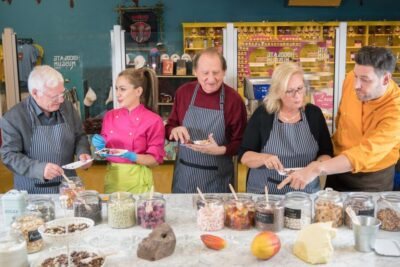
Chocolate Workshop in Chocolate Museum w/ Tasting
Read our review →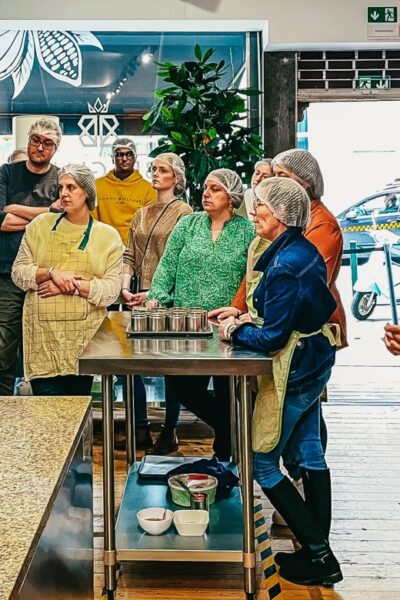
Belgian Chocolate Making Workshop with Tastings
Read our review →
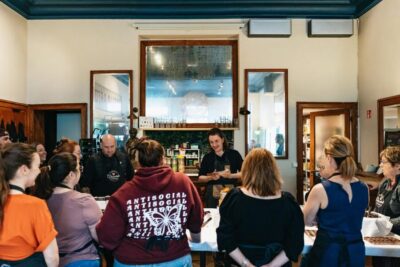
Belgian Praline and Mendiants Chocolate Workshop
Read our review →
1.5h Belgian Chocolate Workshop in Brussels (bean to bar)
Read our review →Browse the lists this tour appears in