REVIEW · PARIS
Paris: Choux Pastry and Chocolate Éclair Making Class
The best part of this Paris class is that you do not just watch a pastry chef make éclairs. You mix, pipe, fill, and decorate your own choux pastry, then sit down with tea or coffee to taste the results. The class takes place at Le Foodist in the Latin Quarter, a short walk from Notre-Dame.
I like the small class size, capped at eight, because the chefs can correct your piping and answer questions. I also like that you leave with both printed and electronic recipes, plus a box of pastries for later. The main drawback is simple: children under 12 cannot enter the kitchen, and the class may feel too focused on one pastry family if you want a broad French cooking lesson.
Key points at a glance
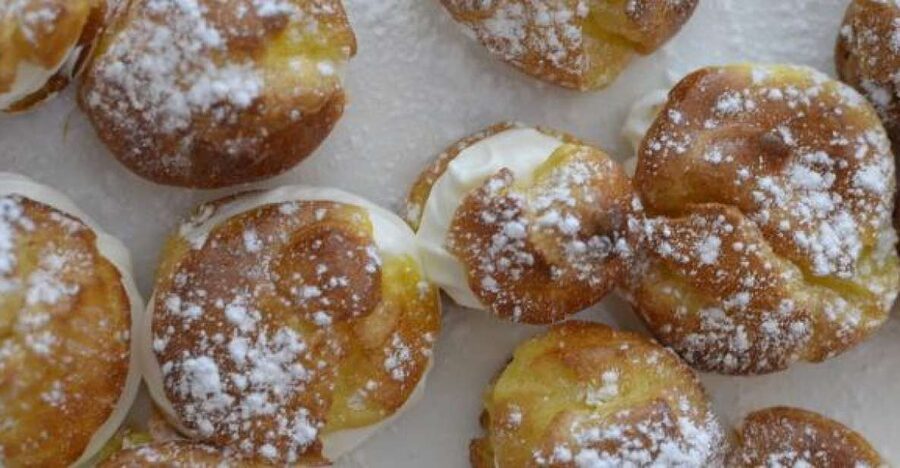
- You make the pastries yourself: Work with pâte à choux, crème pâtissière, Chantilly, chocolate éclairs, and cream puffs.
- Small groups help: Classes hold between three and seven people in the description, with a maximum of eight participants.
- English instruction: Chefs including Stéphane, Florence, Anne, and Stefan have led sessions with clear, lively teaching.
- Tea is part of the fun: French culture and pâtisserie stories accompany tea, coffee, or organic fruit juice.
- You take home the results: The class includes a box of your own pastries and recipes in print and digital form.
- Plan around the age rule: Children under 12 cannot enter the kitchen. Ages 12 to 16 must be with a participating adult.
Why choux pastry is a good Paris cooking lesson
French pastry can look fussy from behind a bakery window. Choux pastry offers a more useful lesson because the same basic dough can become éclairs, cream puffs, and other shapes. Once you understand the method, you have a skill you can repeat at home rather than a single dish you only tasted once.
The class covers pâte à choux, crème pâtissière, and Chantilly. These are the working parts of many familiar French pastries. You learn how the dough is prepared, how the fillings are made, and how to pipe the mixture into an even shape.
That hands-on approach matters. A demonstration can show you what a finished éclair should look like, but it does not teach the feel of the dough or the pressure needed on a piping bag. Here, you work through those steps yourself with a chef nearby.
The class also includes some savory delicacies, although the main focus is chocolate éclairs and choux puffs. If your main goal is to learn classic French pastry technique, that balance should suit you. If you want to make a full meal, choose a cooking class built around lunch or dinner instead.
More Chocolate and Pastry Tours in France
- Paris French Sweets Tasting Tour with Pastries and Chocolates
★ 4.5 · 947 reviews - Saint-Germain: Gourmet Chocolate & Pastry Walking Food Tour
★ 4.8 · 495 reviews - Paris Chocolate, Macaron & Pastry Food Tour: 10 Gourmet Tastings
★ 5.0 · 339 reviews
Starting at Le Foodist near Notre-Dame
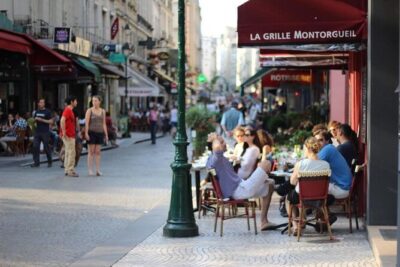
The meeting point is Le Foodist, 59 rue Cardinal Lemoine, in the 5th arrondissement. The address places you in the Latin Quarter, just steps from Notre-Dame de Paris. That makes the class easy to pair with sightseeing, though you should allow enough time to arrive without rushing into the kitchen.
You begin with a welcome refreshment and introductions. This first pause is useful because a small cooking class works best when everyone feels comfortable asking questions. The room may include serious home cooks, teenagers, and people who have never baked before. The class is designed to handle that mix.
The group size is one of the strongest practical features. The activity is limited to eight participants, and the usual class size is described as three to seven people. That gives the chef a fair chance to watch your technique instead of leaving you to copy from the back of a large demonstration.
The kitchen provides the equipment and aprons. You do not need to bring special tools, and the instruction is in English. That makes the class accessible if you want to learn without first mastering French baking terms.
The two-hour hands-on pastry session
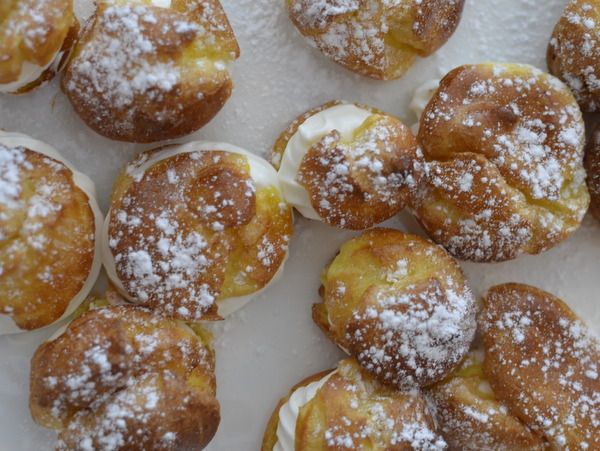
The working part lasts about two hours. You follow step by step instructions for pâte à choux, crème pâtissière, and Chantilly before using them to build the final pastries.
Pâte à choux is the key starting point. The dough looks plain, but small errors can affect how it rises and holds its shape. The chef explains the method and the reasons behind it, which is more useful than memorizing a list of movements. You learn what the dough should look like and how to handle it before piping.
Next comes the filling. Crème pâtissière gives éclairs their smooth, custardy center, while Chantilly brings a lighter texture. The class presents both as basic French pastry building blocks, so you can use the recipes beyond this single afternoon.
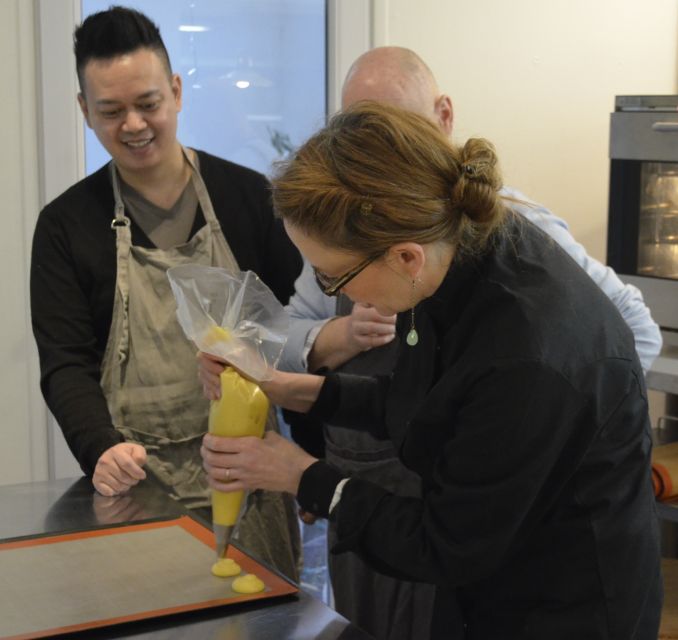
Piping is where the lesson becomes especially practical. You shape the dough into éclairs and cream puffs, learning how to keep the size and form consistent. That may sound easy until you hold the bag yourself. A chef can show you how to control the pressure, angle, and finish, then help you adjust when your first attempts are uneven.
Do not expect every pastry to look like a Paris bakery display. The point is to learn a repeatable technique, not to produce factory-perfect rows. Your pastries will be your own work, and that is part of the appeal. You leave with a better sense of what matters most and which details need more practice.
Some sessions also include a more decorative choux shape. One participant specifically enjoyed making an old-fashioned swan, a traditional design that turns simple choux dough into something more elaborate. It is a nice reminder that French pastry can be playful as well as precise.
Learning with Stéphane, Florence, Anne, and Stefan
The instructor can vary by date. Names associated with the class include Stéphane, Florence, Anne, and Stefan. The teaching style described across the sessions is lively, patient, and clear, with attention given to individual participants.
Stéphane is noted for detailed instruction and a good sense of humor. Florence has taught complete beginners alongside teenagers and more experienced cooks, explaining the process from scratch and sharing small culinary secrets along the way. Anne is described as witty and patient, while Stefan is known for high energy and easy-to-follow guidance.
Those details matter because pastry classes can go wrong when the teacher moves too fast. You need time to see the consistency of the dough, understand the filling, and fix your piping. The small-group format gives the instructor room to offer individual attention.
You should still expect to work. This is not a relaxed pastry tasting with a chef doing everything for you. You will be measuring, mixing, shaping, and filling. Wear something comfortable and be ready to spend much of the session on your feet in the kitchen.
More Chocolate and Pastry Tours in Paris
- Paris Pastry Tour – Croissants, Macarons & Iconic French Desserts
★ 5.0 · 232 reviews - Saint-Germain The Original Chocolate Tasting Tour with Pastries and Macaron
★ 4.5 · 215 reviews - Paris: Montmartre Chocolate & Pastries Tour with 8+ Tastings
★ 4.7 · 131 reviews - Croissants and pains au chocolat with a pastry chef in Paris
★ 5.0 · 123 reviews
Tea, stories, and a taste of French pastry culture
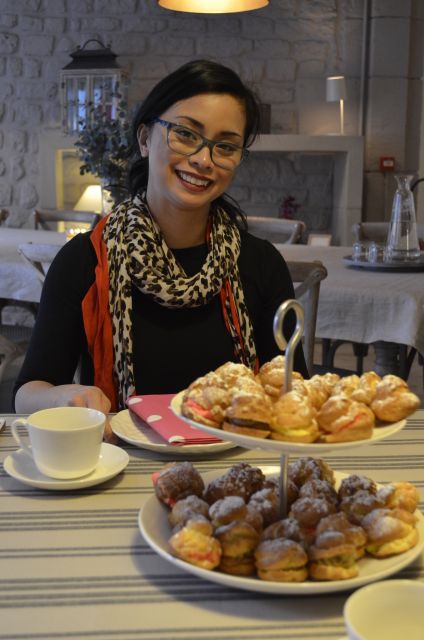
Once the baking work is done, the class shifts into a tea-time setting. You enjoy tea, coffee, or organic fruit juice with the pastries. You also hear stories about French culture and pâtisserie from a native Frenchman.
The tone is described as convivial and tongue in cheek. That means you get more than technical instruction, but you should not expect a formal lecture on French culinary history. The stories are there to make the afternoon social and give context to the way pastry fits into French life.
This is one of the class’s more personal touches. A recipe tells you how to make crème pâtissière. A story can explain why pastry matters at a French tea table or how a familiar sweet fits into daily life. The combination keeps the session from feeling like a production line.
The tea break also gives you a chance to taste your work while it is fresh. You can compare the éclairs and puffs with the techniques you used only a short time earlier. For many people, that is the most satisfying part of the afternoon.
What you take home
You receive a box of your own pastries to share with friends or family, or to keep for yourself over the next couple of days. The exact number of pastries is not specified, so do not book this expecting a fixed quantity.
The takeaway adds real value to the price. At $151 per person, you are paying for instruction, ingredients, equipment, an apron, refreshments, recipes, and the pastries you make. It is not cheap, but it is more than a tasting or a short demonstration.
The printed and electronic recipes are especially useful. A hard copy is convenient in the kitchen, while the digital copy is easy to save and revisit after your trip. Since the class covers several core preparations, the material can support more than one baking session at home.
I would treat the takeaway box as a bonus rather than the main reason to book. Pastries are delicate, and you will need to carry them carefully. The lasting value is the method, especially if you already enjoy baking or want to build confidence with French techniques.
Is $151 a fair price?
The price makes the most sense for someone who values instruction and participation. You spend about three hours at a professional cooking venue, with roughly two hours of hands-on work. You also receive recipes, equipment, an apron, refreshments, stories, and pastries to take away.
Compared with simply buying an éclair from a Paris pastry shop, the class costs much more. A bakery visit is the better deal if all you want is a sweet treat. The class earns its price through personal guidance and the chance to repeat the recipe at home.
Compared with a large group lesson, the maximum of eight participants is important. A chef can pay attention to your piping and answer individual questions. That is the sort of small detail that can make a class feel worth the money.
I would book it for a special Paris afternoon, a mother and daughter outing, or a pair of friends who enjoy cooking. One participant found it equally enjoyable when attending with a friend, and the format also works for a solo visitor because the opening introductions and shared tea create an easy social setting.
Who should book this class?
This is a good fit for first-time bakers because the instruction begins with the basics. You do not need to arrive with professional pastry skills. The class also suits serious home cooks who want to improve their choux technique and understand the reasons behind each step.
Families need to read the age rules carefully. Children under 12 cannot enter the kitchen or participate. Participants from 12 through 16 must be accompanied by a participating adult, and only participants may come into the kitchen.
The class is taught in English, which removes a major concern for many international visitors. You should still be comfortable following spoken instructions and working in a shared kitchen.
It is less suitable if you want a broad survey of French cooking, a full meal, or a pastry class focused on croissants and macarons. Those are different skills. This session keeps its attention on choux-based pastries, fillings, piping, and the social ritual of tea.
Timing and booking tips for your Paris day
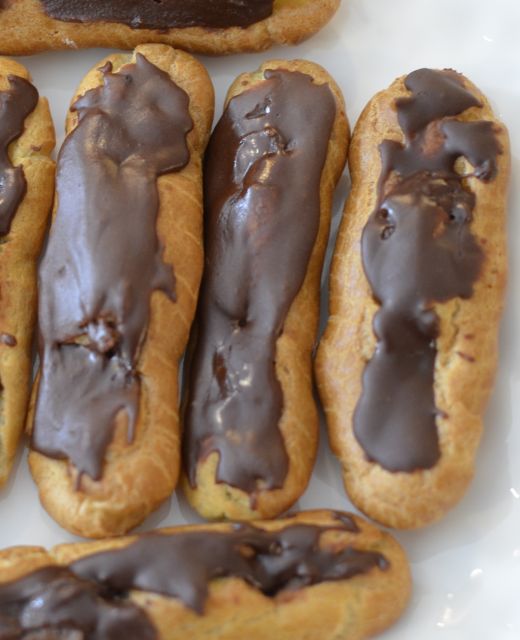
The class lasts three hours, and starting times vary, so check the available schedule before planning your day around it. Allow time to reach 59 rue Cardinal Lemoine and arrive ready to begin. The Latin Quarter location makes it convenient to combine with Notre-Dame, but a busy sightseeing schedule could make the afternoon feel rushed.
The cancellation policy is practical: you can cancel up to 24 hours in advance for a full refund. You can also reserve now and pay later, which helps if your Paris plans are still shifting.
Because the class is small, popular dates may fill faster than large group activities. If you have a fixed day in Paris, book once your schedule is firm. If your plans are uncertain, the flexible payment and cancellation terms give you some room.
My final take on the éclair class
I would book this experience if you want to do something active in Paris and care more about learning than simply eating. The class gives you a real pastry skill, direct access to an English-speaking chef, and a pleasant tea-time finish near Notre-Dame.
The strongest reasons to choose it are the small group, the patient instruction, and the useful mix of techniques. The clearest limits are the price, the narrow focus on choux pastry, and the age rule for children.
Choose it for a hands-on afternoon with pastries to take home. Skip it if you would rather spend $151 on several bakery stops or if your ideal cooking class includes a complete French meal.
FAQ
Where is the choux pastry class held?
The class meets at Le Foodist, 59 rue Cardinal Lemoine, 75005 Paris, in the Latin Quarter near Notre-Dame de Paris.
How long does the experience last?
The full experience lasts three hours. About two hours are devoted to hands-on pastry work.
What pastries will I make?
You will make chocolate éclairs and choux puffs. The class also covers pâte à choux, crème pâtissière, Chantilly, piping, and some savory delicacies.
Is the class taught in English?
Yes. The listed language is English.
How many people can join the class?
The activity is limited to eight participants. The class size is described as between three and seven people.
Are recipes included?
Yes. You receive both a hard copy and an electronic copy of the recipes in English.
Do I need to bring cooking equipment?
No. The use of cooking equipment and an apron is included.
Can children participate?
Children under 12 cannot enter the kitchen and cannot participate. Children between 12 and 16 must be accompanied by a participating adult who is also taking part.
Can I cancel the booking?
Yes. You can cancel up to 24 hours in advance for a full refund. You can also reserve the activity and pay later.
More Chocolate Making Workshops in Paris
- Private Family Chocolate Making Class in Paris
★ 5.0 · 16 reviews - Become a Chocolate Master! Chocolate Bar Workshop in Paris
★ 5.0 · 4 reviews
More Chocolate Making Workshops in France
- Paris: 45-minute Chocolate Making Workshop at Choco-Story
★ 4.4 · 444 reviews - Paris : 45 min Chocolate Workshop at Choco-Story Paris
★ 4.0 · 51 reviews - Praliné Rocher Chocolate making class in Paris (collective)
★ 5.0 · 23 reviews - Molded Bonbons Chocolate making class in Paris (collective)
★ 4.5 · 20 reviews
Just added around Paris
- Private Wine and Chocolate Tasting Experience★ 4.4 · 3 reviews
- Molded Bonbons Chocolate making class in Paris (collective)★ 4.5 · 20 reviews
- Private Wine and Chocolate Tasting in Paris★ 4.5 · 4 reviews
- Paris Sweet & Chocolate Family Treasure Hunt★ 5.0 · 37 reviews
- Private Family Chocolate Making Class in Paris★ 5.0 · 16 reviews
- Pure Chocolate Tour in Paris★ 5.0 · 20 reviews
- Paris Marché d’Aligre Walking Tour with Chocolate and Cheese Tasting★ 3.5 · 24 reviews
- Paris Chocolate and Pastry Private Tour With Secret Food Tours★ 5.0 · 44 reviews
Paris Chocolate Tours, compared.
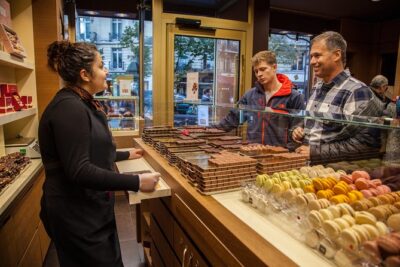
Paris French Sweets Tasting Tour with Pastries and Chocolates
Read our review →
Brussels and Bruges Tour & Optional Chocolate Tasting
Read our review →
A Morning in Paris Food Tour: Croissants, Baguettes & Chocolate
Read our review →
Saint-Germain: Gourmet Chocolate & Pastry Walking Food Tour
Read our review →
45-minute Chocolate Making Workshop at Choco-Story
Read our review →
Paris Chocolate, Macaron & Pastry Food Tour: 10 Gourmet Tastings
Read our review →