
REVIEW · MEXICO
Bean to Bar Chocolate Workshop in Puerto Vallarta
Chocolate here is more than a sweet treat. In this two-hour hands-on class, you learn how cacao shaped Mexican culture, taste several forms of it, and finish by making chocolate bars in flavors you choose. Guides such as Rodrigo, known as Rod, Elias, Martin, and Zoar lead the sessions, and each brings a lively teaching style.
I like two things in particular: the class links food to Olmec, Maya, Aztec, and European history, and you do real work instead of simply watching a demonstration. The main drawback is comfort: the workshop room can feel warm in Puerto Vallarta, so confirm that the air conditioning is running before settling in.
Key points to know before booking
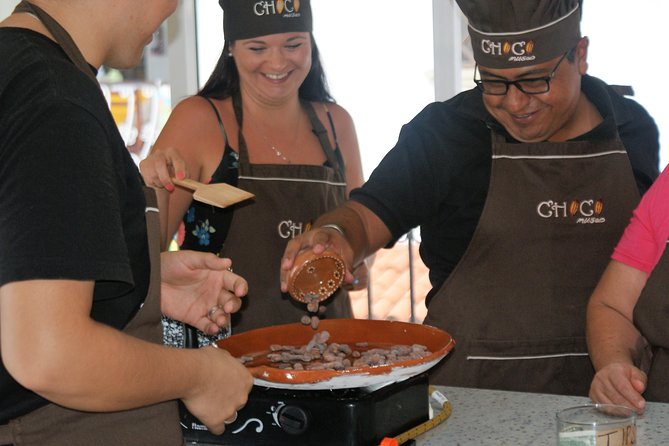
- You roast and work with cacao beans: The class can include roasting beans, shelling them, making tea from the shells, and preparing hot chocolate.
- Your chocolate is yours to design: Add toppings and flavorings to create custom bars to take home.
- The history lesson has real substance: You trace cacao from early Mexican use through later chocolate-making traditions.
- Guides make the difference: Rod, Elias, Martin, and Zoar are praised for humor, patience, and clear instruction.
- The group is small: The stated maximum is eight people, which gives you more room to ask questions and take part.
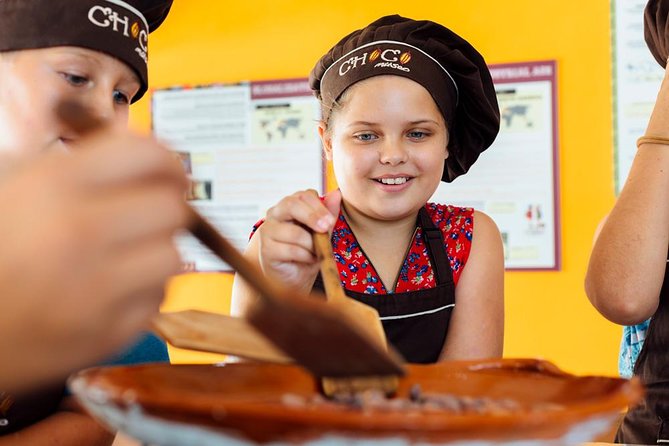
- It suits families: Children age five and older can participate, and the class uses tasting, handling, and making to hold their attention.
What happens inside ChocoMuseo Puerto Vallarta
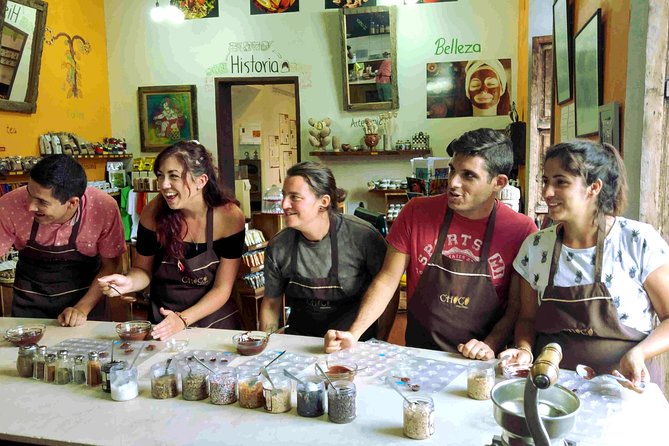
You meet at ChocoMuseo Puerto Vallarta on Josefa Ortiz de Domínguez in the Centro area. The class begins and ends at the museum, so you arrange your own way there. The museum is near public transportation, but transportation to and from the activity is not included.
The two-hour schedule is compact but active. You are not simply seated for a long lecture. The guide moves between explanation, tasting, demonstration, and hands-on work. That mix matters, especially if you are bringing children or anyone who loses interest during a standard museum talk.
The class is offered in English. The group size is listed as a maximum of eight, though the exact feel can depend on the booking that day. A smaller group makes it easier to hear the guide, ask about ingredients, and get help with the chocolate-making steps.
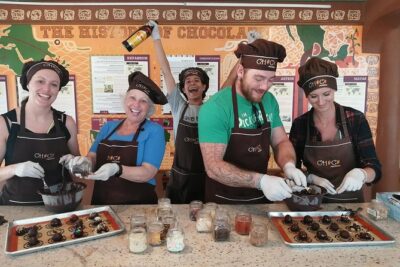
You receive an apron and hat for the workshop. Cocoa beans, chocolate, and toppings are included, so the $62.90 price covers the central activity rather than leaving you to pay extra for the materials you need to participate.
More Chocolate Making Workshops in Mexico
- Chocolate & Margarita Workshop
★ 5.0 · 207 reviews - Chocolate and truffles workshop
★ 5.0 · 157 reviews - Chocolate Workshop
★ 5.0 · 92 reviews
From cacao plant to chocolate bar
The first lesson explains where cacao grows and how the bean becomes chocolate. You learn about the cacao plant, the bean itself, and the stages that turn a raw agricultural product into something smooth, sweet, and familiar.
This is one of the strongest parts of the class because it gives context to the tastings that follow. Chocolate can seem like a finished product that appears on a shop shelf. Here, you get a clearer sense of the work and transformation behind it.
The guide may have you roast cacao beans and shell them. That simple task helps you understand that the bean does not begin life as a ready-made chocolate ingredient. You handle the material, smell it, and see how it changes as the process continues.
The class can also include tea made from cacao shells. That is a useful reminder that different parts of the cacao bean can be used. You then taste hot chocolate made from the bean, along with other preparations that show how cacao has changed over time.
Do not expect a professional chocolatier certification or a full production course. This is an introductory cultural workshop, not a technical pastry class. You learn the basic process in a way that is easy to follow and enjoyable to share.
Cacao in Olmec, Maya, and Aztec life
The history portion gives the experience its Mexican character. The guide explains cacao’s use by the Olmecs, Maya, and Aztecs, then connects those traditions with the way chocolate developed after European contact.
You may taste different drinks as the story moves through time. That approach works better than a long list of dates because you can connect each period with a flavor, texture, or preparation. One class sequence included cacao tea, several hot cocoa preparations, and chocolate bars at the end.
The lesson also covers the way chocolate is spoken about in different parts of the world. That broader angle helps explain why chocolate is not one fixed thing. It has been a drink, a ceremonial ingredient, a source of nutrition, a luxury, and a modern dessert.
I especially like that the food gives the history a practical shape. You are not asked to remember an abstract timeline. You taste and make things while learning how cacao moved through Mexican and European traditions.
The quality of this section depends partly on the guide. Rodrigo, or Rod, is frequently singled out for his humor, patience, and ability to keep adults and children involved. Elias has led a chronological presentation that ties social, cultural, and political history to chocolate-making. Martin is known for clear explanations and good organization, while Zoar brings warmth and enthusiasm to the class.
Guide assignments can change, so do not book expecting one particular person. Still, the range of teaching styles is encouraging. The activity is built around a guide who explains, demonstrates, answers questions, and keeps the session moving.
Tasting cacao in several forms
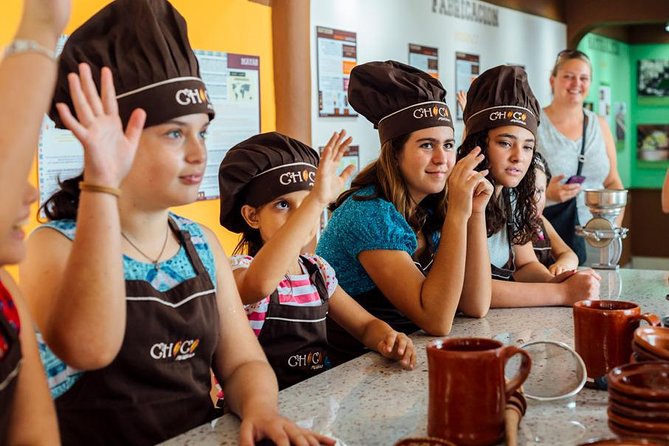
Tasting is not an afterthought here. It helps you notice how roasting, shells, ingredients, and preparation change the final drink or chocolate.
You might sample cacao products from different points in the ingredient’s development. The class can include hot cocoa preparations and chocolate products that show how the flavor became sweeter and more familiar over time.
The tasting is also useful for families. A child may not care about a long explanation of processing, but tasting cacao tea or helping with hot chocolate gives that child something concrete to do. Adults get the cultural context while younger participants get a sensory lesson.
One practical suggestion is to arrive a little early if you want to try samples in the museum shop. Free samples are available downstairs, and the shop sells chocolate products. The activity itself includes the materials for the class, but you may want time before or after to browse.
A small limitation is that tasting several chocolate products can become sweet and rich. One participant suggested having water available to refresh the palate between samples. Bring that expectation with you, especially if you prefer dark chocolate or less-sweet flavors.
Same place, a different way to taste it:
- Finca 18 Puerto Vallarta Tequila Tour + Chocolate Pairing
★ 5.0 · 393 reviews - Chocolate Tour in Vallarta
★ 5.0 · 226 reviews - San Jose del Cabo Art Walk, Beer Tasting &Chocolate Demonstration
★ 5.0 · 141 reviews - Artisanal Mezcal and Fine Chocolate Tasting
★ 5.0 · 132 reviews
Making your own chocolate bars
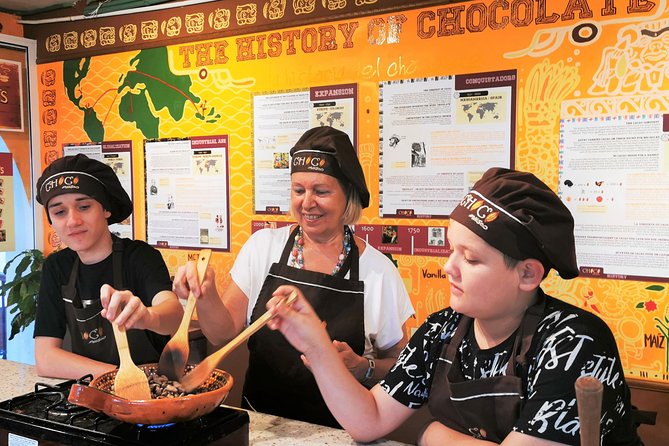
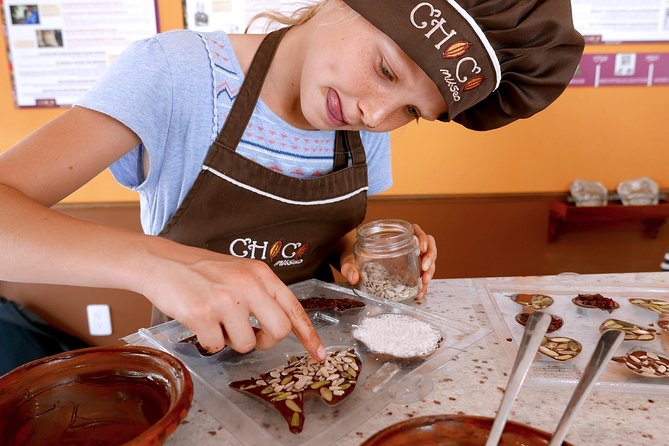
The final section is the payoff. You use chocolate and select toppings or flavorings to make your own bars. This is where the class shifts from demonstration to personal choice.
You can build a combination that suits you, using the ingredients provided. The exact topping selection may vary, but the point is that you are not handed an identical souvenir. Your finished chocolate reflects the choices you make during the workshop.
The process is approachable for children, but adults will not feel left out. Parents can help younger children, while older children can make decisions about flavors and toppings themselves. Adults who enjoy food classes will appreciate the chance to experiment without needing advanced kitchen skills.
You take the chocolates with you. Give them time to set as directed, and remember that Puerto Vallarta’s heat can be tough on chocolate. The class provides a useful edible souvenir, but it is not the same as buying a sealed bar designed for long storage in a hot climate.
This hands-on finish also gives the two-hour class a clear shape. You begin with cacao as a plant and cultural product, follow it through roasting and tasting, then turn it into something personal. That progression makes the workshop feel like a complete activity rather than a tasting with a short craft added on.
Is the $62.90 price fair?
At $62.90 per person, this is not the cheapest way to eat chocolate in Puerto Vallarta. The value depends on what you want from the afternoon.
If you only want sweets, the price is high compared with buying chocolate in the shop. If you want a guided cultural lesson, several tastings, a small-group activity, instruction, materials, and chocolate to take home, the cost is easier to justify.
The price includes the museum guide, cacao beans, chocolate, toppings, an apron, and a hat for the class. You do not pay separately for the workshop materials. Transportation is not included, and a customary tip of 15 to 20 percent for the teacher is suggested if you feel the class earned it.
I would compare it with the price of another organized activity in Puerto Vallarta, not with the cost of a chocolate bar. For a family, the class can replace part of an afternoon of sightseeing while giving everyone something active to do. For a couple, it is a shared food experience with a local cultural focus.
The small group helps the value. With a maximum of eight, you should have a better chance to participate than in a large demonstration. That matters when several people are trying to roast, shell, taste, and decorate at the same time.
Comfort, access, and family fit
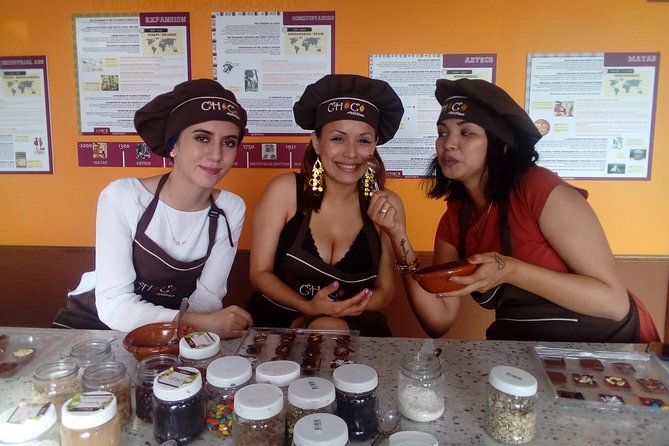
The activity is open to people age five and older. That makes it a useful choice for families who want something more engaging than a standard museum visit. Children can taste, handle cacao, and make chocolate, while adults get the historical and cultural explanation.
One detailed account noted that a nine-year-old and a thirteen-year-old stayed engaged through the class. Another family found that even a five-year-old enjoyed the session. That does not mean every child will love every part, but the mix of activity and storytelling gives younger participants a fair chance.
The museum allows service animals, and most people can participate. The workshop uses counter-height stools, so sitting may not suit everyone. Stairs to the second floor have handrails. If you use a walker, have mobility concerns, or need a particular seating arrangement, contact the provider before booking rather than assuming the room can be adapted.
Air conditioning deserves a practical note. A complaint about a very hot room was answered with an explanation that the air conditioning is turned on one hour before the workshop and during the activity. Conditions can change, so if the room feels uncomfortable when you arrive, ask the staff before the class begins.
Wear clothing that can handle a small spill or chocolate mark. You receive an apron, but chocolate-making is a working activity, not a polished photo opportunity. Closed, comfortable footwear is sensible, especially if you will spend time standing around the work area.
Timing your visit in Centro
Plan for about two hours at the museum, plus time to reach the meeting point. The address is Josefa Ortiz de Domínguez 128 in Centro, Puerto Vallarta, and the activity returns to that same location.
Because no transportation is included, build in time to find the museum and arrive before the start. If you want to sample products in the shop, arrive early rather than trying to squeeze that in after the class.
This can be a good afternoon plan during a hot part of the day, provided the workshop room is comfortable. It also works well near other Centro plans because you do not need to commit to a full-day excursion.
Booking about 20 days ahead is the average pattern for this experience. That does not guarantee a particular date will sell out, but it suggests you should reserve in advance if your Puerto Vallarta schedule is tight.
Free cancellation is available until 24 hours before the start time. Canceling inside that window does not qualify for a refund, and changes made during the final 24 hours are not accepted. The cut-off follows local Puerto Vallarta time.
Who should choose this chocolate workshop?
I would choose this class if you want a Puerto Vallarta activity that combines food, history, and participation. It is particularly well suited to families with children five and older, couples looking for a relaxed shared activity, and anyone curious about Mexican cacao beyond the finished candy.
It also fits a rainy afternoon or a break from outdoor sightseeing. You get a cultural lesson without committing to a long tour, and the take-home chocolate gives the experience a physical finish.
I would hesitate if you dislike sweet tastings, have trouble sitting on counter-height stools, or want a serious professional course in tempering and confectionery. The class is introductory and accessible. Its strength is the way it makes cacao understandable and fun, not its depth as technical chef training.
Should you book it?
Yes, if chocolate is only part of what you want. The best reason to book is the combination of Mexican history, tasting, and hands-on making. Guides such as Rod, Elias, Martin, and Zoar bring humor and patience to a class that needs to work for both children and adults.
Before booking, check the timing, plan your own transportation, and ask about the room temperature if you are visiting during very hot weather. If you want a small-group activity with an edible souvenir and a stronger cultural angle than a basic tasting, the Bean to Bar Chocolate Workshop is a good use of two hours in Puerto Vallarta.
FAQ
Where does the chocolate workshop take place?
It takes place at ChocoMuseo Puerto Vallarta, Josefa Ortiz de Domínguez 128, Centro, 48300 Puerto Vallarta, Jalisco, Mexico.
How long does the activity last?
The workshop lasts approximately two hours.
What language is the workshop offered in?
The workshop is offered in English.
What is included in the price?
The price includes a museum guide, cacao beans, chocolate, toppings, an apron, and a hat for use during the workshop.
Do I need to arrange transportation?
Yes. Transportation to and from ChocoMuseo Puerto Vallarta is not included. The activity begins and ends at the museum.
Can children participate?
Yes. The workshop is open to children age five and older.
What will I make during the class?
You can roast and shell cacao beans, make cacao tea and hot chocolate, taste different chocolate preparations, and create custom chocolate bars with toppings and flavorings.
How many people can join the workshop?
The stated maximum is eight participants.
Can I cancel for a refund?
You can cancel at least 24 hours before the start time for a full refund. Cancellations or changes made less than 24 hours before the activity are not accepted for a refund.
More Drinking Tours in Mexico
- Puerto Vallarta: Bean to Bar Chocolate Workshop
★ 4.9 · 41 reviews - Artisanal Chocolate Bean to Bar Workshop in Cancún
★ 5.0 · 4 reviews - Hungry Mary’s Famous Beer and Chocolate Tour in Brussels
★ 5.0 · 2,258 reviews - Epic Yarra Valley Wine Tour + Lunch, Chocolate & Gin/Beer Option
★ 5.0 · 1,819 reviews
Just added around Mexico
- Uxmal: Choco History Museum & Cenote★ 4.1 · 21 reviews
- Tulum: Chocolate & Honey Sanctuary Experience with Lunch★ 4.2 · 34 reviews
- Tulum: Chocolate & Honey Sanctuary Experience with Cenote★ 3.5 · 6 reviews
- Cultural Adventure: Artisanal Chocolates, Coffee and Doll Making★ 5.0 · 2 reviews
- Tarot Reading with Coffee & Chocolate or Smoothie★ 5.0 · 17 reviews
- Sayulita Magical Town Tour: Local food, and chocolate.★ 5.0 · 18 reviews
- Private Make Your Own Chocolate Experience in Puerto Vallarta★ 5.0 · 8 reviews
- Chocolate Macarons Workshop in Puerto Vallarta★ 5.0 · 5 reviews
Mexico Chocolate Tours, compared.
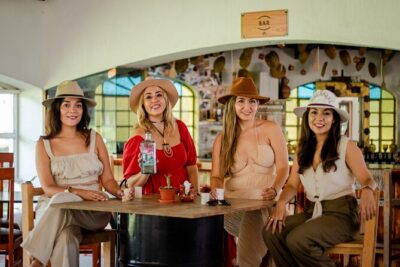
Finca 18 Puerto Vallarta Tequila Tour + Chocolate Pairing
Read our review →
Tour to Uxmal Kabah and Chocolate Museum from Mérida
Read our review →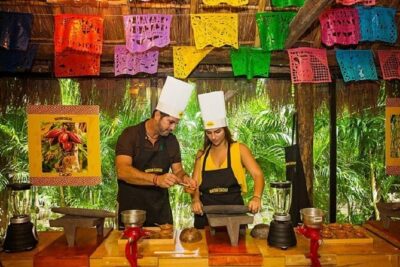
Browse the lists this tour appears in