
REVIEW · BRUGES
Bruges: Belgian Praline and Mendiants Chocolate Workshop
Chocolate is not just a souvenir in Bruges. In this workshop, you work with it from the start, tempering dark chocolate, making praline shells, preparing a creamy filling, and decorating crisp mendiants with dried fruit. You finish with more than 30 handmade chocolates, not just a bag from a shop.
I like two things right away: you do the work yourself, and the class gives you a useful look at Belgian chocolate technique without demanding professional skill. I also like the personal help at stations shared by only two or three participants. Instructors such as Harry, Sabina, August, Henry, and Sam have been praised for clear explanations, humor, patience, and keeping the class moving.
The main consideration is the age rule and the hands-on format. Children under 12 cannot join, and spectators are not allowed. You will spend two and a half hours standing at a work station, handling chocolate, waiting for steps to set, and following instructions rather than simply watching a demonstration.
Key points to know before booking
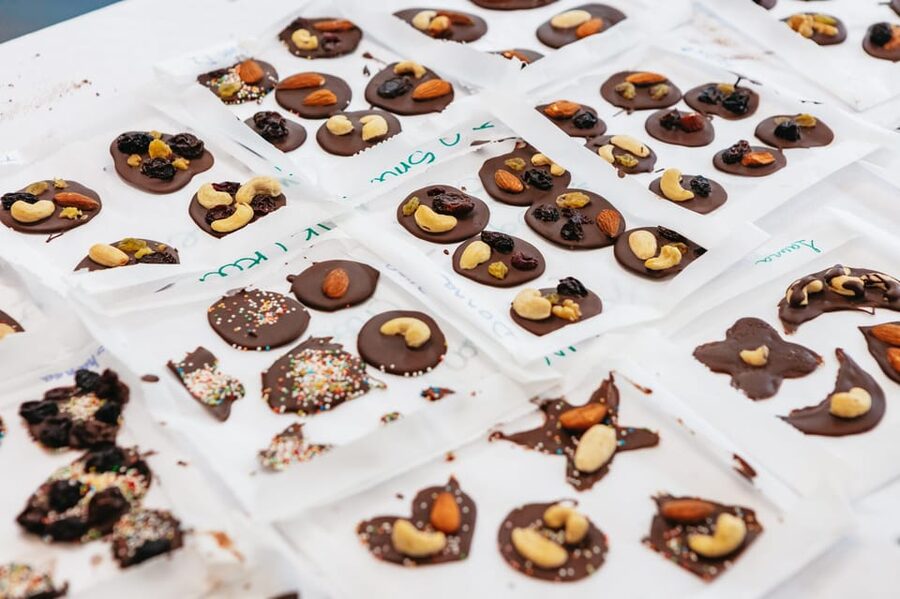
- Make two Belgian classics: Prepare filled pralines with chocolate shells and creamy filling, then create mendiants topped with dried fruit.
- Expect a full box of sweets: The target is at least 30 chocolates per person, with many participants leaving with more than 20 or 25 pieces each.
- Work in small station groups: Each station holds two or three people, and you work with the companions booked with you.
- Learn the tricky part: Tempering chocolate is explained in a practical way, so you understand why the finish, texture, and shine matter.
- Plan around the central location: The workshop is five minutes from Grote Markt and about 20 minutes on foot from Bruges train station.
- Check dietary needs early: The dark chocolate used for the shells is gluten-free and dairy-free, but the filling uses milk chocolate unless you request an alternative at the start.
Why this Bruges chocolate class is more than a tasting
A chocolate shop visit is easy to fit into a day in Bruges. You walk in, choose a box, and walk out. This class gives you something different: a few hours of making the sweets yourself, with enough finished chocolate to share or save for later.
That difference matters if you want an activity rather than another purchase. You learn how Belgian pralines are built, why chocolate needs tempering, and how a simple disc of chocolate becomes a mendiant with dried fruit. The class also gives you a better eye for the chocolates you buy afterward.
The tone appears to be friendly and practical rather than formal. Guides have included Harry, Sabina, Ranza, August, Henry, Sam, Tom, Henri, Manami, and others. Their approach varies, but the strongest pattern is clear instruction mixed with stories, jokes, and steady help when a step becomes messy.
I would not book this expecting a quiet, polished pastry demonstration where you sit back and take notes. You will be involved. That is the point, but it also means the activity suits people who enjoy making things with their hands.
More Chocolate Making Workshops in Belgium
- Belgian Chocolate Workshop in Bruges
★ 5.0 · 660 reviews - Bruges: Chocolate Making Workshop and Chocolate Museum Entry
★ 4.6 · 395 reviews - 2-Hour Historical Walking Tour in Bruges with Praline Included
★ 5.0 · 291 reviews
Finding the workshop near Grote Markt
The meeting point is at Grauwwerkersstraat 15, on the corner of Grauwwerkersstraat and Naaldenstraat in central Bruges. From the main square, Grote Markt, it is about a five-minute walk. From station Brugge, allow roughly 20 minutes on foot.
This is a useful location for a half-day plan. You can visit the square, climb into the surrounding old center, or stop at a chocolate shop before or after class without arranging transport. If you are arriving by train with luggage, the 20-minute walk is manageable for many people, but it is worth allowing extra time so you do not arrive rushed.
Check the meeting details before setting out. One participant found the address had changed shortly before the workshop, which caused confusion. The practical lesson is simple: use the current booking information on the day, even if you already know the original location.
The workshop is taught in English. If your group includes people with different language levels, the activity still has a visual, practical rhythm, but the instructions about tempering and fillings are important, so you should be comfortable following spoken English.
The first stage: chocolate, equipment, and a working station
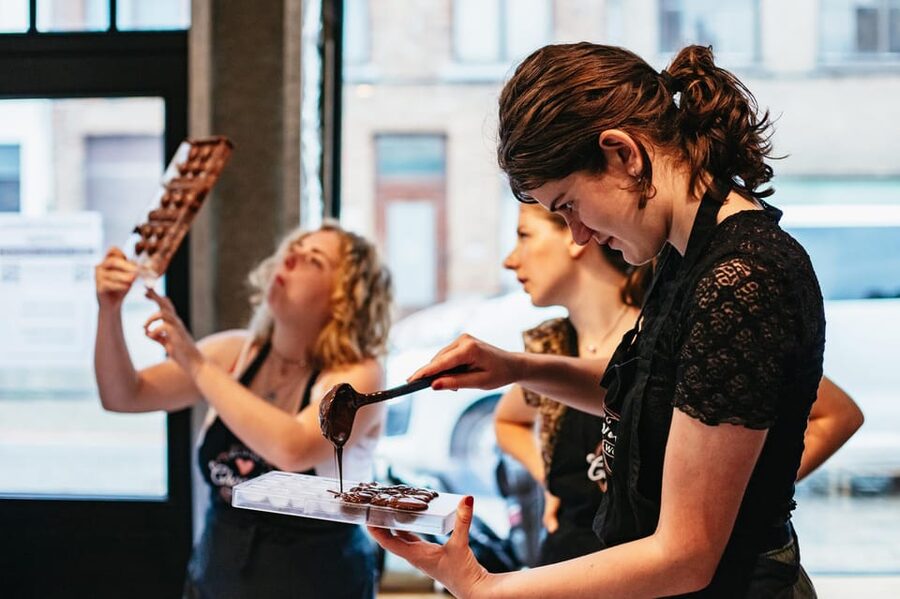
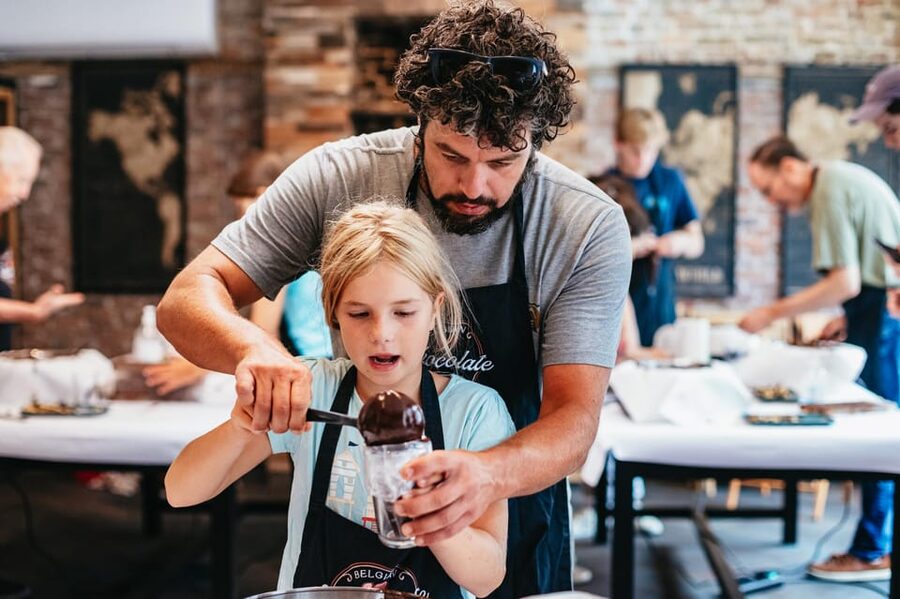
On arrival, ingredients, cookware, and aprons are provided. You do not need to bring chocolate-making tools or raw ingredients from home. The class is organized into stations, with two or three participants at each one, and you work with the people included in your booking.
That setup is a good middle ground. You are not isolated at your own private table, but you also are not lost in a large crowd. You have someone beside you for shared tasks and an instructor nearby for questions. Several guides have been praised for stepping in when help was needed while still letting participants do the work.
The class includes a little chocolate theory, but it is not presented as a long lecture. You learn enough to understand what is happening before moving on to the next task. That balance is useful because chocolate can be surprisingly fussy. A small mistake in temperature or timing can affect texture and appearance.
You also receive hot chocolate during the workshop. It is a small touch, but it gives you something warm to enjoy while chocolate sets or while the instructor explains the next step.
Tempering chocolate, the skill that changes the result
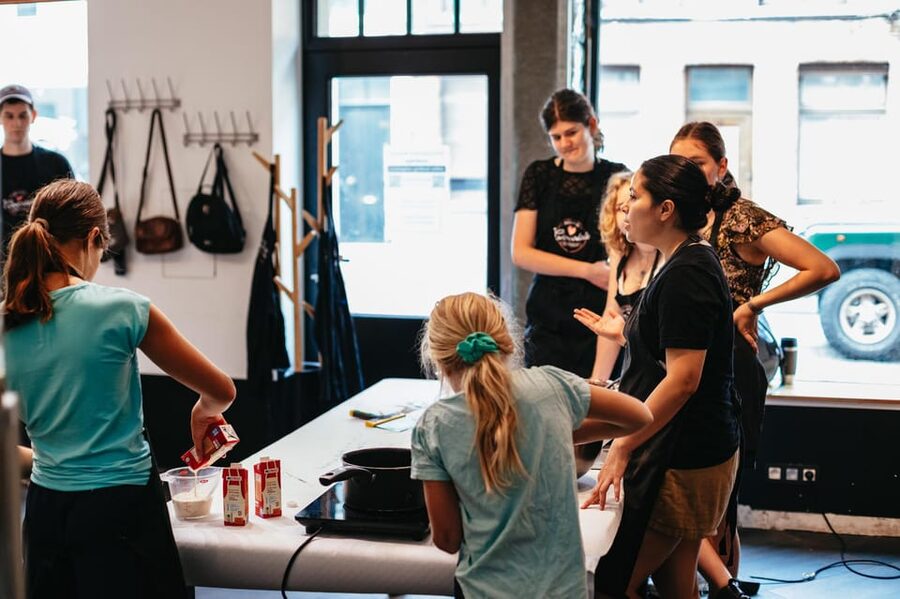
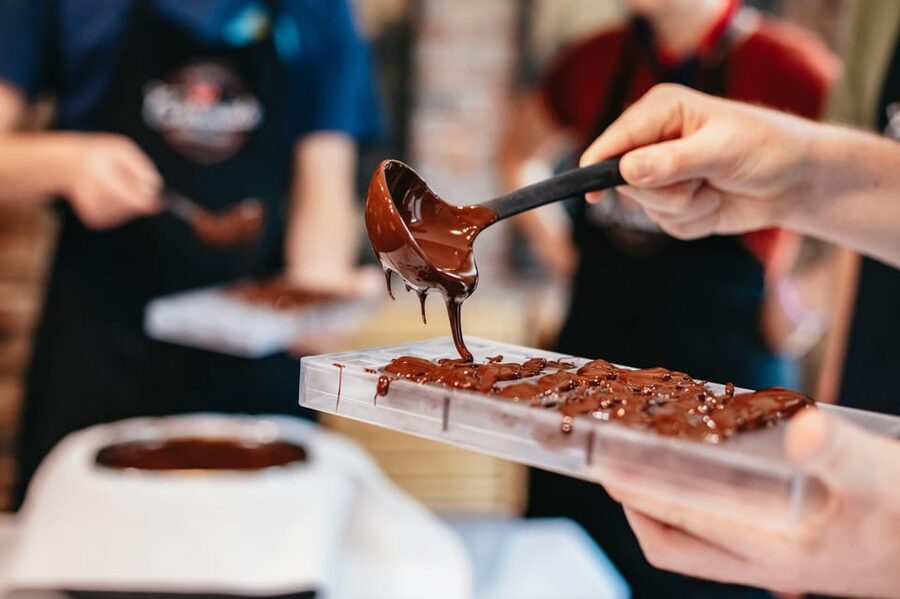
Tempering is one of the most valuable parts of this experience. You are not simply melting chocolate and pouring it into shapes. The instructor explains how to prepare the chocolate so the finished shells have the right texture and appearance.
The process can sound technical at first, but the class is designed to make it manageable. You work under guidance, and instructors such as Harry, Sam, and Henry have been singled out for clear explanations and patient help. If you are new to chocolate making, this is the point where an instructor adds real value.
The dark chocolate used for the praline shells is gluten-free and dairy-free by definition. That does not make the entire activity dairy-free, because milk chocolate is used in the filling. If you need a dairy-free filling, ask for the alternative at the start rather than waiting until the filling is being prepared.
The class does not promise professional chocolatier training, and you should not expect to master every part of the craft in 150 minutes. You will, however, pick up a technique you can try again at home. That makes the workshop more useful than a one-time decoration session.
More Chocolate Making Workshops in Bruges
- Bruges: Belgian Chocolate Making Workshop with Beer Tasting
★ 4.9 · 203 reviews - Bruges: Chocolate Truffle Making Class
★ 4.6 · 149 reviews - Chocolate Workshop at Choco-Story Brugge
★ 5.0 · 84 reviews - ✨Small-Group Tour of Bruges with a local + Praline/ -3€ boat
★ 4.9 · 73 reviews
Making pralines from shell to filling
The praline is the central project. In Belgian chocolate making, it is a chocolate shell filled with a soft center. Here, you prepare both parts rather than receiving pre-made shells to decorate.
First comes the shell. You work with tempered dark chocolate and prepare the outer layer. The shell needs to be substantial enough to hold the filling but not so thick that it overwhelms it. This is where clear instruction and patient correction help, especially for first-time chocolate makers.
Then comes the filling. The workshop includes making a creamy filling or ganache, with milk chocolate used in the standard version. A ganache is a simple mixture in principle, but the texture has to be right for a praline. It needs to be soft and smooth while still holding inside the shell.
You then bring the pieces together and finish the pralines. The result may not look identical from one participant to another, and that is part of the appeal. Handmade chocolates have small differences in size, topping, and finish. You get to see how a professional method works while still leaving room for your own hands.
This is also the part most likely to require attention. If you rush, overfill, or lose track of the instructions, the final shape may suffer. The instructors are there to help, but you still need to take part and listen.
Decorating mendiants with fruit and texture
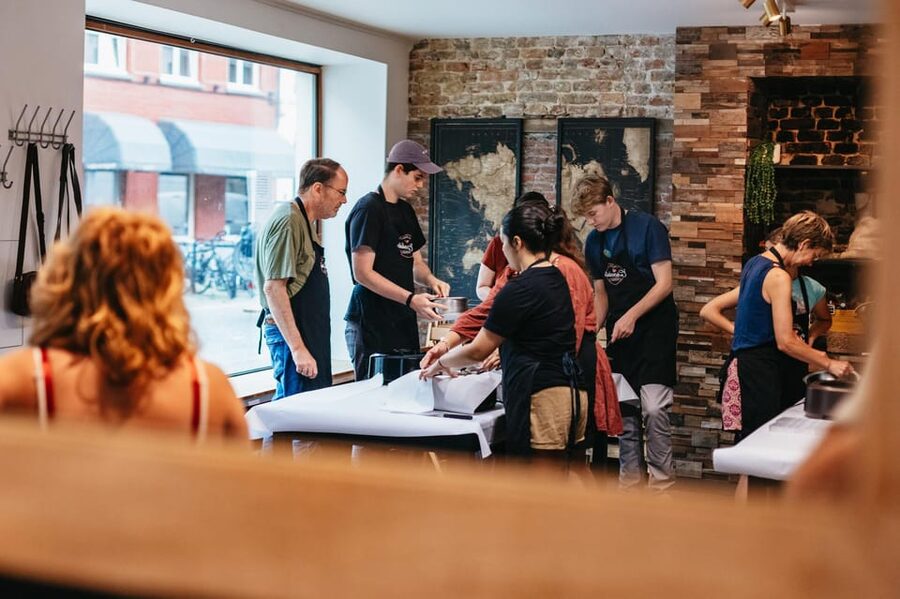
Mendiants are the simpler of the two chocolates. You create chocolate discs and add dried fruit for contrast. The chocolate gives you a smooth base, while the fruit adds sweetness, chew, and a little crisp texture.
I like this part because it gives you more freedom than the filled pralines. You can play with size, arrangement, and the amount of topping. The basic form is straightforward, but the finished pieces can look quite different depending on how you decorate them.
Mendiants also make a good counterpoint to the pralines. The pralines teach you about shells and fillings. The mendiants show how much you can do with good chocolate and a few well-chosen toppings. You get two different styles of Belgian sweet in one class, rather than repeating one recipe for the full session.
The activity description says you will create at least 30 chocolates in total. The exact number can vary, but the available comments repeatedly point to a generous amount to take home. Several people described leaving with a full box or more than 20 pieces per person. Do not assume every piece will look shop-perfect, but you should have plenty to eat and share.
What the 150 minutes feel like
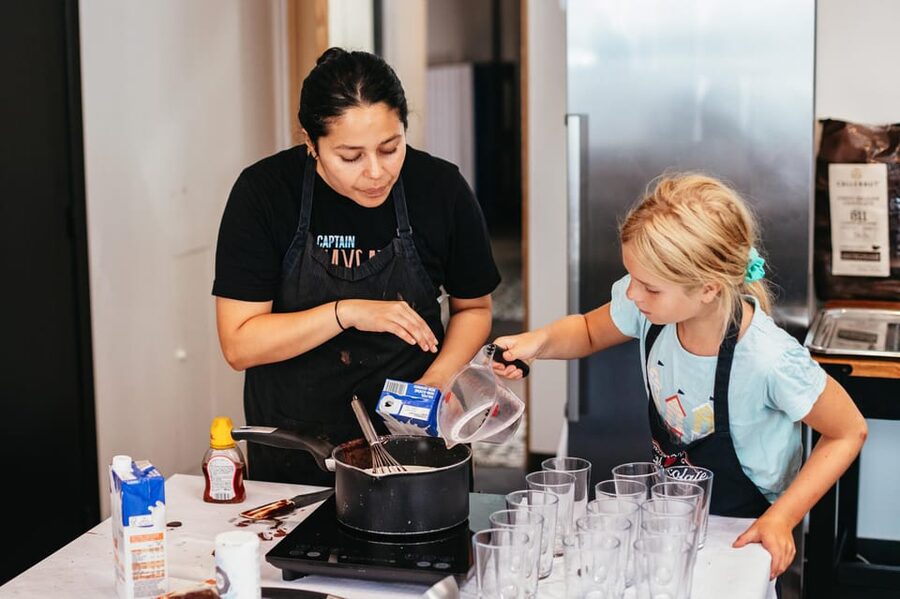
Two and a half hours is long enough to make the experience feel substantial without taking your entire day. The time is divided between instruction, preparation, hands-on work, waiting for chocolate stages, and packing the finished pieces.
The class is structured, but it should not feel like a timed factory line. Guides have been praised for keeping things moving while making the session fun. That matters because chocolate work has pauses, and a good instructor fills those pauses with useful advice or stories rather than letting the group wonder what comes next.
The social side is another part of the experience. You work with your own booking group at the station, while the wider room may include people from several countries. One of the pleasant features is that you can meet other people without being forced into a large team activity.
The limitation is that the pace will not be fully yours. If you are an experienced baker or chocolatier, some steps may feel basic. If you are very particular about presentation, the group format may also mean you do not get unlimited time for each piece. For most first-time participants, though, the guided pace is likely to be helpful.
How good is the value at $69?
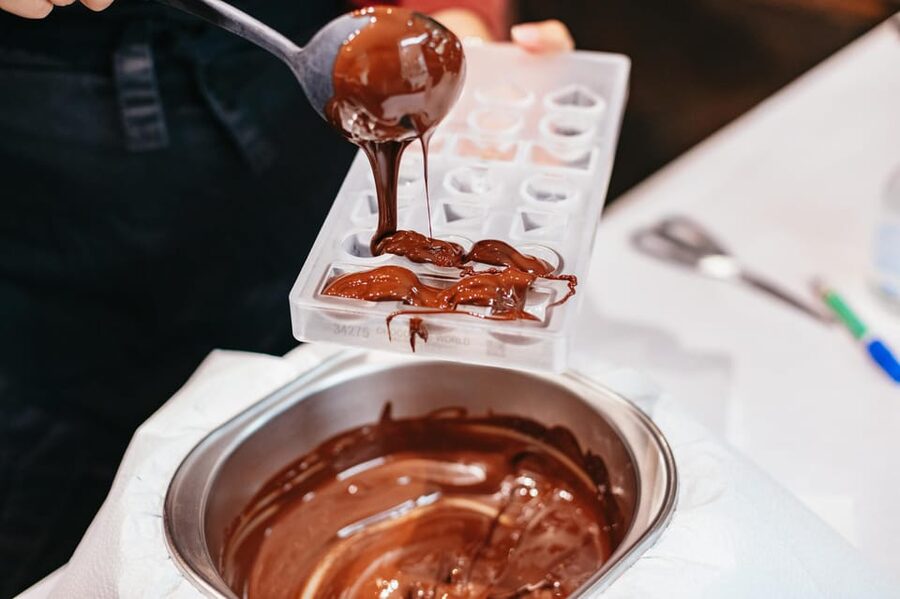
At $69 per person, this is not the cheapest chocolate stop in Bruges. You can buy a small box of pralines for much less. The price makes more sense when you count the ingredients, equipment, apron, instructor, hot chocolate, and box of handmade chocolates included in the session.
You are paying for an activity and an edible result. The finished chocolates are not merely a token sample. The stated target is more than 30 pieces, and the amount described by participants often sounds generous enough for gifts, family, or several days of snacks.
The best value comes if you care about the process. If you only want Belgian chocolate to eat, a shop visit will be faster and probably cheaper. If you want a hands-on Bruges memory, a practical skill, and a box of sweets made by you, $69 is easier to justify.
I would also consider the time of year. Chocolate is a comfortable indoor activity in cool or rainy weather, and Bruges often rewards having a planned indoor option. In warm conditions, you will need to treat the box carefully after class, since handmade chocolate is more delicate than a sealed souvenir package.
Who should book this experience?
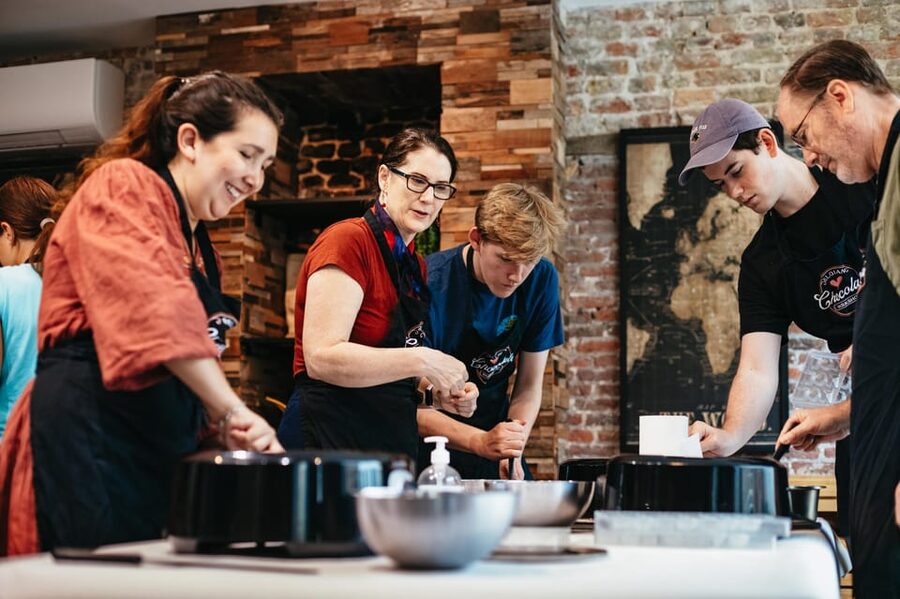
This class works especially well for couples, friends, families with older children, and small groups looking for a shared activity. The age minimum is 12, so it suits teenagers more than younger children. A teenager can take part in the practical work and leave with something tangible, which is often more satisfying than a standard sightseeing stop.
It is also a good choice for people who enjoy food but do not consider themselves expert cooks. The activity is designed to teach the basic methods without making the work too difficult. Guides are there to explain, demonstrate, and help when needed.
You should think twice if you dislike communal work, have limited time in Bruges, or want a fully dairy-free experience without arranging an alternative. The standard filling uses milk chocolate, although a dairy-free option is available if requested at the start.
Spectators and non-participating companions are not admitted. Everyone entering should have a booking and be ready to join the work.
Practical planning for your Bruges day
Allow the full 150 minutes, plus walking time to and from the workshop. Since the location is close to Grote Markt, you can pair it with central Bruges sightseeing rather than treating it as a separate excursion.
Wear something you can work in comfortably. Aprons are supplied, but chocolate making is still a hands-on activity. Keep the box level when you leave, and avoid planning a long, careless walk in warm weather if you want the chocolates to arrive home in good shape.
The activity offers free cancellation up to 24 hours before the start time, and you can reserve now and pay later. Those terms are useful if your Bruges schedule depends on train times or changing weather, but you should still check the available starting time before building the rest of your day around it.
The overall rating is 4.7 from 620 reviews, with especially strong praise for the instructors, clear explanations, organization, good ingredients, and the quantity of chocolate produced. Names change by session, but the repeated pattern is instructors who are friendly, funny, patient, and willing to help.
Should you book the Bruges chocolate workshop?
Book it if you want to understand Belgian chocolate by making it, not just eating it. The combination of pralines, ganache, mendiants, tempering, hot chocolate, and a box of at least 30 pieces gives you plenty to do for $69.
Skip it if your Bruges visit is tightly packed or if you would rather spend the same money on a selection of chocolates from several shops. For most visitors with two and a half hours to spare, I think the workshop offers a better memory than another quick purchase, especially for couples and families with children aged 12 and over.
FAQ
How long does the chocolate workshop last?
The workshop lasts 150 minutes, or two and a half hours.
What chocolates will I make?
You will make Belgian pralines with chocolate shells and a creamy filling, along with chocolate mendiants decorated with dried fruit.
How many chocolates can I take home?
You will create at least 30 chocolates, which you can eat during or after the workshop and take home in the provided box.
Where is the meeting point?
The workshop is at Grauwwerkersstraat 15, on the corner of Grauwwerkersstraat and Naaldenstraat in central Bruges. It is about five minutes on foot from Grote Markt and about 20 minutes from station Brugge.
Is the workshop suitable for children?
Children under 12 are not admitted. Participants aged 12 and older can join, and everyone attending must take part because spectators are not allowed.
Can I join if I cannot have dairy or gluten?
The dark chocolate used for the praline shells is gluten-free and dairy-free. The filling normally uses milk chocolate, but a dairy-free alternative is available if you request it at the start of the workshop.
Just added around Bruges
- Private Belgian Chocolate Tour in Bruges★ 5.0 · 19 reviews
- Private Bruges’ Iconic Sites and Chocolate Tasting Tour★ 5.0 · 8 reviews
- Unique Belgian Chocolate Making Workshop in Bruges★ 5.0 · 47 reviews
- Secrets of Bruges: Walking Tour With a Chocolate and Waffle Bite★ 5.0 · 27 reviews
- Bruges Beer Tour with chocolate pairing by a young local★ 5.0 · 13 reviews
- Evening Delights: Bruges Tour with Beer & Chocolate★ 4.0 · 4 reviews
- Tasty massage chocolate and spicy stories!★ 4.5 · 17 reviews
- Authentic and Complete Bruges, with Local Guide and Chocolate★ 5.0 · 12 reviews
Bruges Chocolate Tours, compared.
Choco-Story Museum with Audio Guide and Tastings
Read our review →
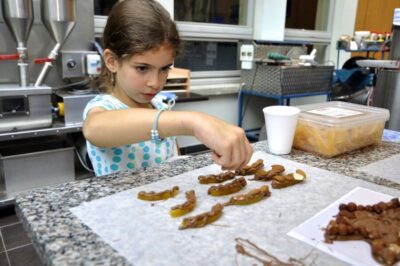
Chocolate Making Workshop and Chocolate Museum Entry
Read our review →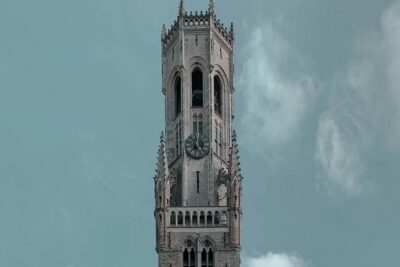
2-Hour Historical Walking Tour in Bruges with Praline Included
Read our review →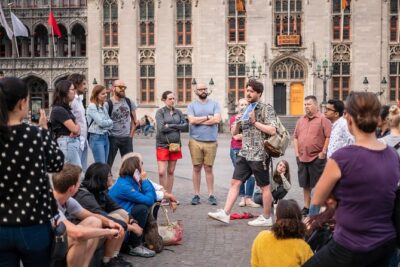
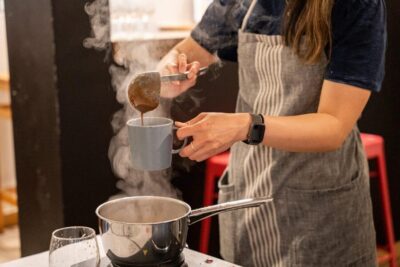
Belgian Chocolate Making Workshop with Beer Tasting
Read our review →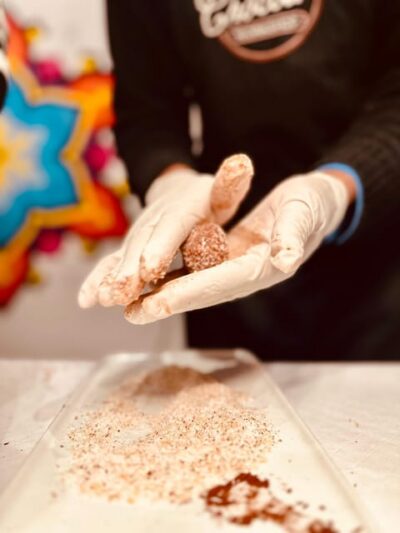
Browse the lists this tour appears in