
REVIEW · CHOCOLATE MAKING WORKSHOPS
Bean to bar Chocolate Workshop in Ho Chi Minh City
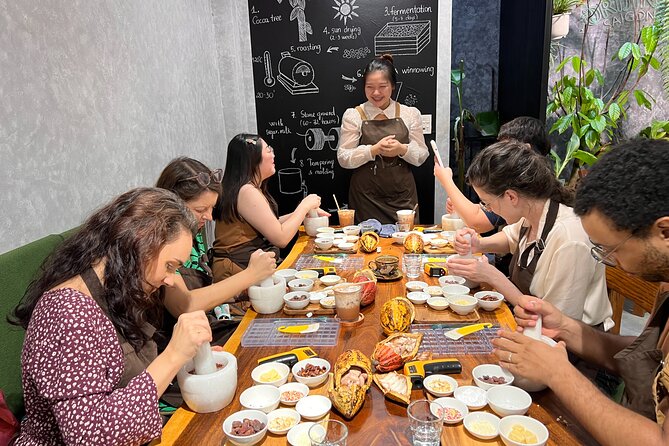
The best part of this Ho Chi Minh City chocolate workshop is that you start with the cacao itself, not a pre-made chocolate mix. You taste a fresh pod, husk beans, grind cacao paste by hand on a granite stone, and finish with chocolate bars you can decorate and carry home.
I like the clear connection to Vietnamese cacao and the fact that you make the chocolate from the first stage to the final bar. I also like the small group limit of 10, which should give you room to work. The one drawback is physical: grinding cacao with a mortar can be tiring, especially for younger children.
Key points about the Ban Cacao workshop
- Fresh cacao comes first: Taste the fruit before working with the beans.
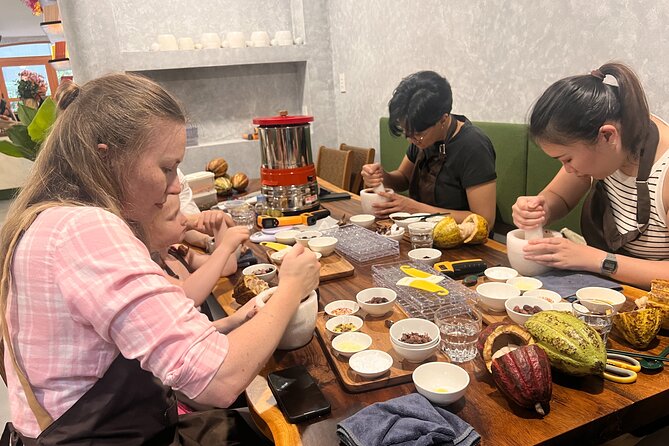
- Traditional hand grinding: Use a granite mortar to turn cacao into paste.
- Local chocolate focus: Learn how Vietnamese makers use local cacao and ingredients.
- Two-hour format: The class fits neatly into a morning or afternoon in District 1.
- Chocolate and drinks included: Make bars to take home and enjoy a hot or iced chocolate during the class.
- Small-group setting: The maximum is 10 participants, with the activity beginning and ending at Ban Cacao.
From fresh cacao pod to finished bar
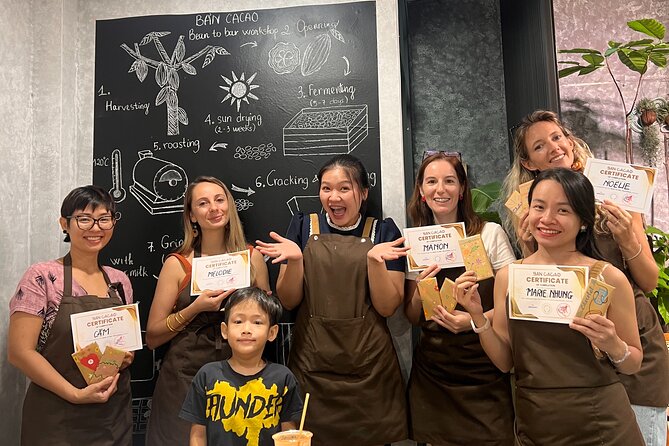
This is not simply a chocolate tasting with a short demonstration attached. The class follows the basic path from pod to bar, giving you a useful look at the work hidden behind a finished square of chocolate.
You begin with an explanation of cacao pods, beans, and the process of making chocolate. The class also covers the history of cacao in Vietnam and the way Vietnamese chocolate makers use local ingredients. That background matters because it places the activity in a local setting rather than treating cacao as a generic product.
The workshop takes place at Ban Cacao, a Vietnamese chocolate maker in District 1. You are not being driven out to a plantation, and the experience does not claim to be a farm visit. Instead, it offers a compact look at production inside the city, close to the main sightseeing area.
The two-hour length is sensible. You have enough time to handle the ingredients and make something yourself, but the class does not take up a full day. If you are building a busy Ho Chi Minh City schedule, this is an easy activity to pair with other plans in District 1.
More Chocolate Making Workshops in Vietnam:
- Phu Quoc: Bittersweet Chocolate Factory Tour & Workshop
★ 4.5 · 38 reviews - Alluvia Hoi An Chocolate Making Class
★ 4.5 · 12 reviews - Ho Chi Minh City: Premium Bean-to-Bar Chocolate Workshop
★ 4.8 · 8 reviews
Tasting cacao before it becomes chocolate
One of the more unusual steps is tasting fresh cacao fruit. Most people know chocolate in its finished form, but far fewer have tasted the fruit that surrounds the beans.
This first taste helps you understand that cacao is not simply sweet chocolate at the beginning. The fresh pod gives you a direct connection to the raw ingredient before it is husked, ground, mixed, and molded.
You also work with cacao beans, cacao nibs, cacao butter, and cane sugar. Seeing these materials together gives you a better sense of how texture and flavor are built. Cacao nibs bring the roasted cacao character, cacao butter affects the mouthfeel, and cane sugar adds sweetness.
The workshop is especially useful if you enjoy food experiences that explain process. You are not only sampling something unusual. You are learning why the finished chocolate requires several stages and different ingredients.
Husking beans and grinding cacao paste
After the introduction and fruit tasting, you husk your own cacao beans. This is a simple but important hands-on step. You get to handle the beans rather than watching someone else do all the work.
The most traditional part comes next, when you make cacao paste with a granite stone mortar. The mortar, rather than an electric machine, slows the process down and makes the work visible. You can see why chocolate production takes effort long before a bar reaches a shop shelf.
This is also where the class demands the most physical work. Grinding can be tiring, and the experience is not completely passive. For an adult, that hands-on effort is part of the appeal. For children, it is worth keeping expectations realistic.
A family who brought an 8-year-old found the class fun and informative, but noted that the grinding was tiring. The practical advice is simple: children around that age may enjoy the workshop, but they may need help and patience during the mortar work. The activity is best for children over 8 who can take part in a process rather than expecting nonstop entertainment.
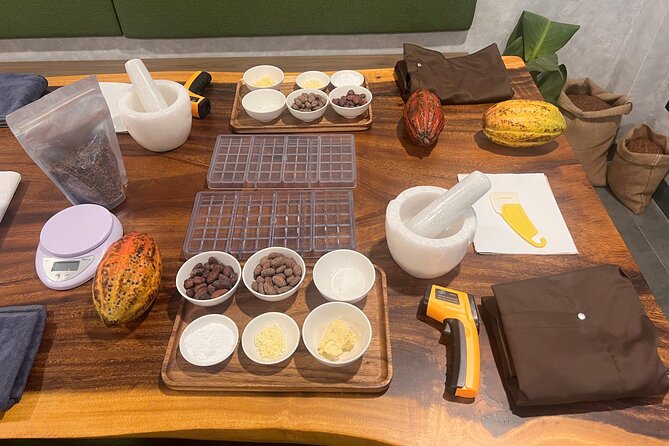
The class uses a thermometer and scale as well as the mortar. Those tools show that chocolate making is both craft and measurement. You are not just mixing ingredients by feel. Temperature and proportions matter when the paste becomes a finished bar.
Making, molding, and decorating your own bars
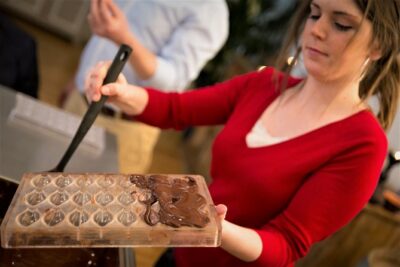
Once the cacao work is done, you move toward the part most people anticipate: making your own chocolate bars. You work with a chocolate mold and shape the mixture into bars, then decorate them yourself.
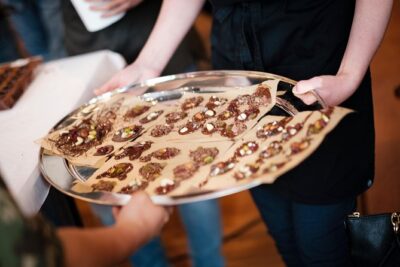
The decorating step gives the activity a personal finish. Everyone starts with the same basic materials, but the final bars and their wrapping can look different. This is a nice touch if you are doing the class with family or friends because you leave with a small souvenir made by your own hands.
Wrapping paper is provided, and you personally decorate the wrappers. That detail makes the take-home chocolate feel more like a finished gift than a loose sample. You can keep it for yourself or give it to someone back home.
The finished result is not the only point. Your bars represent the full sequence you have just followed: fruit, bean, nib, paste, mold, and wrapper. That makes the souvenir more useful than a standard chocolate purchase, especially if you want something tied to your time in Vietnam.
The class provides two bars per person, based on the family experience. You should have enough to enjoy one and save one, although the exact appearance will depend on how you decorate them.
More Drinking Tours in Vietnam:
- Hungry Mary’s Famous Beer and Chocolate Tour in Brussels
★ 5.0 · 2,258 reviews - Epic Yarra Valley Wine Tour + Lunch, Chocolate & Gin/Beer Option
★ 5.0 · 1,819 reviews - Brussels Chocolate Beer Waffle and Belgian Whiskey All-in-One (Small Group) Tour
★ 5.0 · 551 reviews - Project Chocolat Tree to Bar Tour at Hotel Chocolat Saint Lucia
★ 4.5 · 501 reviews
A chocolate drink adds a welcome break
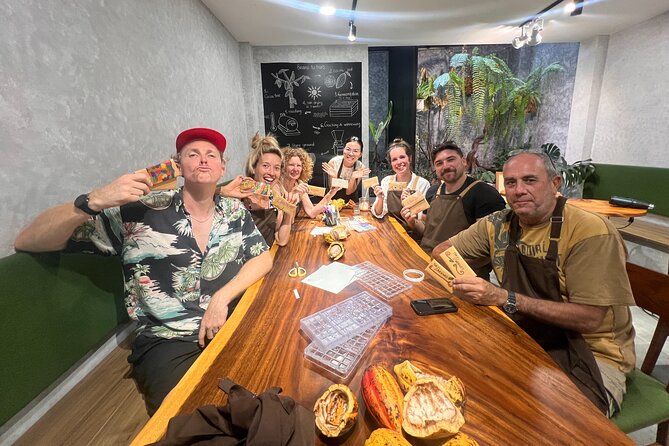
Each participant receives a drink during the class, with a choice of hot or iced chocolate. This gives you a pleasant break from the hand work and lets you taste chocolate in another form.
The drink is also a practical part of the experience. Grinding cacao by hand can be tiring, particularly for children, so having something to drink during the session helps keep the pace comfortable.
Do not think of the drink as a separate café stop. It is part of the workshop and fits the theme of the class. You get to compare the finished beverage with the raw fruit, beans, and paste you have already handled.
For chocolate fans, this adds value to the $32 price. You are receiving instruction, ingredients, equipment, a drink, and finished bars rather than paying only for a short tasting.
What the $32 price gets you
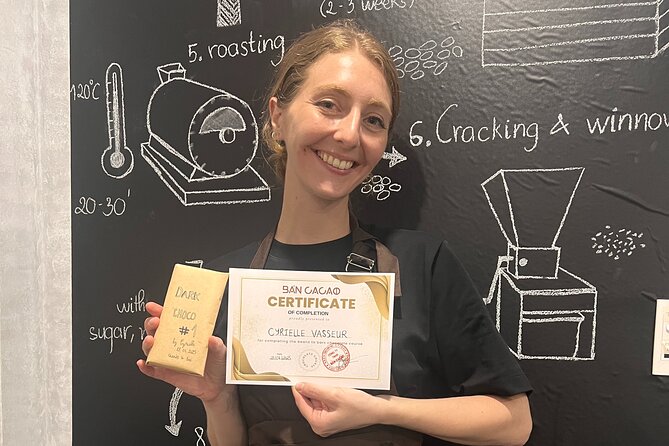
At $32 per person, this is not the cheapest way to spend two hours in Ho Chi Minh City. Its value depends on what you want from the activity.
If you only want to eat chocolate, you could spend less at a shop. But this workshop includes a complete process, hands-on work, a drink, and chocolate to take home. You also get access to equipment such as the granite mortar, thermometer, scale, and mold.
The price makes more sense for people who enjoy food production and want an activity with a clear beginning and end. You are paying for participation, not just consumption.
I would consider it good value for a family, couple, or small group that wants something different from standard city sightseeing. It is also a useful option on a hot or rainy day because the entire activity takes place at the Ban Cacao store.
The small group limit helps here. With no more than 10 participants, the session should feel more manageable than a large demonstration. The information provided does not promise private instruction, so you should still expect to share the space and equipment with other participants.
Location, timing, and getting there
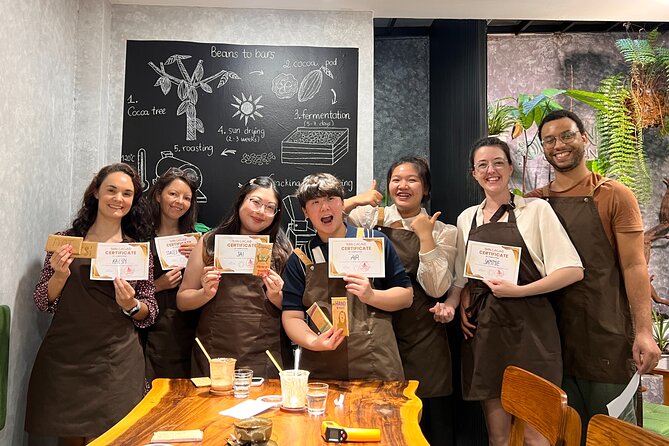
The meeting point is 89/14 Hàm Nghi, in District 1, at Ban Cacao, Ho Chi Minh City. The activity ends at the same place, so you do not need to arrange a separate return transfer.
The location is near public transportation, which makes it practical if you are already exploring central Ho Chi Minh City. Check the address carefully before setting out because the meeting point is given as a specific street number and lane location.
The class lasts about two hours. Since there is no transportation between stops, your main timing concern is simply arriving at the store in time for the scheduled start.
The experience is commonly booked about 11 days ahead. That does not mean you must book that far ahead, but it is a useful planning signal. If your schedule is fixed, booking early is sensible, especially because the group limit is only 10 people.
A mobile ticket is accepted, which keeps the arrival process simple. Confirmation is provided when you book.
Who will enjoy this class most
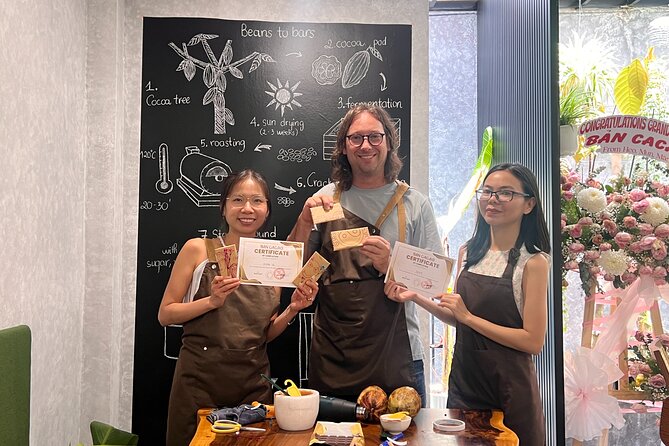
I would choose this workshop if you like food activities with real participation. You will handle beans, use a mortar, work with a scale and thermometer, and decorate your own bars. It is a better fit for you than a quick tasting if you want to understand how an ingredient changes at each stage.
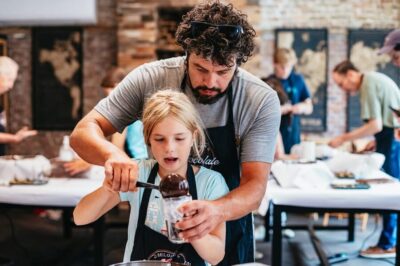
Families can also make good use of the class. An 8-year-old took part successfully, though the grinding was tiring. Children who enjoy crafts, cooking, and making things will likely get more from it than children who want a fast-paced attraction.
Couples and friends may enjoy the creative side. The activity gives you a shared task, and the decorated wrappers make a lighthearted souvenir. It is also an easy way to spend part of a day without committing to a long excursion outside the city.
Chocolate enthusiasts will appreciate the local focus. The workshop uses cacao from Vietnam and introduces the way Vietnamese makers work with local ingredients. That makes it more specific than a general chocolate-making class with no connection to its location.
You might skip it if you dislike hands-on work, have limited patience for repeated grinding, or want a tour centered on farms and rural scenery. This is a city workshop at a chocolate maker, not a plantation visit.
Practical tips for a smoother visit
Arrive ready to work with your hands. The class supplies the tools and ingredients, but the process includes husking, grinding, measuring, molding, and decorating.
If you are bringing a child, explain that the mortar work is part of the class and can take effort. An adult may need to help with the grinding, particularly if the child is young or tires easily.
Plan to stay for the full two hours. Leaving early would mean missing the later stages, especially molding, decorating, and wrapping the bars you take home.
Keep the address available on your phone. The activity starts and ends at Ban Cacao, and the mobile ticket makes it easy to keep your booking details with you.
The cancellation policy is flexible if your plans are uncertain. You can cancel for a full refund up to 24 hours before the start time. Cancellations or changes made less than 24 hours ahead are not accepted for a refund, and the cut-off follows local time.
Should you book the Ban Cacao chocolate workshop?
Book it if you want a small, hands-on food experience in central Ho Chi Minh City. The strongest reasons are the fresh cacao tasting, traditional granite-mortar work, local Vietnamese chocolate focus, drink, and two decorated bars to take home.
I would especially recommend it for families with children over 8, couples, and anyone who likes to understand how food is made. The class has enough activity to feel worthwhile, but it still fits into a two-hour city schedule.
Think twice if your ideal chocolate experience is relaxed tasting with no effort. The grinding takes work, and the workshop asks you to participate from start to finish.
At $32, the value comes from the process and the finished souvenir, not from the amount of chocolate alone. If that sounds like your kind of afternoon, Ban Cacao offers a personal and distinctly Vietnamese way to spend two hours in District 1.
FAQ
Where does the chocolate workshop take place?
The class takes place at Ban Cacao, Vietnamese chocolate maker, at 89/14 Hàm Nghi, Phường Nguyễn Thái Bình, Quận 1, Ho Chi Minh City, Vietnam.
How long does the workshop last?
The activity lasts approximately two hours.
How much does the workshop cost?
The price is $32 per person.
What chocolate-making steps are included?
You learn about the pod-to-bar process, taste fresh cacao pods, husk cacao beans, make cacao paste with a granite mortar, create chocolate bars, decorate them, and wrap them to take home.
What materials are used?
The materials include fresh cacao fruits, cacao beans, cacao nibs, cacao butter, and cane sugar.
What tools are provided?
The class provides a granite mortar, thermometer, scale, chocolate mold, and wrapping paper.
Do participants receive a drink and chocolate to take home?
Each participant receives a hot or iced chocolate. The class also includes chocolate bars to take home, with two bars provided according to the family experience.
How many people can join the class?
The maximum group size is 10 participants.
Can children join the workshop?
The experience has been recommended for children over 8. The grinding portion can be tiring, so younger participants may need help.
Where does the activity finish?
The workshop ends back at the Ban Cacao meeting point.
Can I cancel for a full refund?
Yes. You can cancel at least 24 hours before the experience start time for a full refund. Cancellations or changes made less than 24 hours before the start time are not accepted for a refund.
Just added around Vietnam
- Full Day Experience to Farm and Chocolate★ 5.0 · 22 reviews
- Alluvia Hoi An Chocolate Making Class★ 4.5 · 12 reviews
- Cai Rang floating market, see sunrise, CaCao orchard, small canal★ 5.0 · 44 reviews
- Can Tho Motorbike Tour – Rhythms of the Mekong Delta★ 5.0 · 4 reviews
- Can Tho: Floating Market, Canals, Nature Reserve & Forest★ 5.0 · 42 reviews
- Phu Quoc: Bittersweet Chocolate Factory Tour & Workshop★ 4.5 · 38 reviews
- Ho Chi Minh City: Premium Bean-to-Bar Chocolate Workshop★ 4.8 · 8 reviews
- Group Tour: Floating Market, Rice Noodle, nursery vegatable★ 4.6 · 8 reviews
Chocolate Making Workshops, compared.
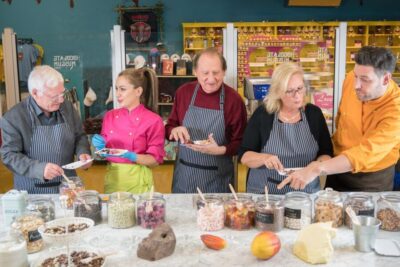
Chocolate Workshop in Chocolate Museum w/ Tasting
Read our review →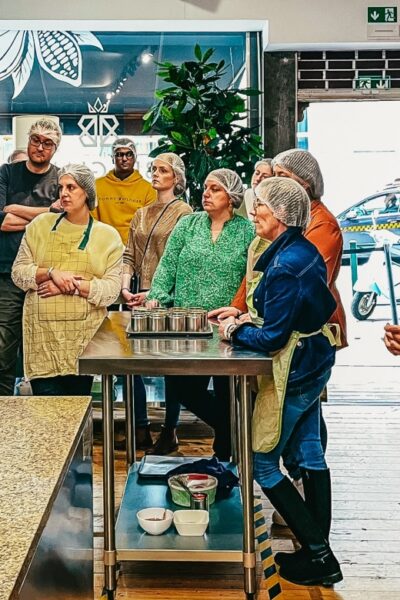
Belgian Chocolate Making Workshop with Tastings
Read our review →
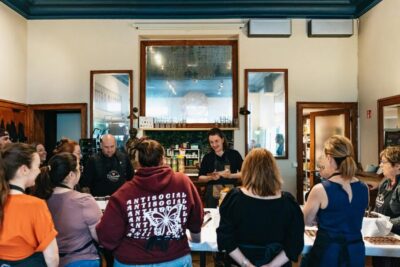
Belgian Praline and Mendiants Chocolate Workshop
Read our review →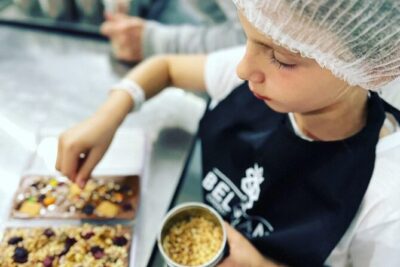
1.5h Belgian Chocolate Workshop in Brussels (bean to bar)
Read our review →Browse the lists this tour appears in