
REVIEW · CHOCOLATE MAKING WORKSHOPS
Phu Quoc: Bittersweet Chocolate Factory Tour & Workshop
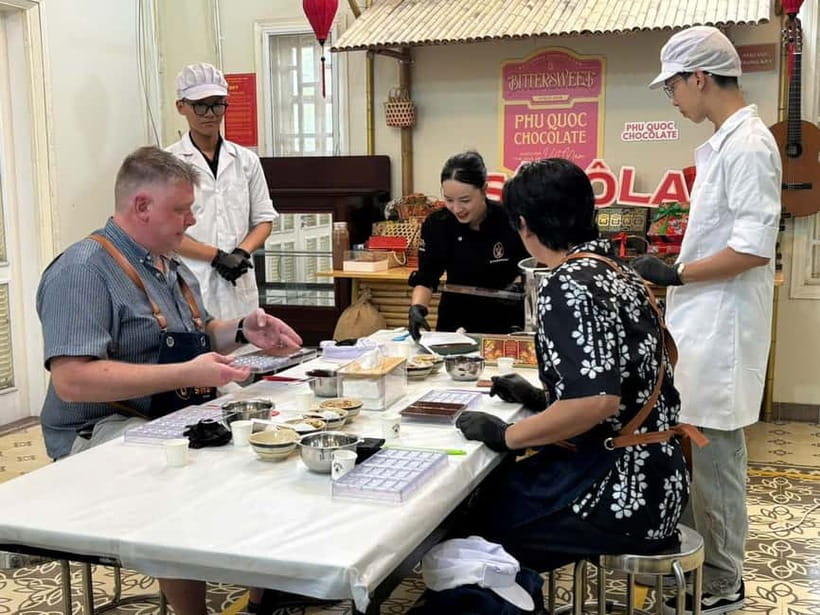
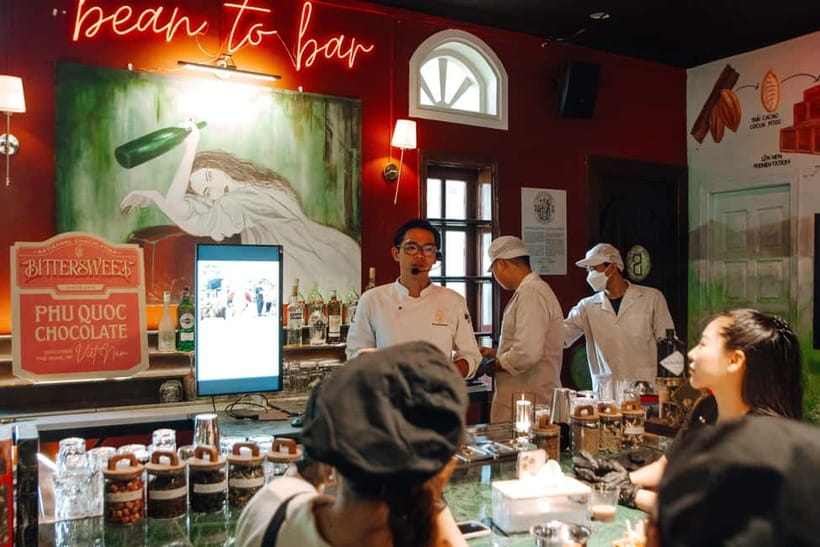
Phu Quoc’s Bittersweet Chocolate Factory gives you a close look at the island’s cacao trade, then lets you turn chocolate into the souvenir. You’ll stroll among cacao trees, taste different beans, and see how local cacao moves from roasting to grinding, tempering, and molding. The bean-to-bar focus makes this more than a quick candy stop.
I like the hands-on hot chocolate and the chance to make a 10-piece chocolate box in your own style. It suits families, couples, and anyone who wants a rainy-day break from the beach. The main caution is that the workshop can feel cramped, and some sessions move through the production explanation quickly rather than showing every step at length.
Key points to know before booking
- Cacao grows on site: Walk through a small garden and see colorful pods under the leaves.
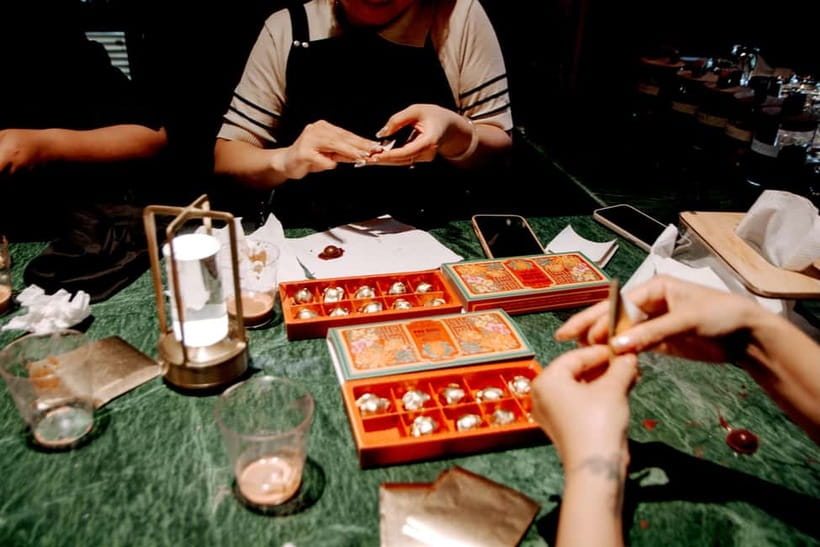
- You make the treats yourself: Prepare hot cacao, decorate molded chocolates, and take your box home.
- The process is bean to bar: The visit covers roasting, grinding, tempering, and molding.
- The tour is family-friendly: Children and adults can take part, with comfortable clothing recommended.
- The package matters: The all-inclusive option adds eight signature chocolates and two types of aged cacao liqueur.
- Allow for a compact workshop: The factory is small, and a full group may have limited room around the work areas.
A small Phu Quoc factory with a clear purpose
Bittersweet Chocolate Factory is presented as Phu Quoc’s first local chocolate factory. That gives the visit a useful sense of place. You are not simply handling imported chocolate in a themed shop. You are learning how cacao is grown and processed on the island, with the factory and garden close together.
The introduction covers cacao’s journey from South America to Phu Quoc, along with the basics of cultivation. You will see cacao pods hanging beneath green foliage and learn what the crop looks like before it becomes a bar.
Do not expect a large agricultural estate. The garden is small, and that is important to understand before you arrive. It works best as a short outdoor introduction rather than a long farm walk. If your main interest is seeing how cacao grows, you will get the essential picture, but not a full plantation tour.
The setting also helps younger children. Cacao can seem abstract when it is only discussed in a shop. Seeing the pods on the trees gives the rest of the workshop something real to connect with.
More Chocolate Factory Tours in Vietnam:
- Lindt Home of Chocolate Museum Entry Ticket
★ 4.7 · 9,329 reviews - Zurich: City Tour, Cruise, and Lindt Home of Chocolate Visit
★ 4.5 · 4,624 reviews - Zurich Sights: Cruise, Lindt Chocolate and optional FIFA Ticket
★ 4.0 · 1,028 reviews
From raw beans to molded chocolate
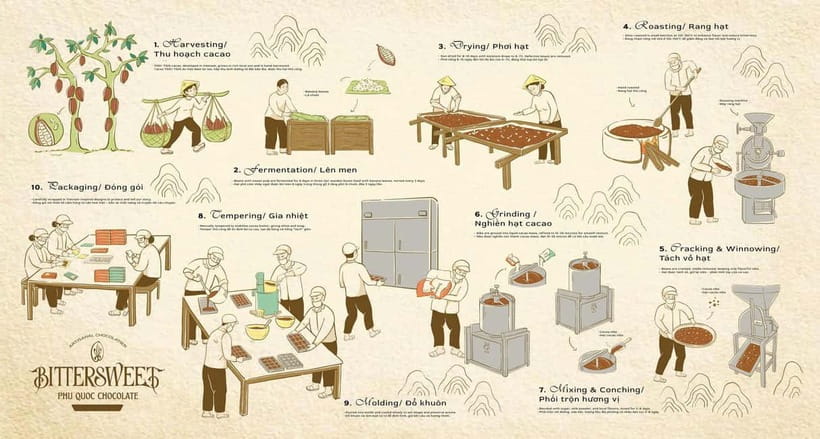
The central lesson is the bean-to-bar process. You will learn about the stages that take cacao from raw beans to finished chocolate, including roasting, grinding, tempering, and molding.
At the roasting corner, you can taste different types of cacao beans. This is a useful part of the visit because it shows that chocolate does not begin as a sweet, smooth bar. The bean has its own flavor and texture before sugar and other ingredients change it.
The factory has two modern production areas, though the working space is compact. You may see equipment and chocolate at different stages of production, but the amount of live demonstration can vary. One recent session gave only a short explanation of the cacao process, with much of the information also shown on boards outside.
That distinction matters. If you want a technical factory tour with every machine running and each stage demonstrated in detail, this may feel light. If you want a clear introduction followed by practical chocolate making, the balance works better.
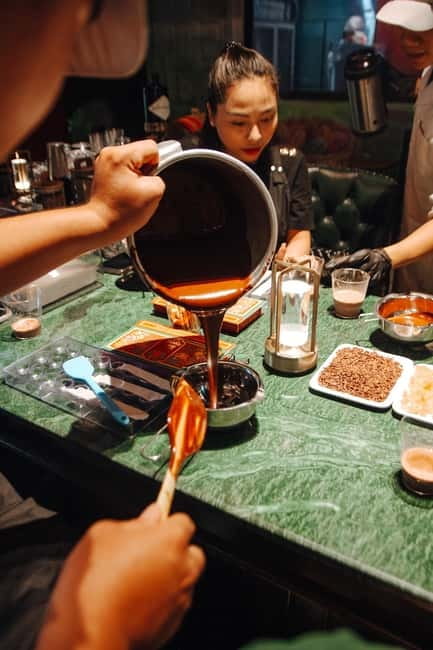
The tempering and molding stages are especially useful to watch because they explain why finished chocolate has a smooth texture and clean shape. The visit gives you a basic understanding without turning into a food-science lecture.
Making hot cacao at the roasting corner
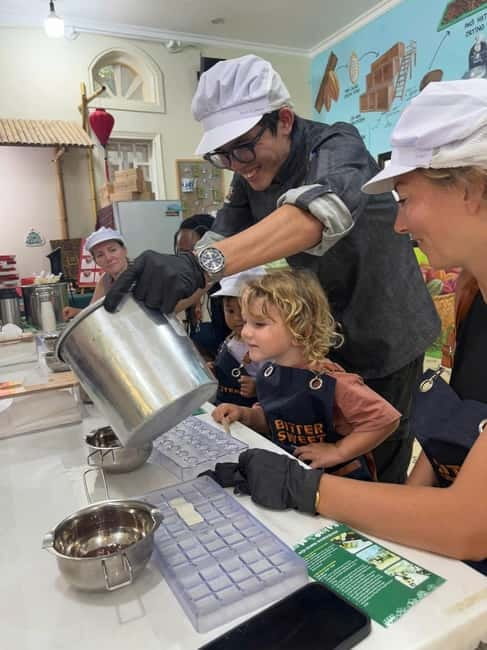
One of the nicest parts is preparing your own hot cacao. You will make it at the roasting workshop, then drink it inside the cozy work area.
This is a simple activity, but it gives the session a warm, social rhythm. You are not standing behind a barrier watching someone else work. You get to handle part of the process, then taste the result immediately.
The hot cacao is also a good reason to wear comfortable clothing that you do not mind getting messy. Aprons are provided, but one account noted that an apron and some hats were not especially clean. That may not be typical, but it is a sensible reminder to dress for a hands-on food activity rather than a polished restaurant visit.
The workshop is accessible to wheelchair users, though the small interior may feel tight when the room is full. If you need generous turning space, contact the provider before booking so you can check the arrangements for your departure.
Creating your own 10-piece chocolate box
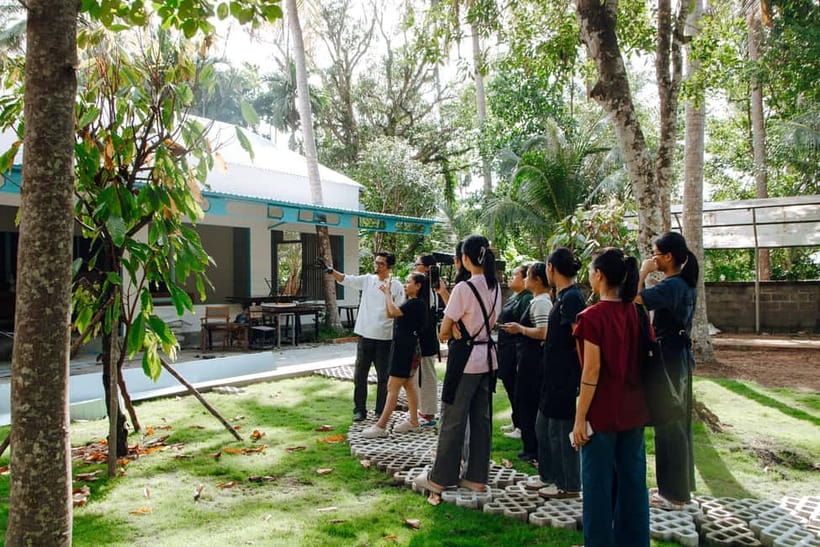
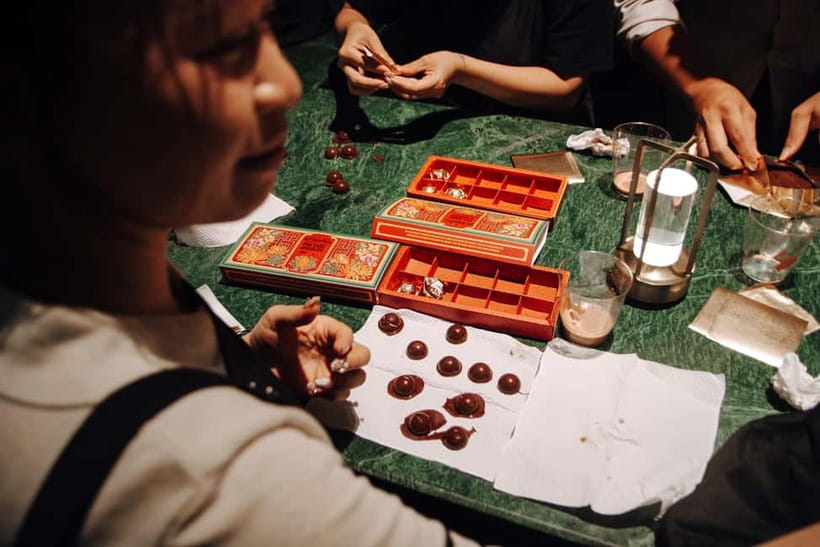
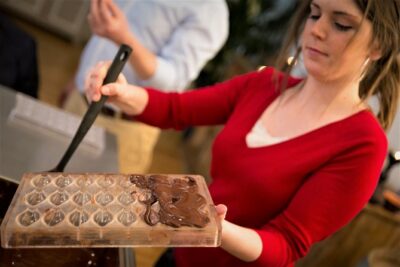
The most memorable part for many people is the molding activity. You add chocolate to molds, choose from fun shapes, and finish the pieces with toppings. The standard activity includes a box of 10 chocolates that you make yourself.
This is not a professional chocolatier class. You will not be tempering a large batch from scratch or learning advanced decoration techniques. The activity is closer to guided chocolate assembly, but that is exactly why it works for mixed-age groups.
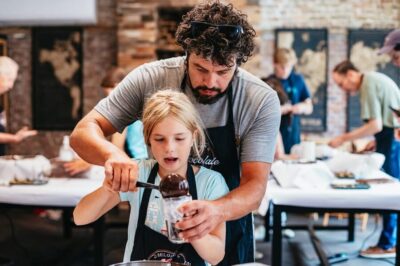
Children can take part without needing specialist skills, and adults can still enjoy the creative side. You decide how to shape and decorate the pieces, then pack them to take home. The result is a personal souvenir rather than another factory-made bar from a shop shelf.
The amount of creative freedom may be modest. One session involved placing chocolate into molds and adding two toppings, with the process completed fairly quickly. Go in expecting a fun, simple workshop, not a full pastry course.
Your chocolates may need time to set before they are packed. The exact handling process is not specified, so follow the guide’s instructions and keep the box level on the way back to your accommodation.
More Chocolate Making Workshops in Vietnam:
- Alluvia Hoi An Chocolate Making Class
★ 4.5 · 12 reviews - Bean to bar Chocolate Workshop in Ho Chi Minh City
★ 5.0 · 10 reviews - Ho Chi Minh City: Premium Bean-to-Bar Chocolate Workshop
★ 4.8 · 8 reviews - Da Lat: Handmade Chocolate Workshop
★ 5.0 · 4 reviews
Tasting the factory’s chocolate range
Chocolate tasting forms another part of the visit. The all-inclusive package includes eight signature chocolates from the workshop, while the general activity includes tasting different cacao beans and the chocolates produced during the session.
The tasting helps you compare styles rather than treating chocolate as one single flavor. You may notice differences between cacao beans, finished chocolate, and the sweeter molded pieces you make yourself.
Portions can be small. A full session may offer only one or two chips of each flavor, so this is a sampling rather than a dessert buffet. That is enough to compare several styles, but not enough to replace a meal.
The all-inclusive option also includes two types of in-house aged cacao liqueur. This is available only with that package and is best suited to adults who want to explore cacao beyond chocolate bars. Since meals and other drinks are not included, eat beforehand if you expect to be hungry.
What the two-hour schedule really means
The advertised duration is two hours, but the actual pace can vary. Some sessions may finish in about 75 minutes, especially if the group moves quickly through the factory explanation and tasting.
That makes the tour easier to fit into a busy Phu Quoc schedule, but it also creates a value question. At $21 per person, the price is reasonable if you value the guided introduction, hot cacao, hands-on molding, tasting, certificate, souvenir photo, and take-home chocolate. It feels less convincing if you mainly want a long production tour.
The price also includes something you cannot get from a supermarket bar: the chance to make your own box and connect the finished product with the island’s cacao growing. For families, that personal activity can justify the cost. For serious chocolate fans, the short technical explanation may leave you wanting more.
Check the package carefully before paying. The all-inclusive option adds eight signature chocolates and two aged cacao liqueurs. The basic inclusion list covers the garden, bean-to-bar explanation, cacao tasting, hot cacao, molding, certificate, photo, and your own chocolates.
Finding the workshop from Duong Dong or the airport
The factory is south of Duong Dong center. Follow Tran Hung Dao Street, then turn into the alley marked Cau Ba Phong and look for the Bittersweet Chocolatier sign.
From Phu Quoc Airport, the journey takes about 10 minutes by taxi or motorbike. Transportation is not included, so you need to arrange your own ride. There is small parking for motorcycles and cars directly in front of the workshop.
Large buses have a separate practical issue. Vehicles bigger than 29 seats must stop on the main road, followed by a walk of about two minutes to the factory. That is short, but it is worth telling a group leader in advance.
The meeting point is useful for independent visitors because it is not hidden behind a resort transfer system. Still, allow enough time to find the alley. Arriving 15 minutes early is wise, especially if you are coming from the airport or traveling with children.
Guides, language, and the feel of the session
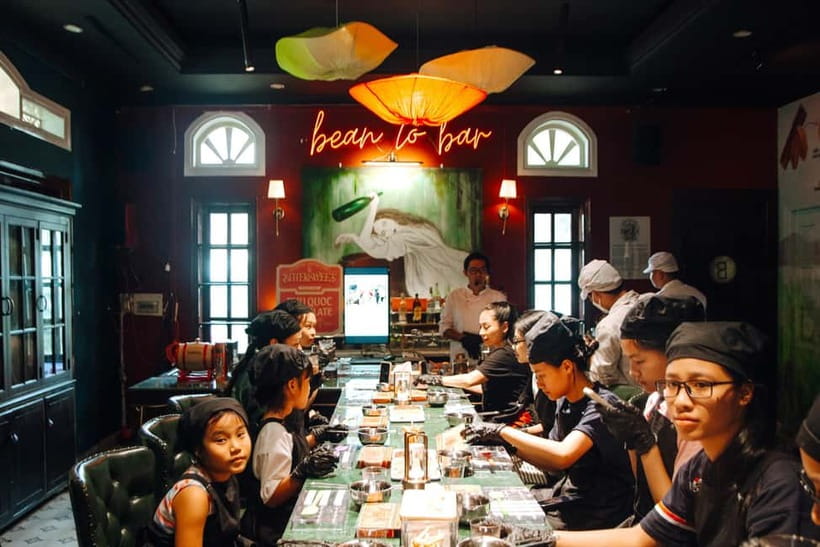
Tours are offered in Vietnamese and English. The guide explains the cacao story, leads the garden walk, and shows you through the chocolate-making stages before the practical work begins.
Teebi has been singled out by name for friendly, clear explanations, though guide assignments can change. The quality of the session depends partly on how much detail the guide gives and how the group is managed.
Late arrivals can affect the pace. One session was interrupted when the guide left to handle people arriving after the stated meeting time. Arriving early is not just polite. It protects your own time and helps the group stay together.
The workshop is suitable for all ages. I would particularly recommend it to families, couples, and people looking for an activity that does not require a full day. It is also a good choice when you want something connected to local food rather than another beach excursion.
Comfort, cleanliness, and practical expectations
Wear comfortable clothing. Chocolate work is hands-on, and splashes or toppings can make formal clothes a poor choice.
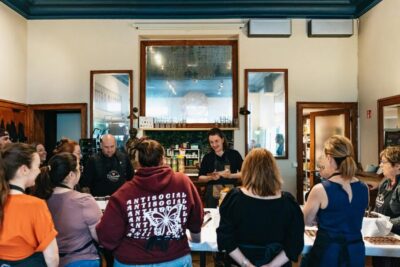
The factory is small, and a full room may feel crowded around the work tables. The compact setting is part of the local character, but it also means you should not expect the spacious layout of a large visitor center.
Cleanliness may be uneven. An apron and hats were reported as being visibly dirty during one busy session. If that concerns you, ask for a clean apron before beginning. This is a practical request, not a reason to skip the activity, but it is worth knowing before you arrive.
The workshop is wheelchair accessible, although the tight interior may affect comfort during a busy departure. Ask about the group setup if you need extra room.
Cancellation is free up to 24 hours before the start time, and you can reserve now and pay later. Those options help if your Phu Quoc plans depend on weather or changing transport arrangements.
Who will enjoy this chocolate workshop most?
You should consider booking if you want a short, local food activity with something to take home. The combination of cacao trees, factory equipment, tasting, hot chocolate, and molded sweets gives the two hours several different parts.
Families will appreciate the simple instructions and all-ages format. Children can see the pods, taste cacao, and create their own pieces without needing advanced cooking skills.
Couples and solo visitors can also enjoy it, especially on a hot afternoon or during a break from outdoor sightseeing. The certificate and souvenir photo add a light, playful finish.
Chocolate specialists may want to adjust expectations. The tour introduces bean to bar but does not promise a long technical demonstration. The factory is small, the tasting portions are limited, and the molding activity is fairly simple.
Should you book Bittersweet Chocolate Factory?
Book it if you want a friendly, hands-on food stop and value the take-home chocolate more than a detailed factory lecture. At $21, the package offers a fair mix of tasting, garden time, hot cacao, molding, and souvenirs, especially for families.
Choose the all-inclusive option if you want the larger tasting selection and cacao liqueur. Arrive early, wear casual clothes, and allow for a compact workshop where the exact pace can vary.
Skip it if your main goal is a long, highly technical production tour or a spacious, polished visitor center. For everyone else, Bittersweet Chocolate Factory is a pleasant way to connect Phu Quoc’s cacao crop with something you can taste and make yourself.
FAQ
Where is Bittersweet Chocolate Factory located?
It is in Kien Giang province on Phu Quoc Island, south of Duong Dong center. From Tran Hung Dao Street, turn into Cau Ba Phong alley and follow the Bittersweet Chocolatier sign.
How long does the activity last?
The stated duration is two hours. The exact pace can vary, and one session finished in about 75 minutes.
How much does the tour cost?
The listed price is $21 per person.
Is transportation included?
No. You must arrange your own transportation to and from the factory.
How far is the factory from Phu Quoc Airport?
The factory is about 10 minutes from Phu Quoc Airport by taxi or motorbike.
Can I park at the workshop?
Yes. Small parking for motorcycles and cars is available in front of the workshop.
Is the activity suitable for children?
Yes. The activity is suitable for all ages and includes hands-on chocolate molding.
What will I make during the workshop?
You will make your own hot cacao and create a 10-piece box of molded chocolates to take home.
Is chocolate tasting included?
You can taste different cacao beans and chocolates made during the workshop. The all-inclusive package includes eight signature chocolates.
Is cacao liqueur included?
Two types of in-house aged cacao liqueur are included with the all-inclusive package only.
What languages are available?
The activity is offered in Vietnamese and English.
Is the workshop wheelchair accessible?
Yes, the activity is listed as wheelchair accessible. The workshop is small, so you may want to confirm the space available for your specific departure.
What should I wear?
Wear comfortable clothing suitable for a hands-on food activity. An apron is provided, but casual clothes are still the sensible choice.
Can I cancel my booking?
Yes. You can cancel up to 24 hours in advance for a full refund. You can also reserve now and pay later.
Just added around Vietnam
- Full Day Experience to Farm and Chocolate★ 5.0 · 22 reviews
- Bean to bar Chocolate Workshop in Ho Chi Minh City★ 5.0 · 10 reviews
- Alluvia Hoi An Chocolate Making Class★ 4.5 · 12 reviews
- Cai Rang floating market, see sunrise, CaCao orchard, small canal★ 5.0 · 44 reviews
- Can Tho Motorbike Tour – Rhythms of the Mekong Delta★ 5.0 · 4 reviews
- Can Tho: Floating Market, Canals, Nature Reserve & Forest★ 5.0 · 42 reviews
- Ho Chi Minh City: Premium Bean-to-Bar Chocolate Workshop★ 4.8 · 8 reviews
- Group Tour: Floating Market, Rice Noodle, nursery vegatable★ 4.6 · 8 reviews
Chocolate Making Workshops, compared.
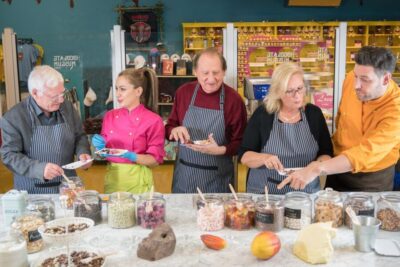
Chocolate Workshop in Chocolate Museum w/ Tasting
Read our review →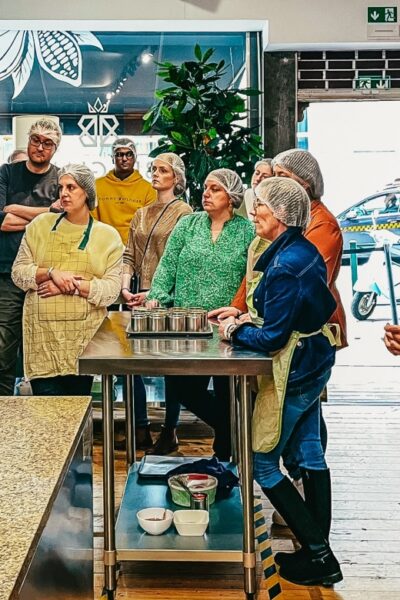
Belgian Chocolate Making Workshop with Tastings
Read our review →
Belgian Praline and Mendiants Chocolate Workshop
Read our review →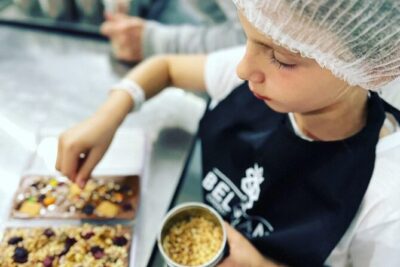
1.5h Belgian Chocolate Workshop in Brussels (bean to bar)
Read our review →Browse the lists this tour appears in