
REVIEW · FRANCE
Visit of Choco-story COLMAR, the Chocolate Museum.
Chocolate takes center stage at Choco-Story COLMAR, where cocoa moves from a pre-Hispanic forest to Spanish ships, European palaces, and modern production lines. I like the clear story and the way the museum turns each stage into a small scene rather than a wall of dry text.
I especially like the interactive games and the tasting, which give children something to do while adults follow the history. The chocolate sculptures, including a 250-kilogram Statue of Liberty, add a fine bit of spectacle. The drawback is that the visit is mostly self-guided, so anyone wanting a live expert to answer questions may find the audio format less personal.
Key points at a glance
- A journey across centuries: Follow cocoa from Aztec legend and Spanish exploration to European courts and industrial production.
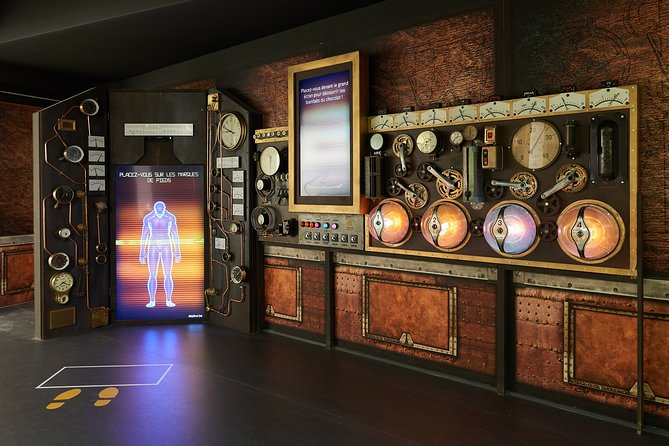
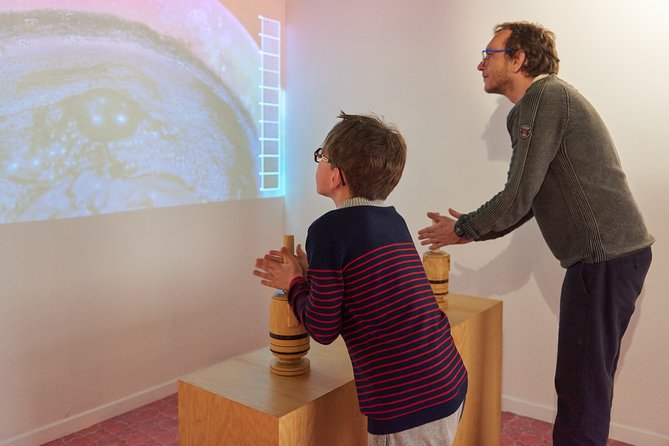
- Hands-on museum design: Expect animated panels, films, 3D projections, body-tracking technology, games, and moving set pieces.
- A 250-kilogram chocolate Statue of Liberty: The industrialization section includes large chocolate sculptures in a cabaret-style display.
- Chocolate tasting included: You can sample chocolate during the visit, though a hot chocolate drink costs extra.
- About 90 minutes: The route works well as a compact indoor stop during a day in Colmar.
- Listed price of $18.02 per person: The value is strongest for families and chocolate fans who will use the interactive features.
Starting at 12 Place de la Cathédrale in Colmar
The visit begins at 12 Pl. de la Cathédrale, in central Colmar. That location makes the museum easy to add to a walking day in the old city. You do not need to set aside half a day, since the visit takes about one hour and 30 minutes.
The museum is near public transportation, and the activity ends at the same meeting point. The group limit is listed as 200 people, so the building can accommodate a fair number of visitors. That also means the experience may feel busier at popular times, especially around the interactive stations.
Confirmation is provided at booking. Since the ticket cannot be refunded or changed, check your date carefully before paying. The listed price is $18.02 per person, though prices can change with booking conditions or currency conversion.
More Chocolate Museums in France:
- Paris: Entrance Ticket to the Chocolate Museum
★ 4.1 · 1,105 reviews - Paris: 45-minute Chocolate Making Workshop at Choco-Story
★ 4.4 · 444 reviews - Colmar: Chocolate Museum Entrance Ticket
★ 4.5 · 187 reviews
A forest, a monkey, and the first cocoa story
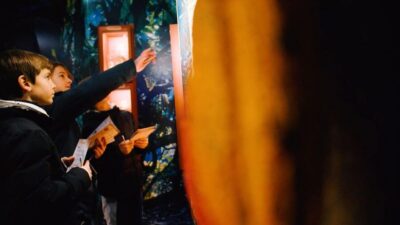
The route opens in a virgin forest, a playful choice for a museum about a plant that began far from European kitchens. An animated panel shows a little monkey tasting cocoa beans. It is a simple scene, but it gives younger children an immediate way into the subject.
From there, the story moves to an Aztec temple. You meet Quetzalcoatl, the feathered serpent god who, according to legend, brought cocoa to Earth. This section helps you see cocoa as more than a modern sweet. It had a place in religion, ceremony, and daily life long before European chocolate bars appeared.
The museum uses scenery and movement to keep the pace lively. You are not just reading about cocoa cultivation and early use. You are placed inside a sequence of settings, each with a visual cue or short activity. That approach is useful for families, though visitors who prefer quiet museum displays may find it a little theatrical.
Crossing the Atlantic on a Spanish ship
One of the more distinctive scenes places you aboard a 16th-century Spanish ship. The floor creaks, hurricane lamps move, and windows reveal the sea. These details create a sense of travel and risk without requiring a long explanation.
This is also the point where the story shifts from American origins to Europe. Cocoa did not arrive in European kitchens as a finished candy. It came as an unfamiliar product that had to be transported, prepared, sweetened, and accepted by new audiences.
I like this part because the museum connects the object in front of you, the chocolate you taste, with the difficult movement of ingredients across oceans. The physical effects are not elaborate by theme-park standards, but they give the history a clear shape.
The scene may be less satisfying if you want precise dates, trade figures, or a detailed account of Spanish colonial commerce. The presentation favors quick understanding and sensory effect. Use the audio guide for more context, and expect the experience to keep moving rather than pause for long academic discussion.
Chocolate enters the royal courts
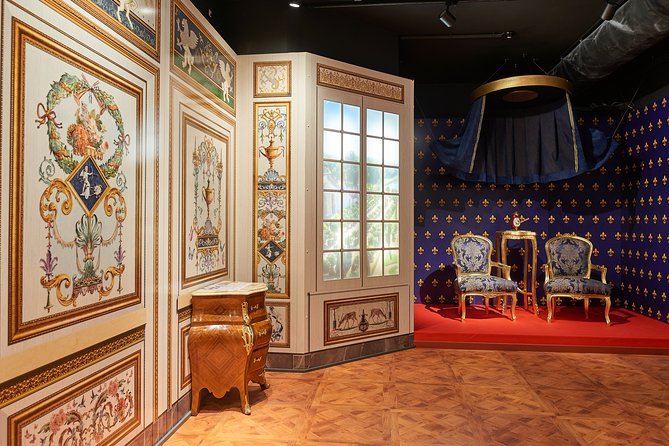
Later, chocolate makes its way into European courts. The museum gives you a chance to sit in royal armchairs and have your picture taken. This is a light moment, but it also explains how chocolate changed status in Europe.
At first, cocoa was linked with wealth and court culture. A product brought across the ocean became part of an elite world of ceremony and display. The photo opportunity helps children connect with that idea, while adults can see the contrast between early luxury and the everyday chocolate sold today.
This section is best treated as a short scene, not a full study of European court life. It gives you the broad direction of the story: cocoa moved from sacred and traditional use in the Americas to fashionable consumption in Europe.
A few more chocolate tours around France worth a look
- Paris French Sweets Tasting Tour with Pastries and Chocolates
★ 4.5 · 947 reviews - A Morning in Paris Food Tour: Croissants, Baguettes & Chocolate
★ 5.0 · 556 reviews - Saint-Germain: Gourmet Chocolate & Pastry Walking Food Tour
★ 4.8 · 495 reviews - Paris Chocolate, Macaron & Pastry Food Tour: 10 Gourmet Tastings
★ 5.0 · 339 reviews
Trying the Choco Scanner
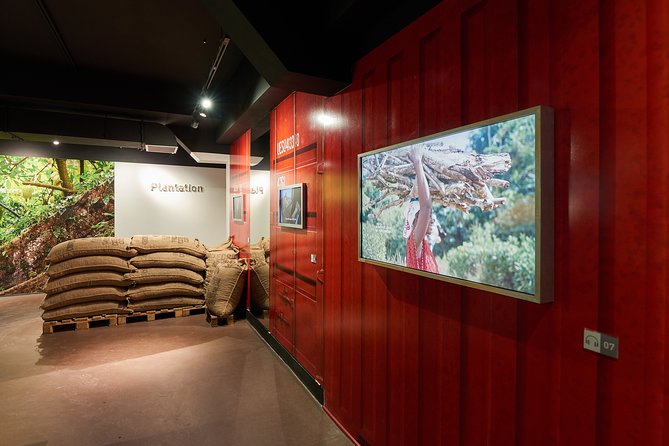
The Choco Scanner uses your body movements as part of the display. It also presents claims about the benefits of the cocoa tree’s fruit. This is one of the more modern parts of the visit, and it breaks up the historical scenes with something active.
The body-tracking feature is a good reason for families to slow down. Children can take part instead of simply listening, and adults get a quick change of pace after the historical displays. It also shows how the museum tries to make information physical and memorable.
Keep the health material in perspective. The feature presents the benefits of cocoa, but the museum visit is not a medical talk. Enjoy it as an interactive explanation of the plant and its products, not as personal health advice.
Industrialization and the chocolate cabaret
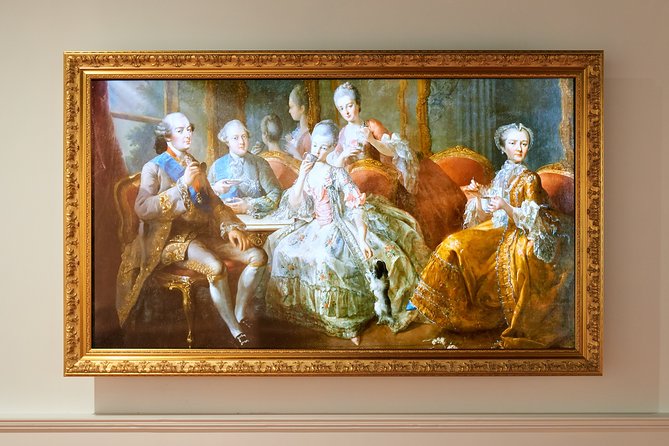
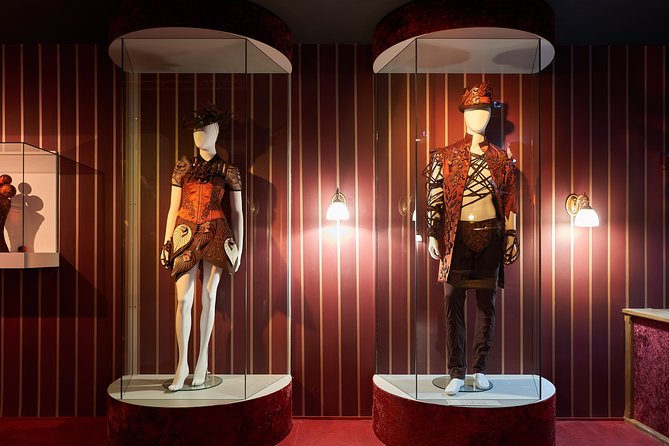
The second floor shifts the story to industrialization, when chocolate production moved toward larger-scale manufacturing. This is an important change. Chocolate became less of a court luxury and more available to a wider public.
The cabaret show is the visual centerpiece. A 250-kilogram Statue of Liberty made from chocolate lights up the display, joined by other chocolate sculptures. The size makes the point quickly: chocolate is no longer only a drink or a small handmade treat. It has become a material for large-scale production and creative display.
The sculptures are fun, but they also raise a practical question about what kind of museum this is. Choco-Story is part history lesson, part sensory attraction, and part family entertainment. If you want a traditional museum with long labels and original objects in cases, you may find the showy elements a little light. If you want a visit that keeps children involved, the balance works well.
Recipes from three master chocolatiers
A giant screen presents recipes from three master chocolatiers. This is a useful bridge between the past and the chocolate you can make or buy today. It shows technique through demonstration rather than asking you to read a long account of tempering, mixing, or shaping.
The screen format means you can follow at your own speed within the overall route. You may stop for a recipe that interests you or move on when the children are ready for the next activity. That flexibility matters because the museum is designed as a self-guided experience.
Do not expect a hands-on cooking workshop. The recipes are presented for viewing, not as a scheduled class where you prepare a dish with a chocolatier. The value here is seeing how skilled makers turn cocoa into finished products and getting ideas for what to look for in a chocolate shop.
Tasting chocolate, but not hot chocolate
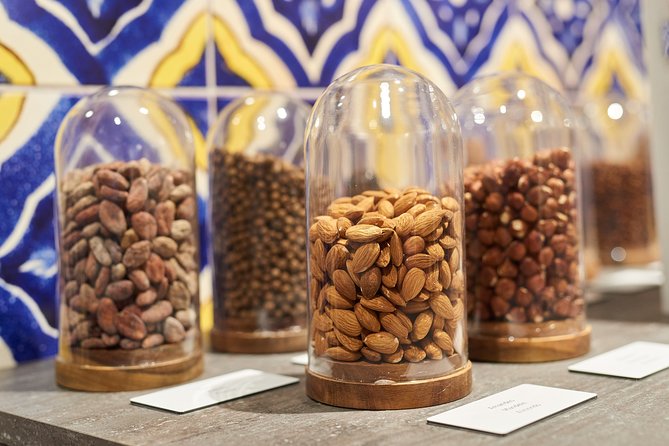
Chocolate tasting is included, and it is one of the strongest parts of the visit. After learning about cocoa’s origins, transport, European use, and industrial production, you get to connect the story with flavor.
The tasting makes the $18.02 price easier to assess. You are paying for a 90-minute museum visit with interactive technology, films, theatrical settings, sculptures, and a sample, rather than for a simple exhibit entry. For a family, the combination can offer solid value, especially when everyone takes part in the games.
A hot chocolate drink is not included. That matters if you arrive expecting a café stop as part of the ticket. You may want to plan a separate drink elsewhere rather than assume the tasting includes a full beverage service.
Using the audio guide without losing the fun
The visit comes with an audio guide. The booking details list six languages, while the experience description refers to four, so check the current language options when you reserve. Either way, the audio format lets you move through the museum without waiting for a scheduled group talk.
I like that arrangement for mixed groups. You can listen to the history while children try the games or look at the scenery. It also gives you more control over the pace, which is useful when one person wants detail and another wants to reach the next chocolate display.
The tradeoff is the lack of a named live guide. No guide names are provided, and the experience is built around recorded interpretation, screens, and set pieces. If your main goal is conversation with a local chocolate maker, this is not that kind of visit.
Who will get the most from this 90-minute visit
Families with children are a natural match. The moving scenes, animated monkey, games, body-tracking Choco Scanner, photo opportunity, and chocolate tasting give younger visitors regular changes of pace. The visit also works for adults who want a clear introduction without committing to a long specialist tour.
Chocolate fans will appreciate the full production story. You see cocoa treated as a plant, a cultural product, a transported commodity, a court luxury, an industrial food, and a material for sculpture. That wider view adds interest beyond simply eating samples.
It is also a practical choice on a wet day in Colmar. The central meeting point and short duration make it easy to fit between other sights. I would be less eager to recommend it to someone who has already visited several chocolate museums and wants advanced technical instruction, since the presentation is broad and accessible rather than highly specialized.
Most people can participate, and the activity is near public transportation. The maximum group size is 200, so do not assume every stop will feel intimate. The museum’s self-paced format helps, but crowded interactive stations can affect how long you spend with each feature.
How the price compares with the experience
At $18.02 per person, this is not a throwaway stop, but it is reasonable if you use the whole route. You get a substantial themed visit, an audio guide, interactive displays, the industrial chocolate sculptures, recipe presentations, and a tasting.
The value drops if you rush through in far less than 90 minutes or care little about staged displays. The value rises for families, first-time chocolate museum visitors, and anyone who wants an indoor activity near the center of Colmar.
The ticket is non-refundable and cannot be changed for any reason. That is a significant condition, so book only when your plans are firm. Since the activity is often reserved about nine days ahead, popular dates may require some planning, though the supplied information does not guarantee that every date sells out.
Should you book Choco-Story COLMAR?
Book it if you want a short, playful museum visit that explains cocoa from Aztec legend to modern production. The strongest reasons are the clever environments, the hands-on features, the giant chocolate sculptures, and the included tasting.
Skip it if you want a quiet, object-focused museum or a live chocolatier-led lesson. For most families, casual chocolate fans, and visitors looking for a well-paced indoor stop in central Colmar, the 90-minute format and $18.02 price make sense. Just confirm the audio-guide language, remember that hot chocolate costs extra, and choose your date carefully because the ticket cannot be changed or refunded.
FAQ
Where does the Choco-Story COLMAR visit begin?
It begins at 12 Pl. de la Cathédrale, 68000 Colmar, France.
Where does the activity end?
The activity ends back at the meeting point.
How long does the museum visit take?
The visit lasts approximately one hour and 30 minutes.
How much does the experience cost?
The listed price is $18.02 per person.
Is an audio guide included?
Yes. An audio guide is included. The booking information lists six available languages, while the experience description refers to four, so check the current options when booking.
Is chocolate tasting included?
Yes. Chocolate tasting is included in the experience.
Is a hot chocolate drink included?
No. A hot chocolate drink is not included.
Can children take part?
Yes. Most people can participate, and the museum includes games and interactive features suitable for children.
How many people can join the activity?
The maximum group size is 200 people.
Just added around France
- Private Wine and Chocolate Tasting Experience★ 4.4 · 3 reviews
- Wine and Chocolate experience★ 4.6 · 3 reviews
- Wine and chocolat tasting at Chablis.★ 4.9 · 5 reviews
- Trio Chocolaté – Tour en français – Champagne Passy-Grigny★ 5.0 · 5 reviews
- tasting workshop of 6 to 8 wines with charcuterie chocolate cheese★ 5.0 · 48 reviews
- Molded Bonbons Chocolate making class in Paris (collective)★ 4.5 · 20 reviews
- Private Wine and Chocolate Tasting in Paris★ 4.5 · 4 reviews
- Paris Sweet & Chocolate Family Treasure Hunt★ 5.0 · 37 reviews
France Chocolate Tours, compared.
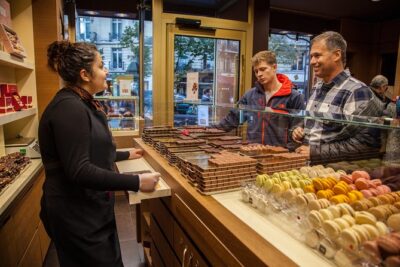
Paris French Sweets Tasting Tour with Pastries and Chocolates
Read our review →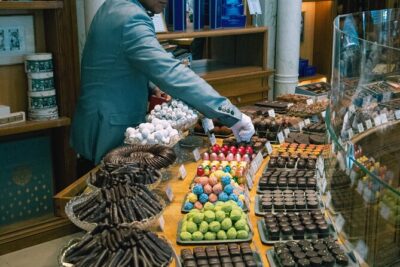
A Morning in Paris Food Tour: Croissants, Baguettes & Chocolate
Read our review →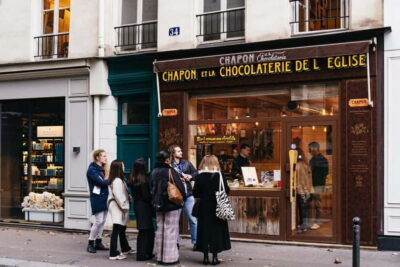
Saint-Germain: Gourmet Chocolate & Pastry Walking Food Tour
Read our review →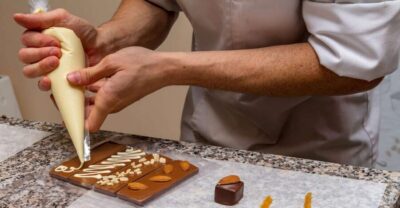
45-minute Chocolate Making Workshop at Choco-Story
Read our review →
Paris Chocolate, Macaron & Pastry Food Tour: 10 Gourmet Tastings
Read our review →
Passy-Grigny: Chocolate and Champagne Tasting Tour
Read our review →
Paris Pastry Tour – Croissants, Macarons & Iconic French Desserts
Read our review →Browse the lists this tour appears in