
REVIEW · BRUGES
Choco-Story: The Chocolate Museum in Bruges
Choco-Story turns chocolate into a small museum adventure, not just a shop visit. Inside a 15th-century building, you move through four floors tracing cocoa from a spicy Mayan drink to the sweet Belgian pralines sold across Bruges. I like the large collection of more than 1,000 chocolate-making objects, and I like that the audio device lets you set your own pace.
The final chocolate demonstration adds a useful, tasty finish, with one freshly made praline and additional chocolate from dispensers. The main drawback is the format: this is a self-guided museum, not a live tour, and the experience can feel quiet or repetitive if you prefer a guide speaking to the group. Crowds can also make the displays and demonstration harder to see.
Key points before you book
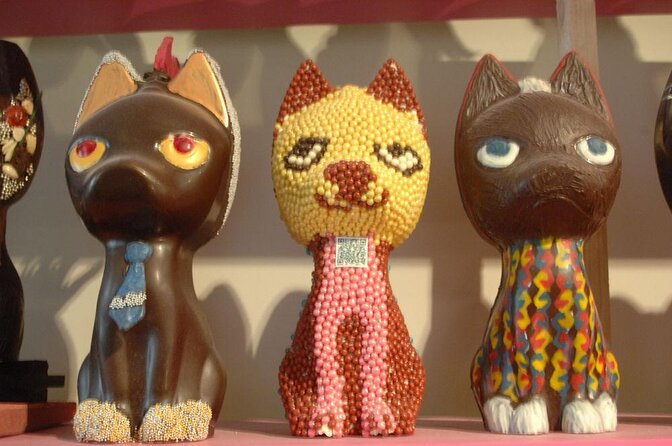
- Four floors in a historic building: Choco-Story occupies an old Bruges building dating from the 15th century, giving the visit more character than a modern exhibition hall.
- Audio-led rather than human-led: You use a small audio device and move at your own speed. A child-friendly version is available.
- Chocolate history from the Maya to Belgium: The displays explain cocoa’s early use, its journey to Europe, and the development of Belgian chocolate.
- More than 1,000 objects: Expect museum pieces, equipment, information boards, and displays about chocolate production.
- A timed demonstration finishes the visit: A chocolatier shows how filled chocolates are made. The demonstration takes place at set intervals, roughly every 15 minutes.
- Samples are included: You receive one fresh praline at the demonstration and can take chocolate from the dispensers at the end.
Four floors of chocolate inside old Bruges
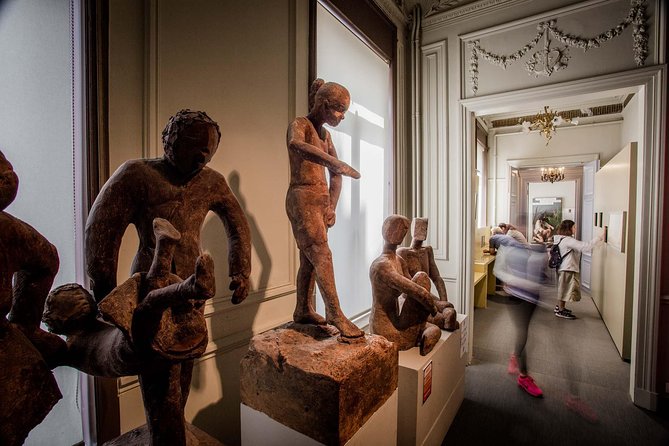
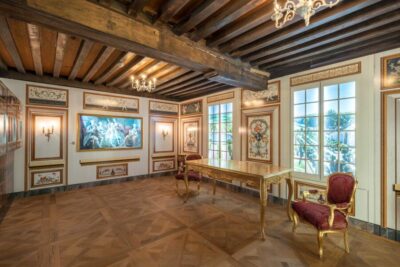
The first pleasure here is the setting. Choco-Story is housed in an ancient building in central Bruges, and the four-floor layout gives the visit a sense of movement. You are not simply standing in one room reading panels. You climb through a sequence of exhibits that follows cocoa from its early use to modern chocolate making.
The museum uses more than 1,000 historic objects and about 80 information boards. That is a lot of material for a visit advertised at roughly 90 minutes. You can move quickly if you want a short stop, or pause at numbered stations and listen to more of the audio content.
I would allow one to two hours, depending on how carefully you listen. Some people will finish faster. If you are interested in food history, trade, manufacturing, or Belgian confectionery, the displays give you enough material to justify a longer visit.
The building itself helps. Old rooms and changing levels make the museum feel connected to Bruges rather than dropped into the city as a stand-alone attraction. Still, the historic setting does not remove the practical issue of stairs and limited places to sit. One useful improvement would be more seating for anyone who wants a break between floors.
More Chocolate Museums in Bruges:
- Bruges: Choco-Story Museum with Audio Guide and Tastings
★ 4.2 · 1,825 reviews - Bruges: Chocolate Making Workshop and Chocolate Museum Entry
★ 4.6 · 395 reviews - Chocolate Workshop at Choco-Story Brugge
★ 5.0 · 84 reviews
From Mayan cocoa drink to Belgian praline
The central story begins long before Belgian chocolate became famous. The museum explains how cocoa was used by the ancient Mayans as a spicy drink, a very different product from the sweet bars and filled chocolates you know today.
You then follow cocoa’s route into Europe and learn how chocolate developed from an unfamiliar beverage into a commercial product. The displays also explain how Belgium became one of Europe’s major chocolate centers. That broad timeline gives you context for the praline shops you will see all over Bruges.
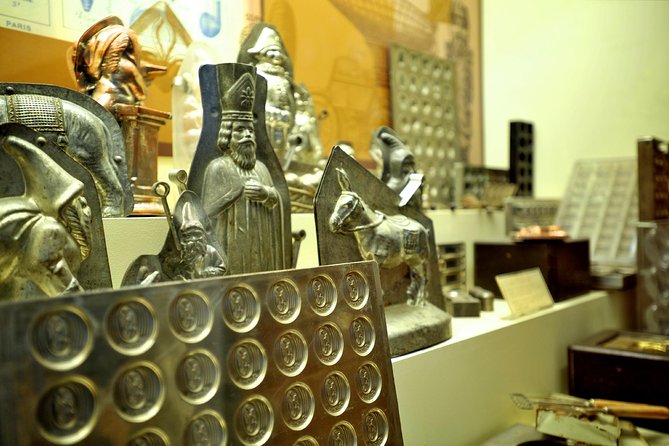
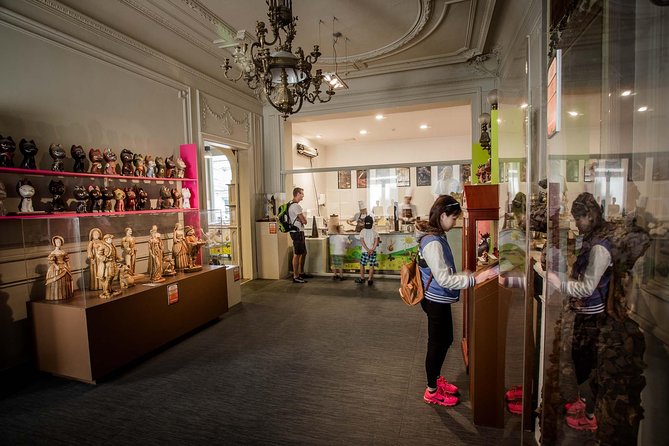
The museum is strongest when it connects history with objects. Equipment, molds, tools, and production pieces show how chocolate making changed over time. You can see how modern machinery made the work faster and more consistent, while older objects show how much of the craft once depended on handwork.
The historical account has limits. If you want a serious treatment of colonial trade, sugar production, or forced labor connected with cocoa, you may find the coverage too light. The focus is mainly on the development and production of chocolate, with less attention to the difficult economic and political history behind it.
That matters because chocolate is not only a charming Belgian souvenir. It is also a global commodity shaped by colonial trade and labor. I would treat Choco-Story as an introduction rather than the final word on cocoa’s past.
How the self-guided audio visit works
At the entrance, you receive a small audio device. You tap an icon or station number and listen to the related explanation. The system allows you to skip material, replay sections, and spend more time on the subjects that interest you.
This is convenient for a family or mixed group. One person can listen closely while another moves ahead. You are not tied to a group schedule, and you do not need to stay with a guide who is speaking to everyone at once.
The child-focused version uses lower information boards and showcases. A child-friendly audio option is also available, and younger children may enjoy having their own device and moving from station to station.
The format will not suit everyone. The museum depends heavily on recorded explanations, so you should not arrive expecting a person to lead you through the building. Some audio units may also be difficult to hear or operate during busy periods. The visit works best if you enjoy reading, listening, and exploring at your own speed.
Children under about 12 may lose interest if they are not already curious about chocolate. The lower displays and child version help, but much of the visit still involves history and production information. The final demonstration and samples are likely to be the strongest parts for younger children.
The chocolate-making displays and equipment
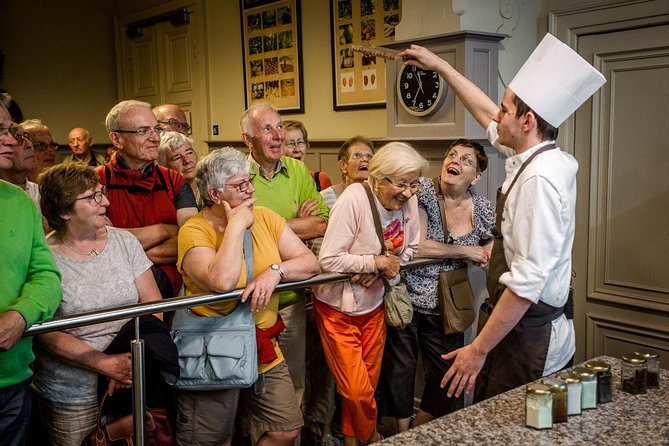
The objects give the museum its substance. You will see tools and equipment linked to cocoa processing and chocolate production, along with displays explaining the stages that turn cocoa into a finished sweet.
The museum also shows how modern equipment has changed the trade. That comparison between older methods and current production is one of the more useful parts of the visit. It explains why Belgian chocolatiers can produce delicate filled chocolates at a steady pace while still presenting the work as a craft.
The exhibition is designed to be educational, but it is not a working chocolate factory. You should not expect to watch every stage of production taking place in real time. Most of what you learn comes through objects, display cases, information boards, and recorded commentary.
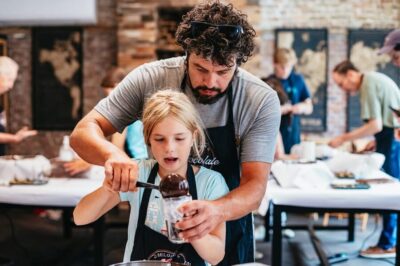
Some exhibits are interactive, which helps break up the listening. Still, the visit is more museum than hands-on workshop. If you want to make your own pralines, this ticket does not promise that activity.
A few more chocolate tours around Bruges worth a look
- Belgian Chocolate Workshop in Bruges
★ 5.0 · 660 reviews - Bruges: Belgian Praline and Mendiants Chocolate Workshop
★ 4.7 · 620 reviews - Best of Bruges: History, Chocolate & Beer Tour
★ 5.0 · 256 reviews - Bruges: Belgian Chocolate Making Workshop with Beer Tasting
★ 4.9 · 203 reviews
The live praline demonstration and tasting
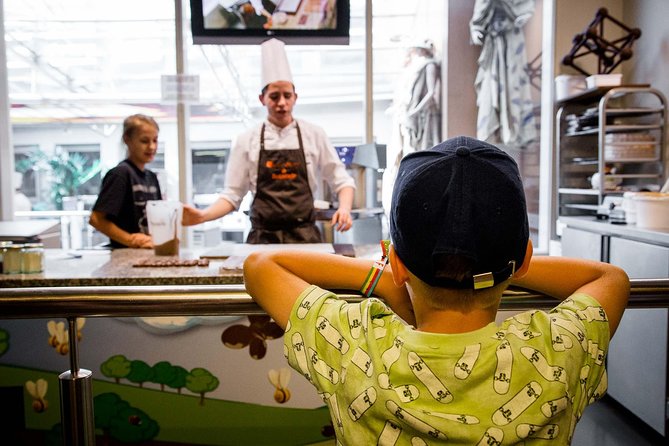
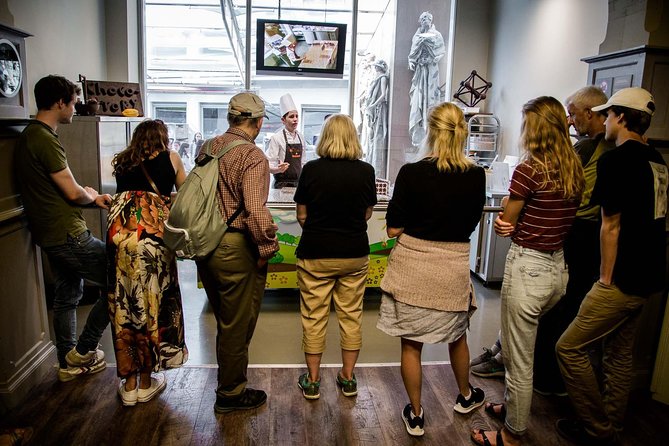
The visit ends with the part many people anticipate: a chocolatier demonstrates how Belgian filled chocolates are made. The presentation shows the basic process and gives you a chance to see the craft rather than only read about it.
The demonstration runs at set times, approximately every 15 minutes. Check the clock or posted timing when you arrive so you do not leave just before the next session. Missing it can make the visit feel much shorter and can create confusion about what is included.
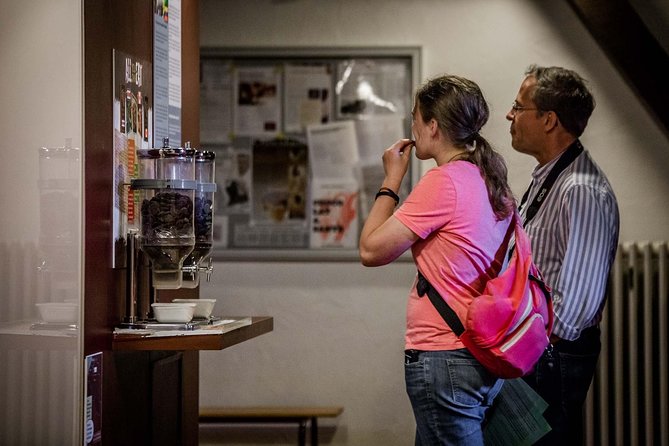
At the demonstration, each person receives one freshly made praline to taste. You do not need to buy anything to receive this sample. At the end, chocolate is also available from dispensers, where you can take additional pieces yourself.
The dispenser setup is less polished than a formal tasting counter. During busy periods, the area can look untidy, and the self-service arrangement may not feel special. The museum says the chocolate is Belgian couverture chocolate, the type used by chocolatiers to make pralines, but your experience will depend partly on how clean and orderly the dispensers are at that moment.
Do not expect a plate of several premium pralines or a guided tasting that compares cocoa percentages and fillings. The tasting is a pleasant extra, not a full chocolate workshop. The live demonstration is the real payoff.
Crowds, timing, and getting there
The museum can become crowded on weekends, school holidays, summer days, and rainy afternoons. Crowding matters here because several floors contain narrow display areas, and a packed room can make it hard to see an object or hear the audio clearly.
For a calmer visit, go early in the morning. You can also use the four-floor layout to move away from a congested room, then return later. If the demonstration area is full, wait for the next session rather than trying to stand behind a large group.
The museum is near public transportation, but transport to and from the attraction is not included. If you are arriving as part of a sightseeing coach itinerary, check the walking distance from the drop-off point. Bruges is compact, but a walk that looks short on a map can feel long after a full day on your feet.
The admission is offered in English. Confirmation is provided when you book, children must be accompanied by an adult, and most people can take part. The supplied booking information lists a maximum of one traveler, which may reflect a booking-system restriction rather than the way families normally visit, so check the current booking page if you are reserving for a group.
The experience is often booked about 16 days ahead. That does not mean you must plan far in advance every day, but it is sensible to reserve early during popular dates.
Is $19.22 a fair price?
At $19.22 per person, Choco-Story is priced like a midrange Bruges attraction. The value depends on how you use it.
You are paying for entry to a four-floor museum, an audio guide, historical displays, the live praline demonstration, one fresh praline, and additional chocolate samples. If you spend 90 minutes listening carefully and enjoy food history, the price is reasonable.
The value drops if you only want chocolate to eat. You receive samples, but this is not an all-you-can-eat chocolate buffet or a luxury tasting. The dispensers provide a casual extra, while the fresh praline is limited to one per person.
The price also feels less attractive if you expect a guided tour. No human guide leads the full visit, and there is no promise of a hands-on chocolate-making session. I would compare it with the cost of another indoor museum in Bruges and ask yourself whether you want context and exhibits along with your sweets.
For families, the child-friendly audio option can help justify the ticket. For adults who already know a great deal about chocolate, the museum may feel basic unless you are especially interested in Belgian production and historical equipment.
Who will enjoy Choco-Story most?
I would recommend Choco-Story to you if you enjoy:
- Food museums and cultural history
- Self-guided visits with the freedom to set your own pace
- Belgian chocolate and pralines
- Indoor attractions on a rainy Bruges day
- Family activities that mix exhibits with a small tasting
- Historic buildings and old production tools
You may want to skip it if you dislike audio guides, need a lively human guide, or expect a large tasting menu. It is also not the best choice if your children are too young to listen or if they need constant hands-on activity.
Chocolate lovers will probably enjoy the final demonstration most. History-minded visitors will get more from the early sections about cocoa’s origins and its route to Europe. Anyone looking for a critical account of colonial trade should treat the museum as a starting point and seek further reading elsewhere.
Book at least a little ahead if your Bruges visit falls on a weekend, rainy day, or school holiday. Leave enough time to find the demonstration, and plan to visit early if you want fewer people around the displays.
Should you book this chocolate museum?
Book it if you want a compact, educational indoor stop with a charming old setting, a useful audio system, and a chocolate demonstration at the end. The museum gives you more than a quick shop visit, and the historical objects make the experience worthwhile for anyone curious about how cocoa became Belgian chocolate.
Skip it if you want a personal guide, a large premium tasting, or a hands-on class. The museum can feel slow and crowded, and the recorded format is not for everyone.
For most chocolate fans, the ticket is a fair Bruges add-on, especially when the weather is poor. Just arrive with the right expectations: this is a self-guided museum with a praline demonstration, not a chocolate factory tour.
FAQ
Where is Choco-Story located?
Choco-Story is in Bruges, Belgium, inside an ancient building dating from the 15th century. It is near public transportation.
How long does the visit take?
The advertised duration is approximately 1 hour and 30 minutes. You can finish faster or spend longer depending on how much of the audio material and displays you explore.
Is the visit guided by a person?
No. The museum is self-guided and uses an audio device. You explore the four floors at your own pace.
Is the experience offered in English?
Yes. The experience is offered in English.
What does the ticket include?
The ticket includes entry to Choco-Story and food tasting. The visit includes the museum displays, audio material, and the chocolate-making demonstration.
Do you receive free chocolate?
Yes. The demonstration includes one freshly made praline per person. Additional chocolate is available from dispensers at the end of the visit.
Is the chocolate demonstration included?
Yes. The demonstration is part of the visit. It takes place at set times, approximately every 15 minutes, so check the timing when you arrive.
Is Choco-Story suitable for children?
Children must be accompanied by an adult. The museum offers lower information boards and showcases for children, along with a child-friendly audio version.
Can I cancel for a full refund?
Yes. You can cancel at least 24 hours before the experience start time for a full refund. Cancellations or changes made less than 24 hours before the start time are not refunded or accepted.
Just added around Bruges
- Private Belgian Chocolate Tour in Bruges★ 5.0 · 19 reviews
- Private Bruges’ Iconic Sites and Chocolate Tasting Tour★ 5.0 · 8 reviews
- Unique Belgian Chocolate Making Workshop in Bruges★ 5.0 · 47 reviews
- Bruges Beer Tour with chocolate pairing by a young local★ 5.0 · 13 reviews
- Evening Delights: Bruges Tour with Beer & Chocolate★ 4.0 · 4 reviews
- Secrets of Bruges: Walking Tour With a Chocolate and Waffle Bite★ 5.0 · 27 reviews
- Tasty massage chocolate and spicy stories!★ 4.5 · 17 reviews
- Authentic and Complete Bruges, with Local Guide and Chocolate★ 5.0 · 12 reviews
Bruges Chocolate Tours, compared.
Choco-Story Museum with Audio Guide and Tastings
Read our review →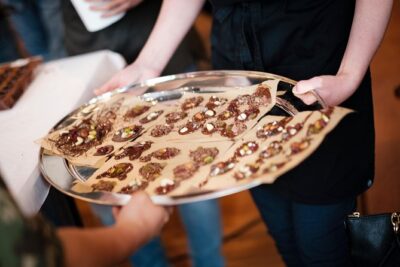
Belgian Praline and Mendiants Chocolate Workshop
Read our review →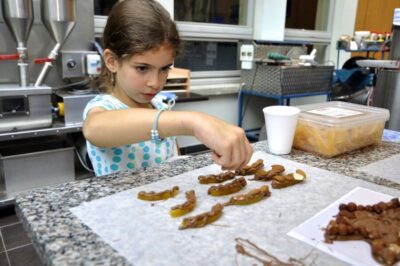
Chocolate Making Workshop and Chocolate Museum Entry
Read our review →
2-Hour Historical Walking Tour in Bruges with Praline Included
Read our review →
Belgian Chocolate Making Workshop with Beer Tasting
Read our review →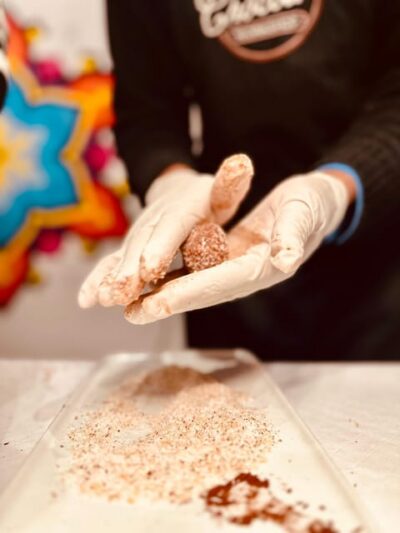
Browse the lists this tour appears in