
REVIEW · GERMANY
Dresden: Guided Walking Tour and Chocolate Museum Ticket
Dresden’s story unfolds in two pleasingly different parts: a brisk walk through royal squares and grand Baroque buildings, followed by a self-guided look at the city’s chocolate past. I especially like the route’s compact shape and its mix of famous sights with less obvious stories about the Middle Ages, the 1989 Peaceful Revolution, and German reunification. The chocolate tasting gives the $18 price a sweet finish.
I also like that you can visit the museum at any time on the day of your walk, giving you room to fit it around lunch or other sightseeing. The main consideration is language: the live guide speaks German, and the museum visit is on your own. If you choose the 4:00 PM walk, you need to visit the museum first because it closes at 6:00 PM.
Key points at a glance

- A short route with major sights: Walk from Dresden Castle past Brühl’s Terrace, the Procession of Princes, Stallhof, Dresden Cathedral, Taschenbergpalais, Augustus Bridge, and the Frauenkirche area.
- Two different experiences in one ticket: The walking tour is guided, while the Chocolate Museum is self-guided.
- Useful historical range: The tour covers the Middle Ages, Renaissance, Baroque Dresden, the Peaceful Revolution of 1989, and German reunification.
- A museum with a local angle: Learn why Dresden was once called Germany’s capital of chocolate and how milk chocolate is linked to the city.
- A tasting is included: Your museum visit ends with a chance to sample German milk chocolate.
- Easy to fit into a day: The tour lasts 1.5 hours, and the museum voucher can be used any time on the walking-tour date.
Why this Dresden pairing works
Dresden can feel like a city built from several different chapters. The Old Town presents royal ceremony, Baroque ambition, and rebuilt monuments, while the city’s 20th-century story includes wartime destruction, East German rule, peaceful protest, and reunification.
This experience gives you a quick introduction to all of those periods without asking you to commit to a long walking tour. The guide provides the main narrative, then the museum changes the pace. You move from stone facades and palace courtyards to cocoa beans, factory history, and chocolate molds.
At $18 per person, the package is priced like an affordable city orientation rather than a full-day cultural program. That is its strength. You get a live walk through central Dresden, admission to the museum, and a tasting. The value is best if you want a first look at the Old Town and are curious about a local food story.
You should not expect a private tour, a long museum lecture, or a guided museum visit. The guide does not accompany you inside the Chocolate Museum. That division is important when you plan your time and decide if the experience fits your interests.
More Chocolate Museums in the world:
- Lindt Home of Chocolate Museum Entry Ticket
★ 4.7 · 9,329 reviews - Choco-Story Brussels: Chocolate Museum Entrance with Tasting
★ 4.3 · 4,883 reviews - Cologne: Chocolate Museum Entrance Ticket
★ 4.4 · 2,790 reviews
Meeting your guide below the QF Passage
The meeting point is in the basement of the QF Passage, in the seating area of Dresden Information. Give yourself enough time to find the lower level rather than searching around the open spaces above.
This is a practical central starting point for an Old Town walk. You begin near the city’s main historic sights, so there is no separate transport segment to slow things down. Once you meet the guide, expect a set route through the core of Dresden.
The guide speaks German. The tone appears to be lively and personal, with several recent ratings praising the guide’s enthusiasm, humor, and ability to explain a lot in a short time. One useful clue is the repeated description of the walk as entertaining as well as informative. That matters because 1.5 hours is not long enough for a slow, detailed examination of every building.
If you do not understand German, this is not the best choice for a live guided tour. The museum may still interest you, but the main historical portion depends on following German commentary.
Dresden Castle and the royal center
The route heads from Dresden Castle into the city’s royal heart. Dresden Castle connects several periods of the city’s story, making it a sensible place to begin. Here, you start with the political and royal forces that shaped the Old Town rather than simply ticking off monuments.
The guide covers the Middle Ages, the Renaissance, and the Baroque era. These labels are more useful when you see them attached to real streets, courtyards, and buildings. You get a broad sense of how Dresden changed from a medieval settlement into a major court city.
The walk moves at a practical pace. You will hear background information and stories rather than spend a long time inside each attraction. If you want interior visits to the castle, the Semperoper, or the Frauenkirche, you will need to arrange those separately.
Brühl’s Terrace and the Procession of Princes
From the castle area, the walk continues toward Brühl’s Terrace. This riverside terrace is one of Dresden’s best-known public spaces and offers a different view of the Old Town from the formal palace squares.
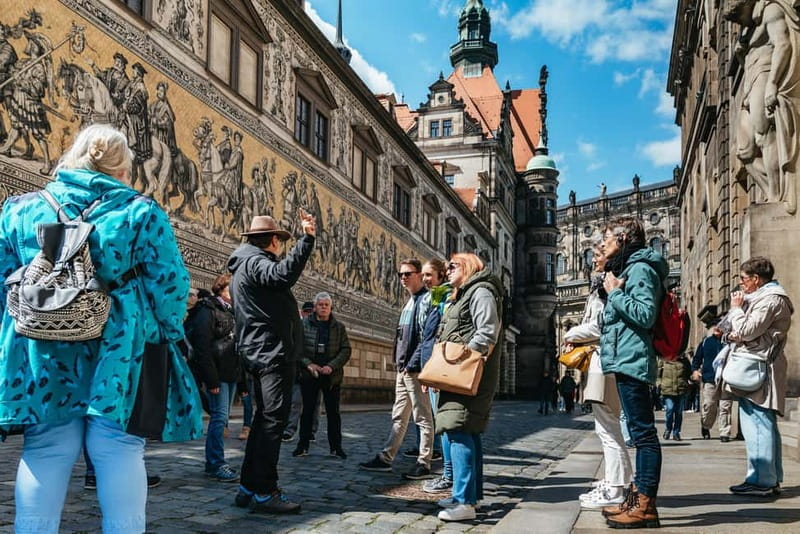
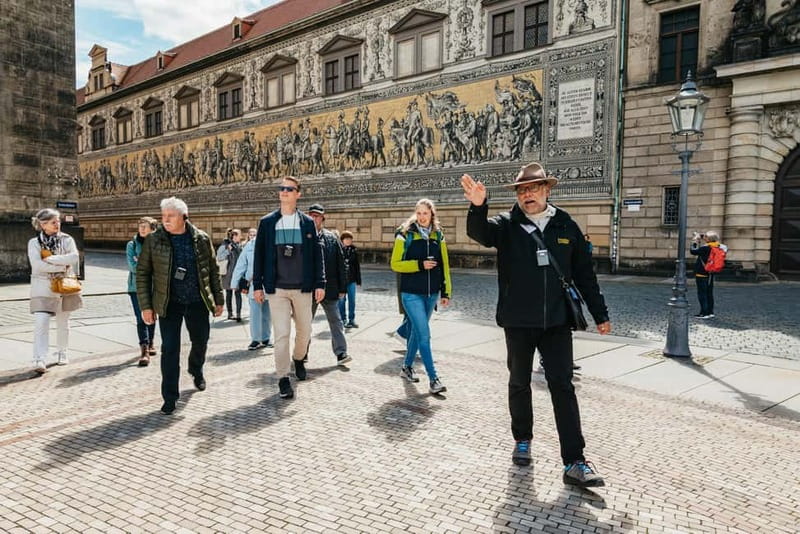
The route also includes the Procession of Princes, a large outdoor mural made of porcelain tiles. It is one of the places where Dresden’s rulers and dynastic story become easy to see. A guide can help you read the scene and place it within the city’s long royal tradition, rather than leaving you to puzzle over the figures alone.
You also pass Stallhof, the former tournament courtyard. It gives the walk a more intimate setting than the broad ceremonial avenues. The contrast is useful: Dresden’s historic center is not only grand churches and opera houses. It also includes courtyards that hint at court life and older forms of public spectacle.
More Chocolate Walking Tours in the world:
- Brussels: Historical Walking Tour with Chocolate & Waffle Tasting
★ 5.0 · 1,165 reviews - Brussels Walking and Tasting Tour (Beers,Chocolates&Fries/Waffle)
★ 5.0 · 929 reviews - Brussels Chocolate Walking Tour and Workshop
★ 4.5 · 885 reviews - Chocolate Flavors Walking Tour of Geneva
★ 4.9 · 670 reviews
Dresden Cathedral and the Baroque Zwinger
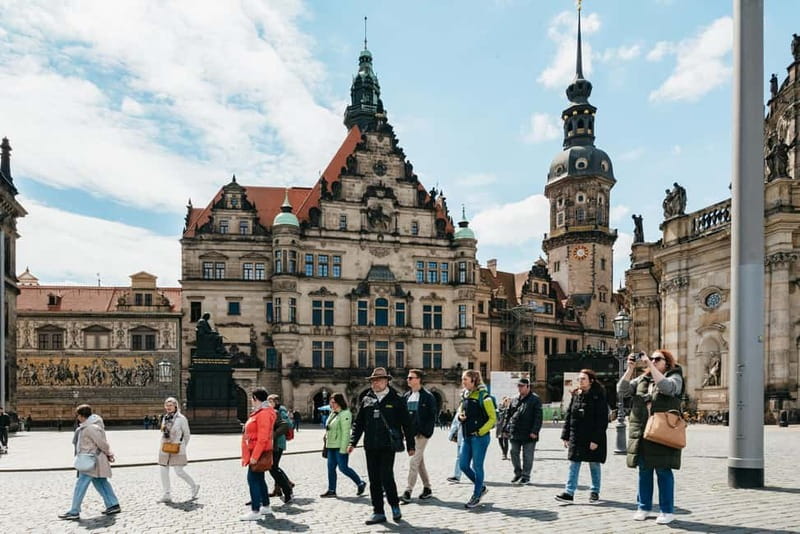
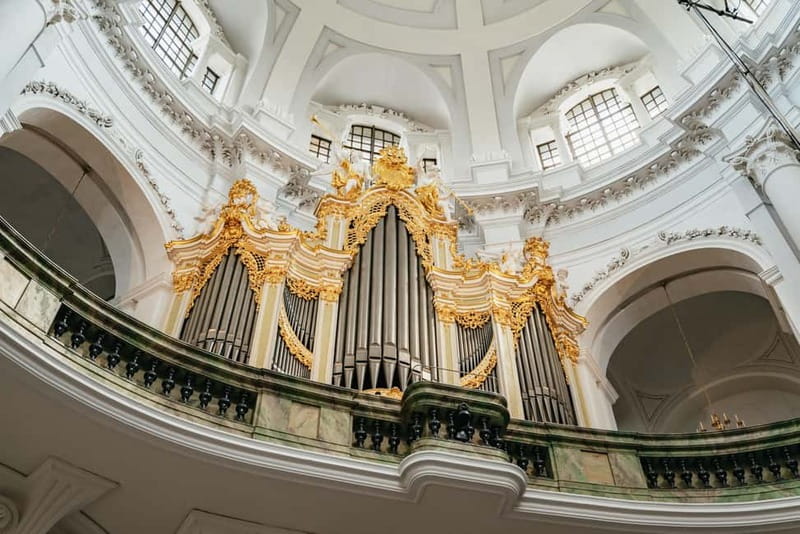
Dresden Cathedral is another major stop along the route. Its position near the royal buildings shows how closely religion and court power were linked in the historic center.
The walk also brings you within view of the Baroque Zwinger. Its dramatic architecture is one of Dresden’s signature sights, and it helps explain why the Baroque period left such a strong mark on the city. The Zwinger is best appreciated as part of the wider royal district, where architecture was used to display wealth, power, and artistic ambition.
Since the tour is short, you should think of these stops as an introduction. You will get the setting and the story, but not a full museum-style examination of the Zwinger or cathedral. That is a fair trade if your goal is to get oriented before exploring independently.
Taschenbergpalais, Augustus Bridge, and Frauenkirche
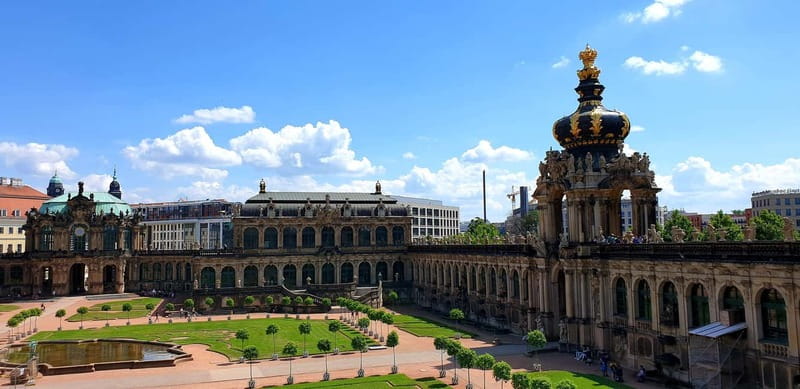
The route continues past Taschenbergpalais and Augustus Bridge before ending near the Frauenkirche. Each stop adds another piece to the central Dresden picture.
Taschenbergpalais brings the focus back to the court district and its grand residences. Augustus Bridge provides a strong link between the historic center and the Elbe, while also showing how Dresden’s major buildings relate to one another across the river.
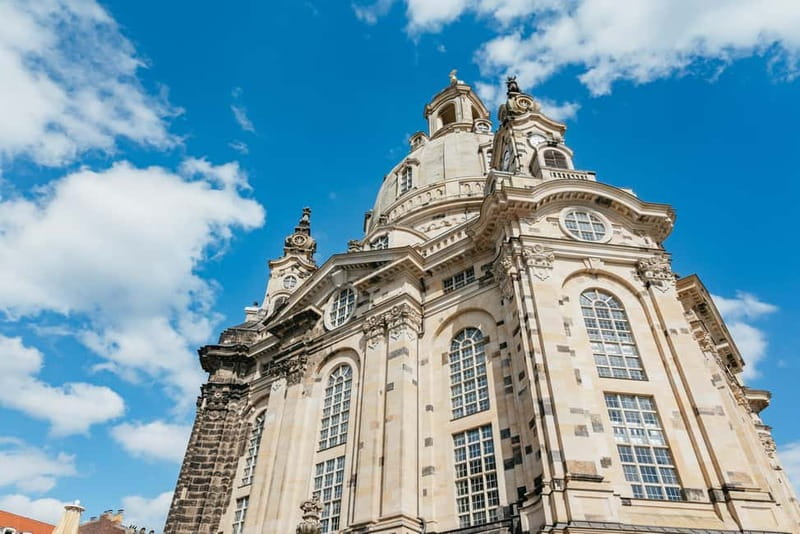
The Frauenkirche is the natural finale. Its dome dominates the Old Town, and its modern history is as important as its original Baroque design. The church was destroyed during the Second World War and later rebuilt, making it a powerful place to consider Dresden’s destruction and recovery.
The walk also addresses the Peaceful Revolution of 1989 and the reunification of East and West Germany. This is a valuable part of the experience because Dresden is not only a Baroque postcard. Its recent political history shaped daily life, public spaces, and the city you see today.
The tour ends near the Frauenkirche rather than returning you to the meeting point. That is convenient if you want to continue sightseeing, visit the church, or find a meal in the Old Town. It also means you should not leave belongings or transport plans tied to the starting location.
What makes Dresden’s Chocolate Museum different
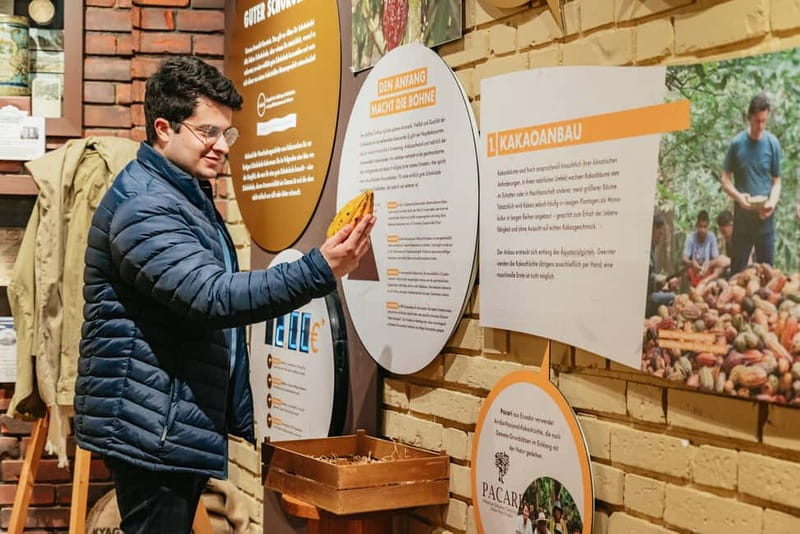
After the walk, you use your voucher for the Dresden Chocolate Museum. This part is self-guided, so you can take your time and read at your own pace.
The museum focuses on Dresden’s former role as Germany’s capital of chocolate. That local connection gives the visit more purpose than a general display about cocoa. You learn about the city’s 19th-century chocolate factories and the long process that carries cocoa beans to finished chocolate.
One of the most unusual features is the collection of chocolate molds associated with Anton Reiche. The collection is described as one of the world’s largest, giving you a look at the tools used to shape early chocolate products. Molds can seem like a small industrial detail, but they show how chocolate moved from handmade luxury toward factory production.
The museum also explores the ingredients that make good chocolate and the origins of milk chocolate. Dresden is linked to the invention of milk chocolate, so this section gives the city a tasty claim to fame. You can compare the city’s grand architectural past with a more everyday form of German industrial history.
Do not expect the guide from the walking tour to lead this section. You enter independently using the ticket included with the activity. The museum visit can be completed at any time on the date of your walk, with opening hours listed as 11:00 AM to 6:00 PM daily. Check for special closing times before you go.
The tasting at the end
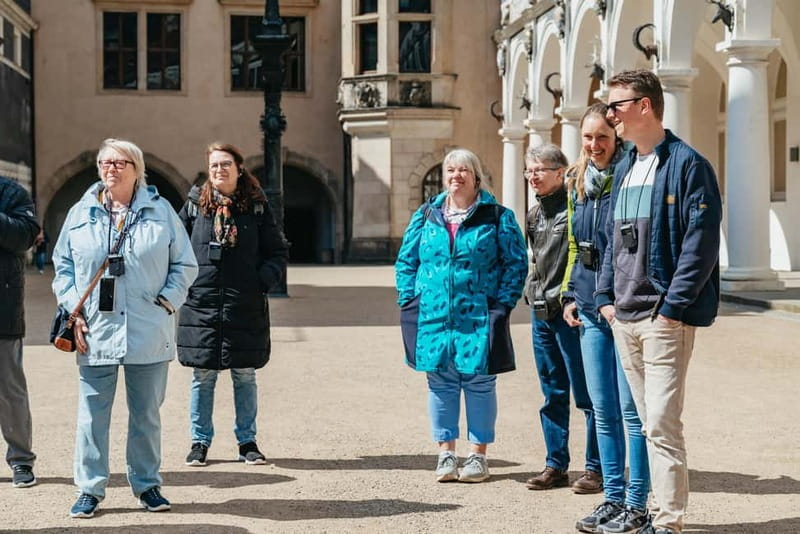
The included tasting is simple but useful. After learning about cocoa, milk chocolate, molds, and production, you get to taste German milk chocolate for yourself.
That tasting helps make the museum feel connected to the subject rather than purely theoretical. You can think about texture, sweetness, and the difference between an old-style chocolate sample and the bars you know today.
The tasting is not a meal, so plan food separately. Still, it adds a pleasant finish and makes the $18 package more appealing for families, couples, and anyone who likes combining sightseeing with local food traditions.
Timing the walk and museum properly
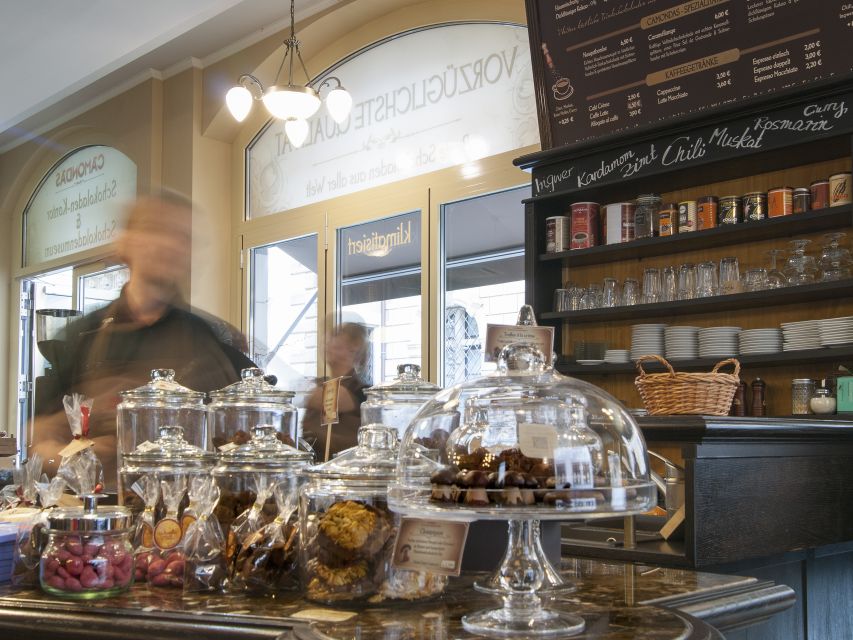
The activity lasts 1.5 hours, but the museum ticket works on the full day of your walking tour. That flexibility is one of the strongest practical features.
For a morning walk, you can visit the museum afterward and have the rest of the day free. If you choose a later walk, visit the museum before meeting your guide. This is especially important for the 4:00 PM departure, since the museum closes at 6:00 PM.
A simple plan looks like this:
- Take the walking tour in the morning, then visit the museum afterward.
- Visit the museum first if your walking tour begins at 4:00 PM.
- Leave extra time for finding the QF Passage meeting point in the basement.
- Continue sightseeing near the Frauenkirche after the walk, since the route finishes there.
The tour has free cancellation up to 24 hours before the start time, and you can reserve now and pay later. Those terms are useful if your Dresden schedule may change, but the main planning issue remains the German language and the museum’s fixed opening hours.
Who will get the most from this experience
I would choose this for a first visit to Dresden, especially if you want a clear introduction without spending half a day on one subject. The route covers the city’s headline sights and gives you enough context to decide what deserves a longer visit later.
It also suits you if you enjoy food museums and want something beyond the usual royal buildings. The chocolate section is not an unrelated add-on. It explains a real part of Dresden’s industrial and commercial past.
Families may like the combination of walking, visual landmarks, and tasting. The short duration can be easier for younger children than a long museum tour, although the guide’s German commentary may limit the experience for children who do not speak German.
You may want a different tour if you need English commentary, a very detailed architectural study, or a guide inside the museum. You should also look elsewhere if your main goal is to spend a long time inside the Frauenkirche, Semperoper, Dresden Castle, or the Zwinger. This activity shows you those places from the outside and puts them into context.
The experience is wheelchair accessible. As with any historic center, you may still want to confirm the exact route and access details if you have specific mobility needs, but the activity is marked as suitable for wheelchair users.
Should you book this Dresden tour?
Book it if you want an affordable Old Town orientation, speak German, and like the idea of adding a small chocolate museum to a major-sights walk. The best parts are the compact route, the guide’s lively delivery, the range from medieval Dresden to reunification, and the flexible museum ticket.
Skip it if you need English, prefer a private pace, or want a fully guided museum visit. At $18, this is a good-value introduction rather than a deep specialist tour. Plan the museum carefully, especially with the 4:00 PM start, and you get a practical first look at Dresden with a sweet local ending.
FAQ
How long does the Dresden walking tour last?
The scheduled activity lasts 1.5 hours.
What language is the live tour guide?
The live tour guide speaks German.
Is the Chocolate Museum guided?
No. You visit the Chocolate Museum on your own, without the walking-tour guide.
Can I visit the museum at any time?
Yes. Your voucher can be used at any time on the day of your walking tour, without prior notice. The museum is listed as open from 11:00 AM to 6:00 PM daily, although special closing times may apply.
What if I book the walking tour for 4:00 PM?
You should visit the Chocolate Museum before the walking tour because the museum closes at 6:00 PM.
Where does the walking tour meet?
Meet in the basement of the QF Passage, in the seating area of Dresden Information.
Is chocolate tasting included?
Yes. The ticket includes a chocolate tasting after your self-guided museum visit.
Just added around the world
- Zurich: Chocolate Tasting and Walking Tour with a Local★ 4.2 · 13 reviews
- Lindt Chocolate Museum with Cruise Transfer from Zurich★ 4.6 · 7 reviews
- Zurich Open-top Tour and Chocolate and Cheese Countryside★ 3.5 · 11 reviews
- York: Introduction to Chocolate Making Experience★ 4.9 · 10 reviews
- Zagreb: Lake Bled and Ljubljana Day Tour with Chocolate Gift★ 5.0 · 26 reviews
- Private Wine and Chocolate Tasting Experience★ 4.4 · 3 reviews
- Wine and Chocolate experience★ 4.6 · 3 reviews
- Yarra Valley: Wine and Chocolate tasting tour.★ 5.0 · 5 reviews
Germany Chocolate Tours, compared.

Death and Chocolate: Walking Tour of Munich’s Old South Cemetery
Read our review →

Düsseldorf: Chocolatier Workshop & Chocolate Tasting
Read our review →
Skip-the-Line Chocolate Museum & Old Town Guided Tour
Read our review →
Explore the Säntis Panorama (2502 m) and Appenzell incl. Swiss Chocolatier
Read our review →Browse the lists this tour appears in