
REVIEW · COLOMBIA
Bean to Bar: Cocoa and Chocolate Workshop
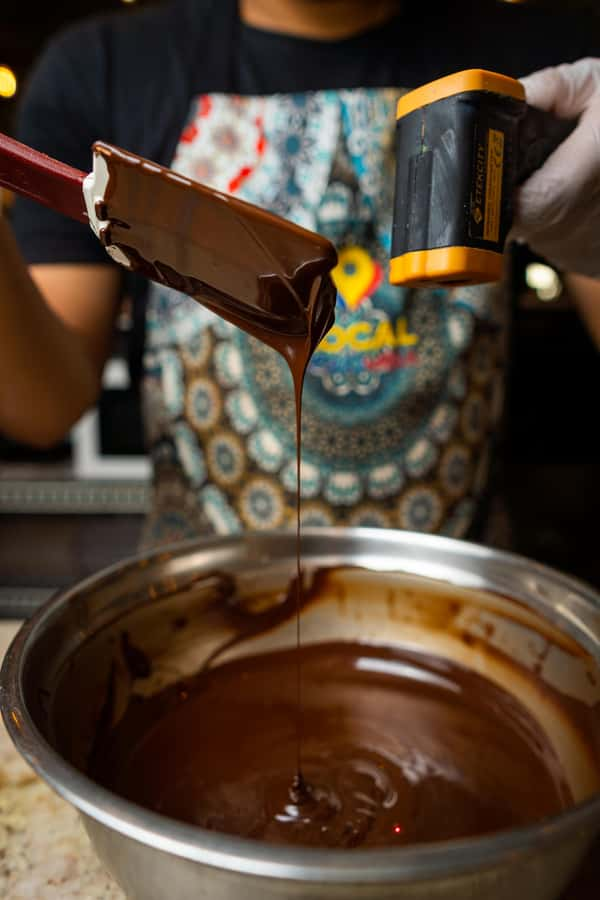
Chocolate here is not just a sweet treat. You’ll see cacao roasted, separated, blended, and shaped, then put on an apron and make your own bonbons, truffles, or bars. The workshop takes place inside a working chocolaterie near Arsenal Street, with equipment and prepared chocolate ready for hands-on work.
I like the private-group format, which gives you room to ask questions and experiment without being lost in a crowd. I also like the chance to taste several cacao percentages and origins, from 40% white chocolate to 100% pure cocoa, while learning why Colombian cacao varieties matter.
The main consideration is the $101 price, which is a serious spend for 105 minutes. It makes the most sense if you want an active food experience with local context, not simply a tasting or a quick chocolate sample.
Key points at a glance
- A full bean-to-bar lesson: Follow cacao from roasting and separation to finished chocolate.
- Hands-on chocolate making: Create bonbons, truffles, or bars with guidance from trained artisans.
- Five chocolate styles to taste: Try white, milk, dark, pure cocoa, and blended chocolates.
- Private instruction: Your group has the session to itself, with English or Spanish available.
- Indoor and weather-proof: The workshop is a useful plan when rain interrupts outdoor sightseeing.
- A guide with real enthusiasm: Alejandra has led sessions with clear explanations, energy, and patient answers.
Entering the chocolaterie near Arsenal Street
The meeting point is easy to identify if you know what to look for. Go to the beginning of Arsenal Street, near the convention center, and find the two-story pink building with wooden barrels outside. The barrels advertise free hugs, which is a more useful landmark than a small sign that might be easy to miss.
Your host takes you from that meeting point to the exact workshop area. The location matters because this is not a classroom arranged only for tourists. You get access to a local chocolate production space with machinery and work areas that show how the product is made beyond the neat package on a shop shelf.
The setting is practical rather than polished in a hotel-spa way. Expect the whir of equipment, the smell of freshly made chocolate, and surfaces where chocolate work actually happens. Wear comfortable clothing that can take a splash or smear. Chocolate is forgiving to eat but less forgiving on pale shirts.
The activity lasts 105 minutes. That is long enough for an explanation, tasting, demonstration, and your own chocolate work without turning the session into a half-day commitment. It also fits neatly into an afternoon plan in Bolívar.
More Chocolate Making Workshops in Colombia:
- Minca: Hidden Waterfall + Coffee and Cocoa Workshop
★ 4.9 · 6 reviews - Bogotá: Candelaria Tour with Cacao and Coffee Workshop
★ 5.0 · 3 reviews - Vienna: Chocolate Workshop in Chocolate Museum w/ Tasting
★ 4.5 · 1,802 reviews
Following cacao from bean to chocolate
The workshop begins with the raw material: cacao in its bean form. You learn about the basic stages that turn it into chocolate, with special attention to roasting and separation.
Roasting is where the cacao’s character begins to show itself. It affects aroma and flavor, so watching this step helps explain why chocolate from different origins does not all taste the same. The separation stage gives you a look at how the bean is prepared for later processing, rather than treating chocolate as a mysterious finished food.
The class also explains different cacao varieties at a national level. That is one of the more valuable parts of the experience because it links your snack to Colombian agriculture and production. You are not only learning a recipe. You are learning why origin and variety matter, and how those choices affect the final chocolate.
Some parts of the process may be prepared in advance so the session can keep moving. That is helpful in a workshop lasting less than two hours. You see the important stages without waiting through every slow interval, though anyone hoping to witness every step from raw bean to finished bar may find the demonstration abbreviated.
Tasting five chocolate percentages and origins
The included chocolate tasting gives you a useful comparison rather than one generic sample. The selection includes white chocolate at 40 percent, milk chocolate at 46 percent, dark chocolate at 80 percent, pure cocoa at 100 percent, and blends made from these styles.
Those percentages give you a quick lesson in balance. The 40 percent white chocolate should offer a softer, sweeter profile, while 46 percent milk chocolate sits in a familiar middle ground. At 80 percent, the cocoa flavor becomes stronger and less sugary. Pure 100 percent cocoa is the extreme point, useful for understanding what chocolate tastes like before sweetness smooths its edges.
You do not need a trained palate to benefit from this. Pay attention to aroma, bitterness, sweetness, texture, and the way each sample finishes. The point is comparison. A tasting like this can change how you choose chocolate later, especially if you normally reach for the sweetest bar on the shelf.
The use of different origins and blends adds another layer. You can consider how the same basic ingredient changes depending on where it comes from and how it is combined. The class does not present chocolate as one fixed flavor. It shows you a range.
Making bonbons, truffles, or chocolate bars
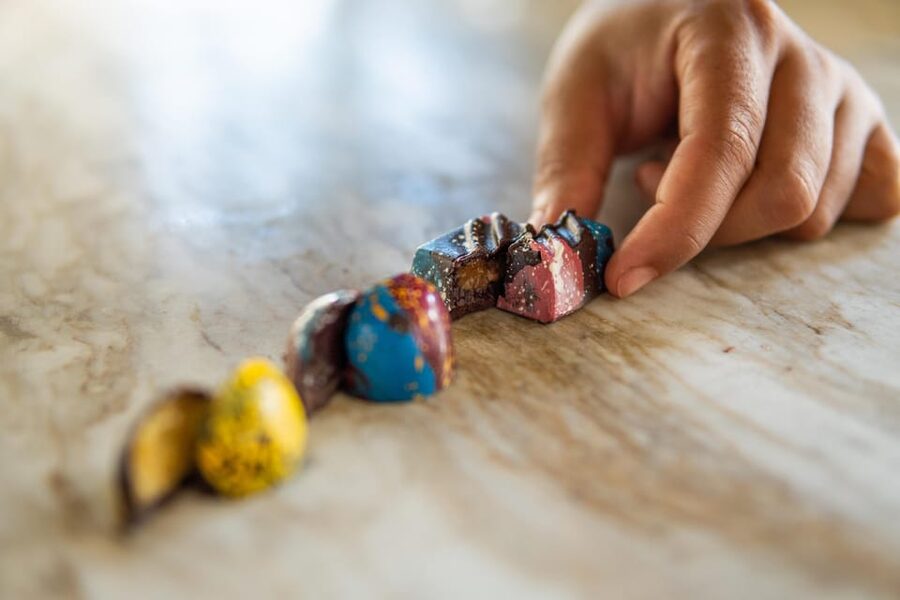
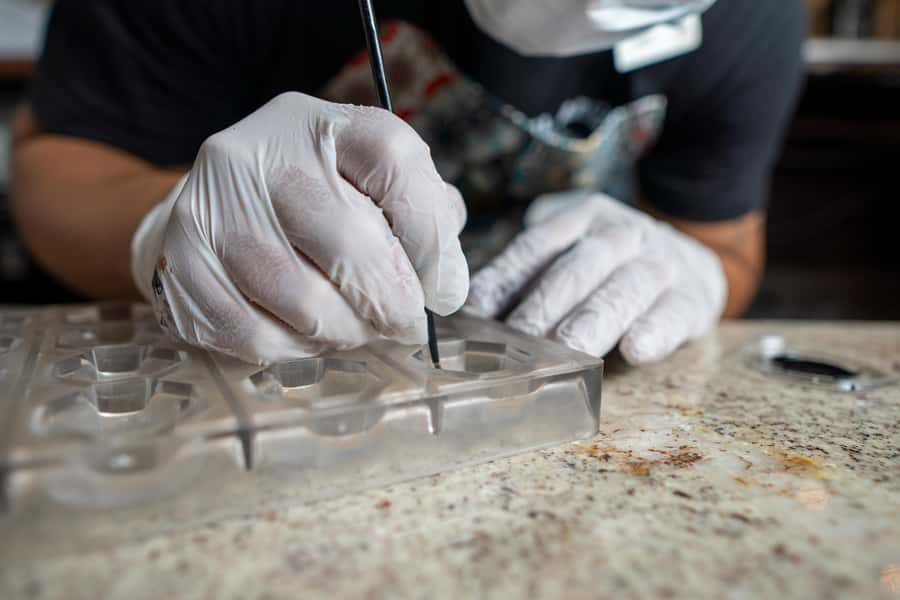
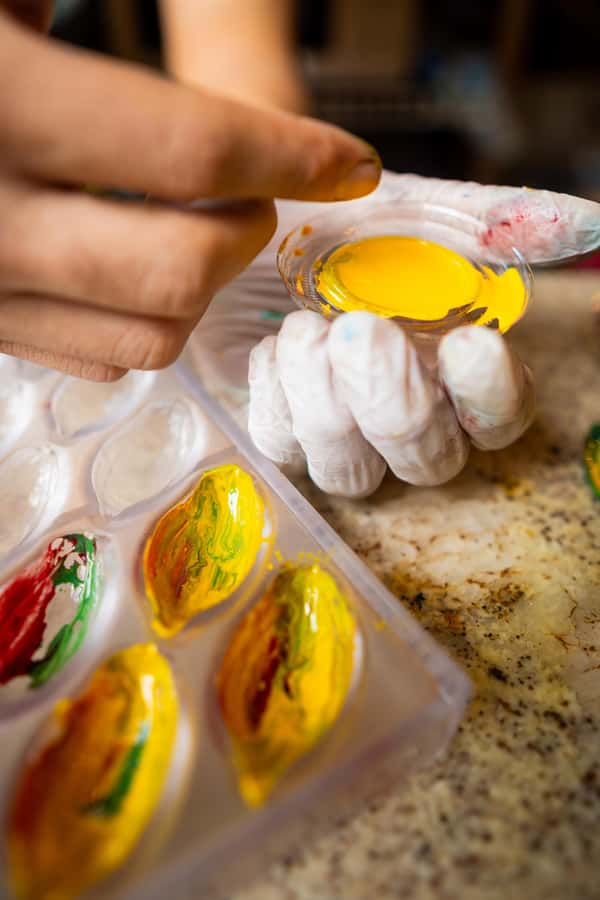
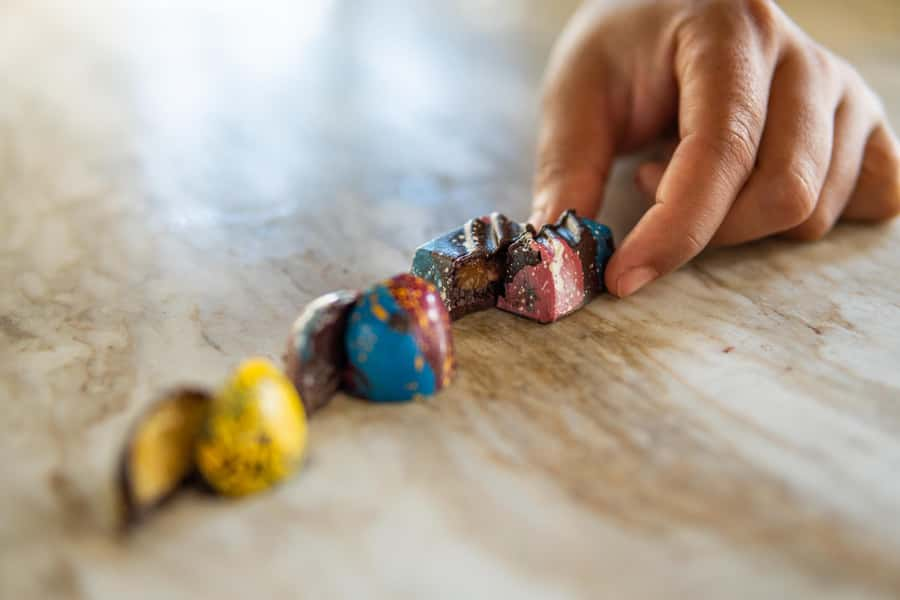
After the demonstration and tasting, you become the chocolatier. Under the direction of the artisans, you make your own chocolate creation. The choices include bonbons, truffles, or chocolate bars, depending on the format offered during your session.
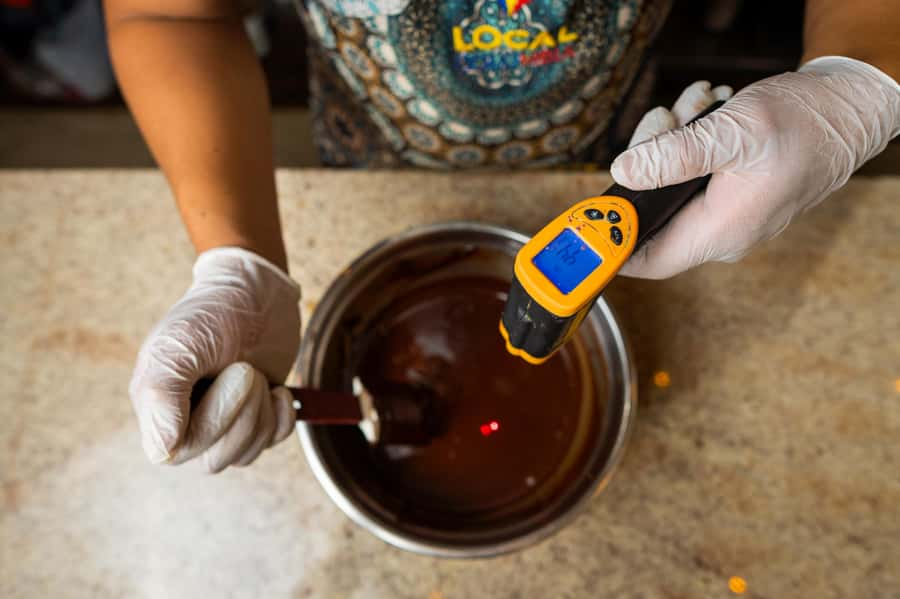
This is the part that makes the activity more than a factory tour. You handle the chocolate, make decisions, and see how much care goes into something that can look simple when it is finished. The process rewards patience. Chocolate work has a visual side, but it also depends on timing and careful handling.
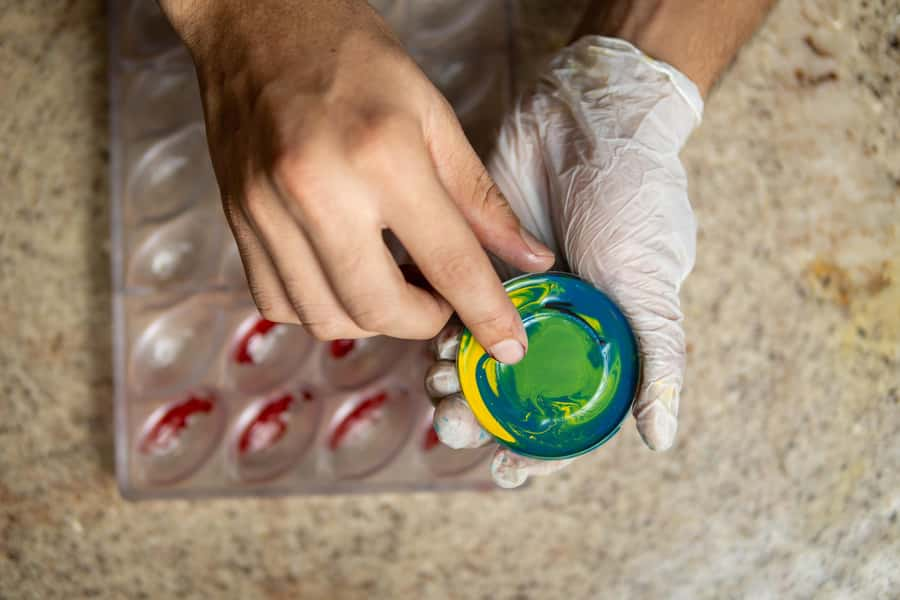
You can bring your own ideas to the decoration and design. The session encourages experimentation, so beginners are not expected to arrive with professional technique. If you have made chocolate before, you have room to try something more ambitious. If this is your first attempt, the guidance keeps the task approachable.
I would treat the finished pieces as part of the experience, not as a guaranteed replacement for a box of chocolates from a fine shop. The pleasure is in making them and understanding the work behind them. Their appearance may reflect your skill level, which is part of the fun.
More Drinking Tours in Colombia:
- Hungry Mary’s Famous Beer and Chocolate Tour in Brussels
★ 5.0 · 2,258 reviews - Epic Yarra Valley Wine Tour + Lunch, Chocolate & Gin/Beer Option
★ 5.0 · 1,819 reviews - Brussels Chocolate Beer Waffle and Belgian Whiskey All-in-One (Small Group) Tour
★ 5.0 · 551 reviews - Project Chocolat Tree to Bar Tour at Hotel Chocolat Saint Lucia
★ 4.5 · 501 reviews
What Alejandra adds to the session
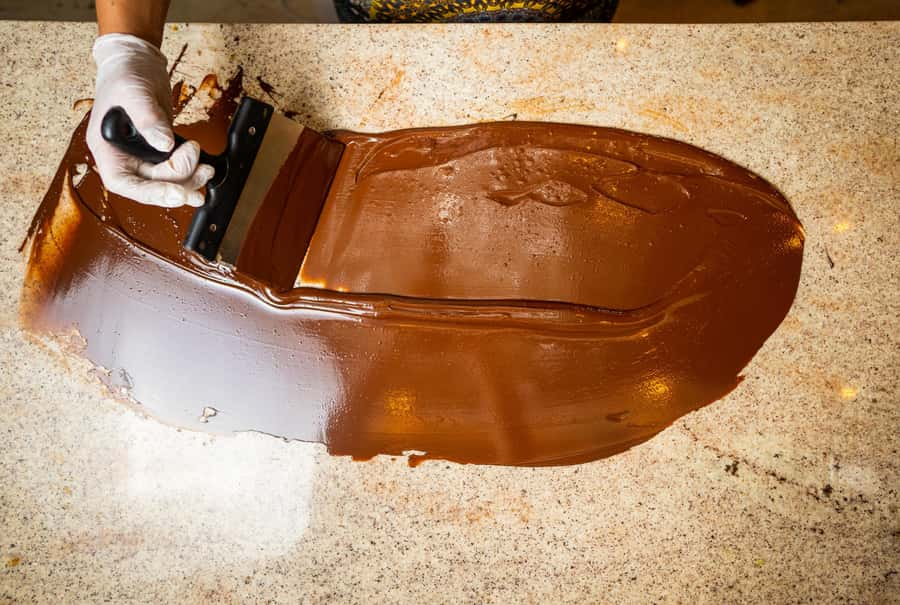
Alejandra has guided this workshop with strong energy and a clear interest in the subject. She explains the chocolate process, answers questions, and connects the hands-on work with the cacao plant, harvest, ecology, and production.
A good food guide does more than recite steps. Alejandra’s role is to help you understand why each stage matters, from the bean to the finished confection. That makes the activity useful for curious adults, families, and anyone who wants more than a sugar fix.
Guide assignment can vary, so you should not assume Alejandra will lead every booking. English and Spanish instruction are available, and the private format gives you a better chance to ask for clarification than a large shared tour would.
The private setting is especially useful if your group has mixed interests. One person can ask about cacao ecology, another can focus on technique, and someone else can simply enjoy the tasting. The session has room for questions rather than forcing everyone through a fixed public demonstration.
Why the private 105-minute format matters
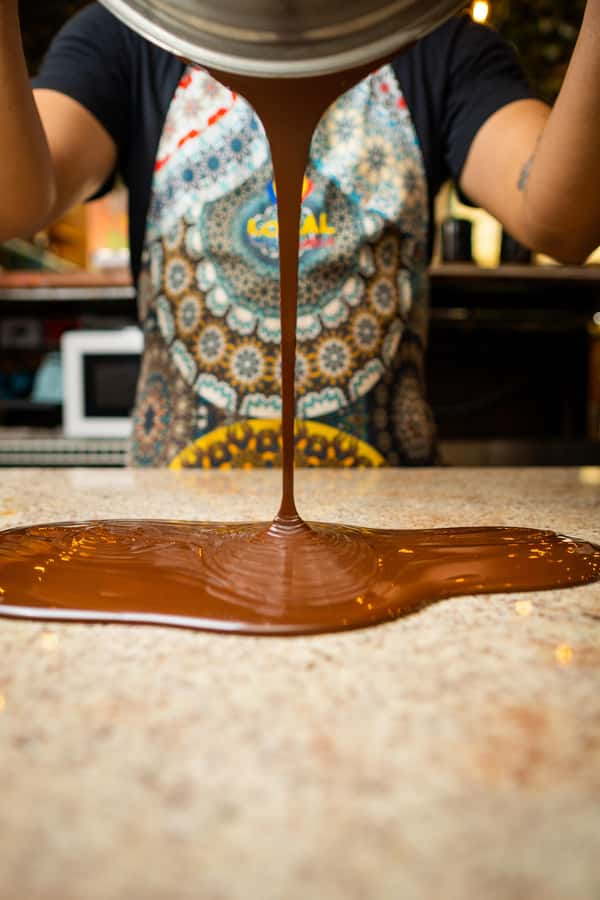
A private group changes the feel of the class. You are not competing with a roomful of strangers for a turn at the worktable or for the instructor’s attention. That can make the practical portion more relaxed and more useful.
It also gives you control over the questions you ask. If the distinction between milk, dark, and pure cocoa is new to you, you can slow down and ask about it. If you already know the basics, you can focus on roasting, origins, or the production machinery.
The 105-minute length is another strength. A shorter session might offer a tasting without enough context. A much longer workshop could feel repetitive, especially if you are visiting Bolívar on a packed schedule. This one gives you a concentrated look at the subject and leaves time for other plans.
There is one tradeoff. The class cannot show every part of chocolate production in full detail within 105 minutes. Some steps are handled ahead of time, so expect a guided introduction and practical workshop rather than a complete industrial production shift.
Is $101 a fair price?
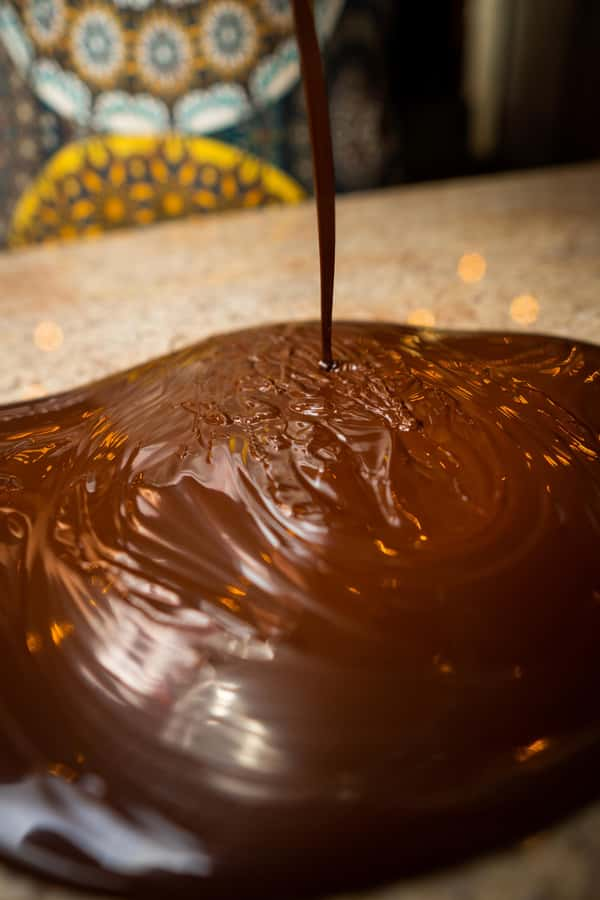
At $101 per person, this is not a casual add-on for anyone watching every peso. You are paying for a private, guided activity with chocolate included, access to a production area, tasting across several styles, and your own hands-on session.
The value improves if you care about local food and want context. The class connects Colombian cacao with national varieties, ecology, processing, and finished chocolate. It also gives you something to do, not just something to watch.
The price is harder to justify if your main goal is eating as much chocolate as possible. A shop visit or simple tasting would likely suit that purpose better. This experience earns its cost through instruction, private attention, and participation.
I would also factor in the weather. On a rainy afternoon, an indoor class can rescue your schedule. One person specifically found it a good option when outdoor plans were spoiled by poor weather, and that is practical advice for a destination where conditions can change your day.
Who will enjoy this most?
I recommend the workshop to anyone who likes food with a story and prefers making something to watching a demonstration. It is a good fit for couples, families, friends, and solo visitors who want a private activity in English or Spanish.
Chocolate fans will appreciate the range from 40 percent white chocolate to 100 percent pure cocoa. Curious first-timers will appreciate the guidance and the chance to learn without needing prior experience.
It may be less suitable for someone who dislikes structured activities or expects a long, detailed factory tour. It is also not suitable for people with food allergies. The workshop involves several chocolate styles and hands-on food preparation, so you should take that restriction seriously.
Wear comfortable clothes that can handle stains. You will be working with chocolate, and an apron does not remove every risk of a drip or smear.
Booking, cancellation, and meeting details
You can reserve the activity and pay later, which helps if your Bolívar schedule is still changing. You can also cancel up to 24 hours before the start for a full refund.
After booking, provide an email address and a phone number with the area code. You receive a confirmation email and a calendar invitation, useful reminders for an activity that begins at a specific time.
Check the available start times when you book. The duration is fixed at 105 minutes, but the starting hour can affect how well the workshop fits around meals, museums, and evening plans.
For the meeting point, head to the beginning of Arsenal Street, across from the convention center and beside the pink two-story building with wooden barrels outside. Your host then directs you to the workshop location.
Should you book the Bean to Bar workshop?
Book it if you want a hands-on Colombian food experience with private instruction, a useful cacao lesson, and enough tasting to compare several chocolate styles. The workshop has particular appeal as a rainy-day plan and for anyone who wants to understand what goes into a bar before buying or eating it.
Skip it if you only want a quick sample, have a food allergy, or feel $101 is too much for a 105-minute activity. For everyone else, the combination of cacao education, local production, and making your own chocolate gives the price a reasonable purpose.
FAQ
Where does the chocolate workshop meet?
Meet at the beginning of Arsenal Street, around the corner and across from the convention center. Look for the two-story pink building with wooden barrels outside advertising free hugs. The host takes you to the exact workshop location.
How long does the activity last?
The workshop lasts 105 minutes. Starting times vary, so check availability when booking.
How much does the workshop cost?
The price is $101 per person.
Which languages are available?
Instruction is available in English and Spanish.
Is the workshop private?
Yes. The activity is offered as a private group experience.
What kinds of chocolate are included?
The session includes chocolate in several percentages and origins, including white chocolate at 40 percent, milk chocolate at 46 percent, dark chocolate at 80 percent, pure cocoa at 100 percent, and blends.
Can I cancel for a refund?
Yes. You can cancel up to 24 hours in advance for a full refund. You can also reserve now and pay later.
Just added around Colombia
- Waterfalls, Animal Reserve and Chocolate: Mango Passage★ 5.0 · 2 reviews
- Cocoa Tour – San Rafael Antioquia from Medellín★ 5.0 · 2 reviews
- Minca: Hidden Waterfall + Coffee and Cocoa Workshop★ 4.9 · 6 reviews
- Medellín: Chocolate Tour & Exfoliation in beautiful river★ 5.0 · 3 reviews
- Coffee, Cocoa and Trekking Tour in Minca: Nature, Crops and Production★ 4.7 · 21 reviews
- Chocolate tour near the Medellín★ 5.0 · 13 reviews
- Cartagena: Express Rum and Chocolate Tasting Experience★ 5.0 · 10 reviews
- Cartagena: The Legendary Colombian Rum and Chocolate Tasting★ 5.0 · 8 reviews
Colombia Chocolate Tours, compared.
Cartagena: Boutique Rum and Chocolate Tasting at Lunático
Read our review →
Santa Marta: Minca Coffee, Cocoa, & Waterfall Full-Day Trip
Read our review →
Coffee & Chocolate Private Tour in Medellin: Genuine Experience
Read our review →
Trekking History and Indigenous Heritage in Minca + Cacao & Coffee + Waterfall
Read our review →
Browse the lists this tour appears in